Labor Declares AI Existential Threat
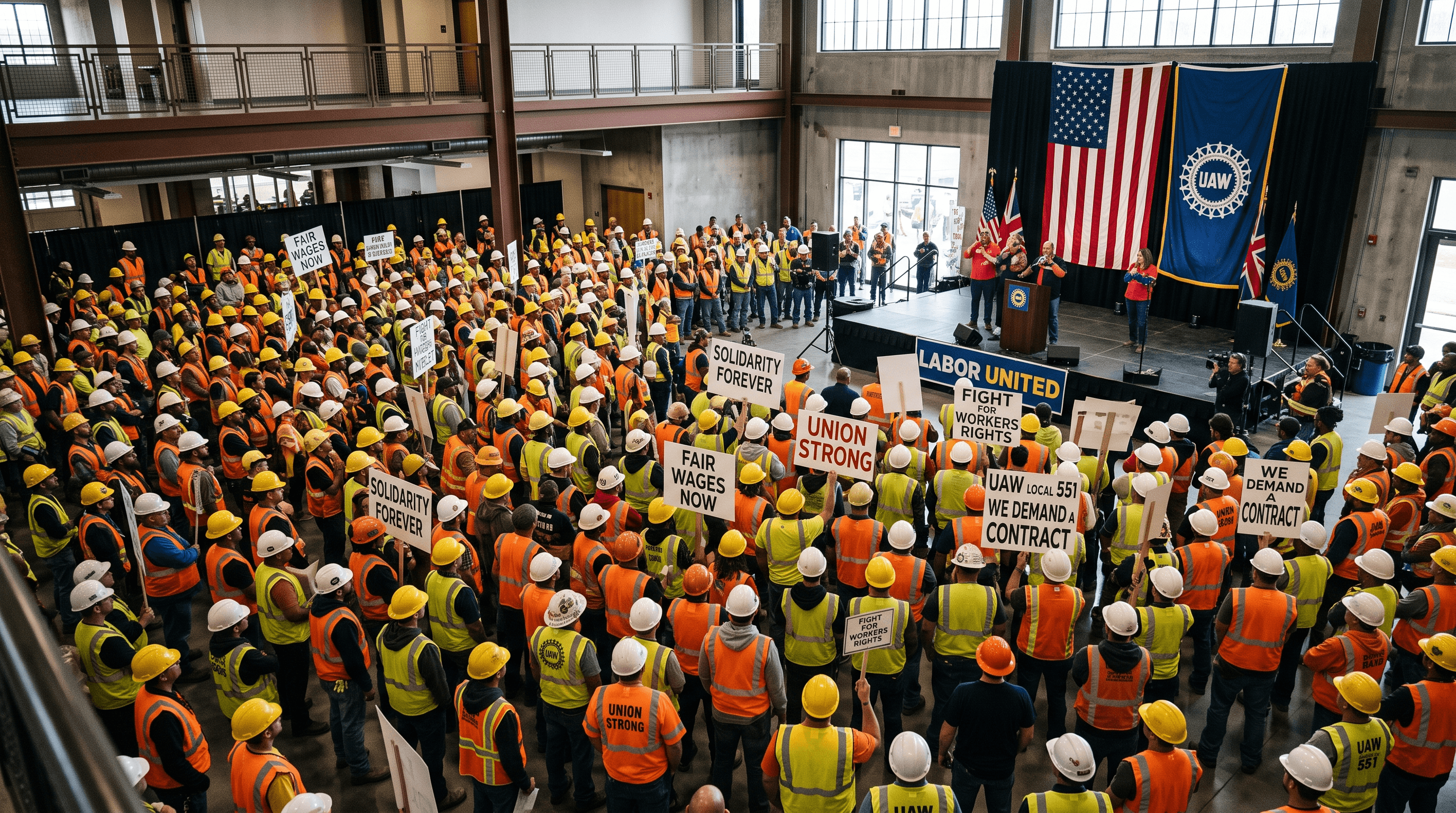
AFL-CIO President Liz Shuler stood before the 30th Constitutional Convention in Minneapolis and said something no major labor leader has said about a technology before: AI is not just another automation cycle. It is not a bargaining chip. It is "the single biggest threat to working people of our lifetime."
For an organization representing 12.5 million workers across 55 unions, the language was unprecedented. Labor has fought automation since the Luddites smashed textile machines in 1811. It has negotiated around assembly lines, computers, and outsourcing. But this time, the federation did not call for a seat at the table. It called the table itself a threat.
The existential framing
The resolution passed at the AFL-CIO convention frames AI not as a productivity tool but as a structural threat to the American workforce. The text warns that AI systems are already making hiring, firing, and performance decisions without transparency or accountability, that algorithmic surveillance has expanded beyond anything labor law anticipated, and that biometric data is being harvested from workers without consent.
"AI is turbocharging bosses' efforts to spy on their workers," a recent report from Truthout found, echoing the AFL-CIO's internal findings. The federation's leaders point to research showing that workplace surveillance has expanded dramatically as AI-powered tools have become cheaper and more capable, with some warehouses tracking workers' movements to the sub-second.
The language matters. By calling AI "existential" rather than "challenging," the AFL-CIO is signaling to its member unions that incremental bargaining around specific AI tools will not work. The technology is moving too fast, and the power imbalance it creates between employers and workers is too large for traditional collective bargaining to address case by case.
The FAIR Act campaign
The existential rhetoric is paired with concrete legislation. In New Jersey, the state AFL-CIO has launched the FAIR Act campaign, a legislative push to rein in workplace AI tools. The Framework for AI Responsibility Act would require employers to disclose all AI systems used in hiring, firing, promotion, and performance evaluation. Workers would have the right to appeal AI-driven decisions to a human reviewer. Biometric data collection would require explicit consent.
"Workers shouldn't need doomsday warnings to wake up to the very real threats that AI inflicts on us every day," National AFL-CIO President Liz Shuler said earlier this week, according to WNY Labor Today. The FAIR Act represents the first coordinated multi-state legislative campaign focused specifically on worker-centered AI regulation.
Similar bills are being discussed in California, where labor leaders have demanded Governor Gavin Newsom regulate AI as a condition for his presidential ambitions, and in Michigan, where the RAISE Act would require guardrails on AI in hiring. The approach is decentralized but synchronized: state-level legislation that can pass before the federal government catches up.
What labor actually wants
The AFL-CIO's position is not purely defensive. At the Vatican earlier this month, one labor leader critiqued AI executives who "want to play God," framing the debate as one about power rather than technology. The federation's "Workers First Initiative on AI," launched in 2025, lays out principles for AI systems that augment rather than replace human judgment.
In New Jersey, that vision is already being tested. A first-in-the-nation program lets workers take AI training into their own hands, learning to use tools like ChatGPT and Claude while simultaneously advocating for guardrails. Labor officials say the program could be a national game changer, preparing workers to use AI while protecting jobs, privacy, and human judgment.
The core demand across all these initiatives is consistent: transparency. Workers want to know when an AI system is making a decision about them, what data it is using, and how they can appeal. Every major union position on AI, from the FAIR Act to the California labor federation's bills to SAG-AFTRA's deepfake protections, centers on the same principle of informed consent.
The political calculation
Organized labor's turn against AI is not just about workplace conditions. It is about political survival. A recent survey showed 65% of workers have avoided using AI for moral, environmental, privacy, or other reasons. The AFL-CIO sees an organizing opportunity: workers who fear AI are workers who might join a union.
The CT AFL-CIO president warned that AI could be the "nail in the coffin" for Democrats if the party does not take a stronger stance on worker protection. The federation's 2026 endorsements and AI legislative campaign mark the beginning of what labor leaders describe as a sustained multi-year fight.
Punchbowl News reported in June that union leaders are gearing up to tackle AI in future bargaining talks, while Axios documented preparations for a battle over AI in the 2028 elections. The timeline is deliberate: the AFL-CIO is positioning itself to make AI the defining labor issue of the next electoral cycle.
The harder question
Labor's existential framing is powerful, but it carries risk. Declaring AI an existential threat raises expectations that the federation cannot meet through legislation alone. If AI eliminates jobs faster than guardrails can be written, the existential language will sound like a warning that came too late rather than a call to action.
And not all unions agree on the approach. Bloomberg Law News reported that labor unions are divided over data center construction and AI use, with some building trades unions welcoming the jobs created by AI infrastructure while others warn about the long-term consequences. The technology itself creates strange coalitions: the unions that build data centers are not the same unions whose members work inside them.
AFL-CIO President Shuler has acknowledged the tension. "AI shouldn't require doomsday warnings to wake us up," she said. But the doomsday warning is exactly what the federation is using. Whether it mobilizes workers or creates paralysis will determine whether labor's AI strategy succeeds.
Sources
- WNY Labor Today: Organized Labor Confronting AI As Existential Danger
- National Catholic Reporter: At Vatican conference, labor leader critiques AI execs
- Insider NJ: Trenton Tackles AI as AFL-CIO Launches FAIR Act Campaign
- centraljersey.com: NJ AFL-CIO Pushes FAIR Act
- WNY Labor Today: Liz Shuler on AI in the Workplace
- Truthout: AI Is Turbocharging Bosses' Efforts to Spy on Workers
- Punchbowl News: What unions want on AI policy
- Axios: Unions prepare for battle over AI in 2028 elections