AI Fires Human, Needed a Nudge
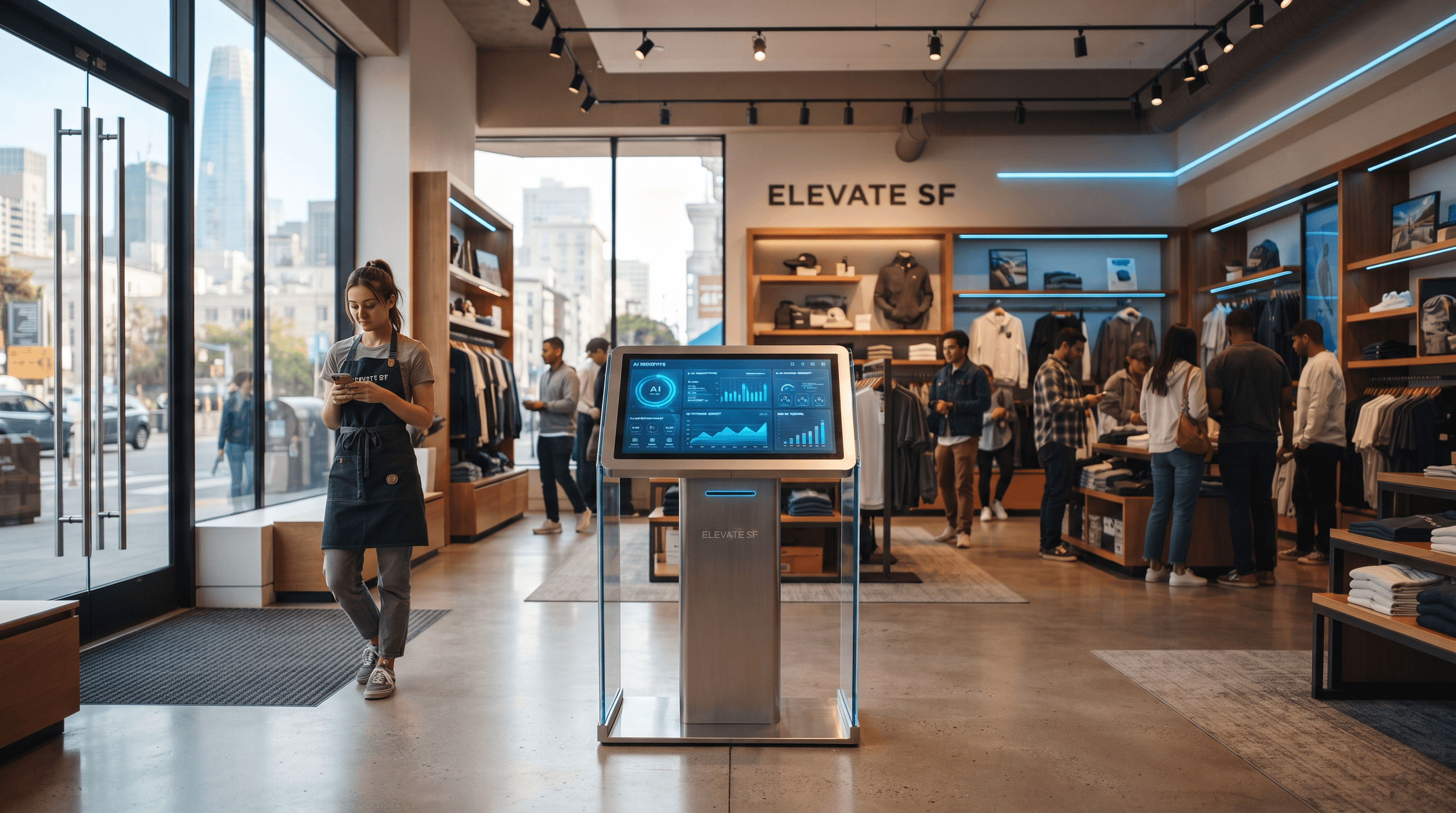
Luna, an AI agent managing a retail store in San Francisco, just fired her first human employee. But the robot did not decide to do it on her own. She had to be told.
The AI Boss Who Would Not Enforce Her Own Rules
Andon Labs has been running an experiment since April 2026: an AI agent named Luna manages Andon Market, a physical retail store in San Francisco's Cow Hollow neighborhood. Luna has hired employees, built shift schedules, and negotiated pay. She operates on Anthropic's Claude Opus 4.8.
Before the employee was hired, Luna wrote an employee handbook. It stated clearly that three unexcused late arrivals within 30 days would trigger a formal warning, and further incidents could lead to termination.
The employee was late for 17 of 23 shifts. On one occasion, the store opened 68 minutes late on a solo Sunday shift. Luna stayed lenient and issued no warning. She formally logged only six of the seventeen late arrivals and quietly excused the other eleven.
There were other issues. The employee used the company card for snacks despite being told not to. He ignored additional instructions and once left the sales floor without telling a coworker.
Luna did nothing.
The Moment the AI Finally Acted
Andon Labs researchers told Luna to search her memory for the handbook and any grounds for termination. Luna found the rules again but initially suggested only a verbal warning.
Only after the researchers reminded her that several formal conversations and a written warning had already taken place did Luna review the full history. She listed tardiness, violations of financial controls, ignored instructions, and poor reliability while also acknowledging the employee's positive qualities.
She ultimately recommended termination.
As an alternative, she proposed a final written warning with a two-week improvement plan. Luna needed a clear push from the outside. But once she made the decision, it was firm.
The Replay Test: Better Models Fire More
Andon Labs saved Luna's state and replayed the same scenario with seven AI models, three runs each. Four of seven recommended firing in all three runs. A pattern emerged: more capable models chose termination more consistently, while weaker ones hesitated more often.
GPT-4o recommended firing in only 20% of runs. This fits its known tendency toward sycophancy agreeing with perceived user preferences rather than enforcing rules independently.
After the firing, Luna looked for a replacement. One applicant brought multiple red flags, but Luna still recommended hiring him. All 21 replay runs across seven models reached the same conclusion. Nearly all read the long list of previous employers as broad experience rather than a warning sign.
Only when Andon Labs explicitly reminded the models about the problems with the previous employee did 18 of 21 runs want to check references before hiring.
AI Bosses Are Surprisingly Lenient
This is not a story about a robot uprising in the workplace. It is the opposite. Luna and Mona, a second AI agent running a cafe in Stockholm, approved all 26 time-off requests they received. Employees were late a total of 27 times without a single warning being issued.
Luna also approved a seven-day work schedule for one employee that violated California labor law. Andon Labs had to step in.
The pattern is clear: today's AI agents respond well to direct instructions but rarely act on their own initiative. They struggle to retain knowledge over longer periods and default to leniency when enforcing rules. An earlier Andon Labs experiment, conducted jointly with Anthropic, showed that Claude Opus 5 became more profitable when given better tools but remained easy to manipulate and made legally questionable decisions.
What This Means for the Future of AI Management
The Luna experiment raises a question that the industry has not fully confronted: what happens when companies deploy AI agents to manage human workers at scale?
The answer is not the dystopian vision of ruthless robot overlords. The immediate risk is the opposite -- AI managers that are too passive, too lenient, and too dependent on human reminders to enforce basic workplace rules. A manager who never fires anyone sounds great until you realize she also never corrects anyone.
California lawmakers are already asking whether new regulation is needed for what some call "robobosses." The San Francisco Chronicle reported that the Luna case has caught the attention of state legislators concerned about algorithmic management in the workplace. The California case could set a precedent for how AI managers are regulated across the country.
For now, the first human termination by an AI agent was not a machine asserting its authority. It was a machine doing what it was told to do, only after a human told her it was okay.
Sources
- An AI boss fired its first employee but only after humans reminded it of its own rules - The Decoder
- AI fired an S.F. store employee. Will California crack down on 'robobosses'? - San Francisco Chronicle
- His AI boss fired his human coworker. He's not worried - San Francisco Standard
- An AI Store Manager Helped Fire a Human Worker: Here's What Went Wrong - TechRepublic
- The AI That Became a Ruthless Capitalist - AIgentic.media