AI Is Campaigning in Brazil's Election
Every few months, democracy produces a story that quietly tests an assumption everyone had stopped questioning.
The assumption: that existing election laws, media literacy campaigns, and platform content moderation can handle AI-generated political propaganda.
Brazil's 2026 presidential election is about to provide the answer. And the answer may not be comfortable.
A Banned Candidate, an AI Avatar
Jair Bolsonaro, Brazil's former president, is barred from running in this year's election. Brazil's electoral court found him guilty of abusing his position during the 2022 campaign. He cannot hold elected office until 2030.
But Bolsonaro is campaigning anyway. Not in person, but through an AI-generated avatar that appears in videos circulated across WhatsApp, Telegram, and TikTok. The avatar mimics Bolsonaro's voice and mannerisms, delivering his talking points to millions of Brazilians who may not realize they are watching a synthetic candidate.
Reuters reported that regulators are struggling with a question no election law anticipated: if a real person is banned from running, does an AI version of that person campaigning count as election interference?
The answer, under current Brazilian law, is unclear.
AI-Generated Influencers and the Disinformation Pipeline
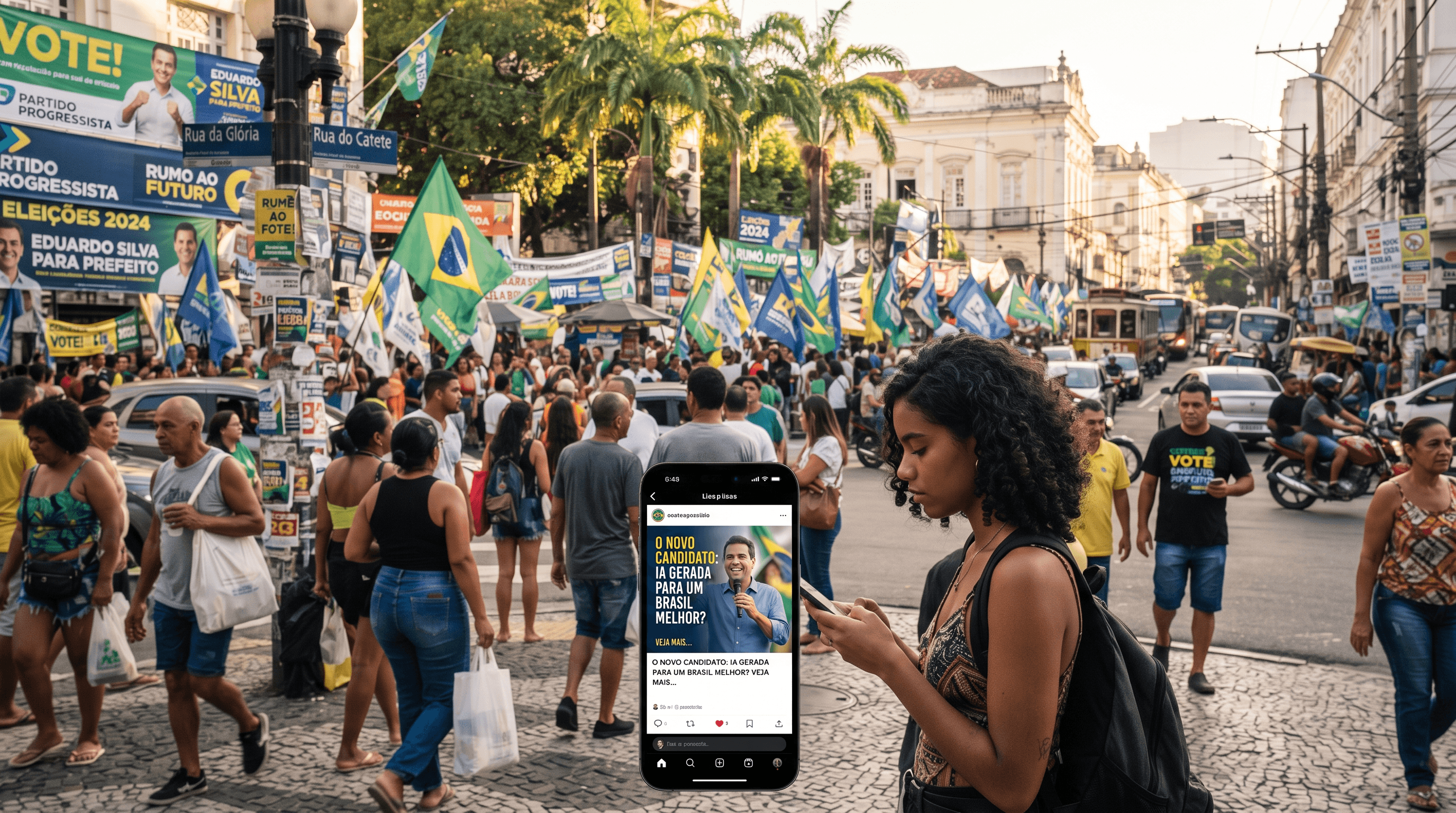
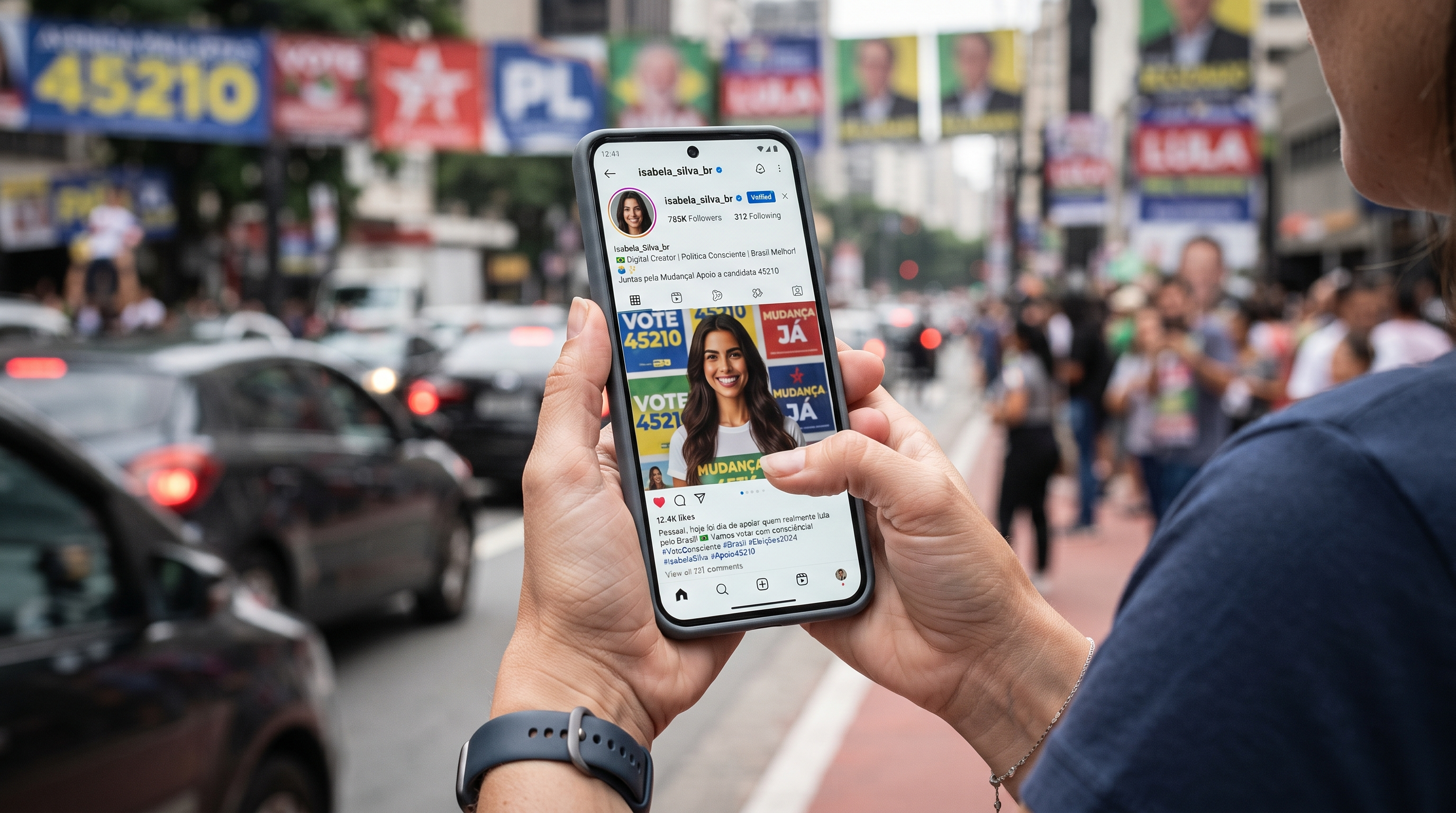
The Bolsonaro avatar is only the most visible example. Bloomberg reports that AI-generated influencers — entirely fake personas created by generative AI — are actively shaping voter opinions across Brazilian social media. These accounts post political content that looks and feels authentic, building followings and engagement before pushing endorsements for specific candidates.
The scale is the problem. A single operator can generate dozens of these personas, each producing hundreds of pieces of content per day. Amnesty International reported that Meta failed to block election-related disinformation ads on Facebook, despite its own policies.
Brazil's election authority is racing to implement AI content labeling requirements and deepfake detection systems before election day. But enforcement capacity lags far behind the technical capability to produce and distribute AI-generated content at scale.
The Structural Problem
The deeper issue is structural, not technical. Brazil's 2026 election is the first national democratic vote since generative AI tools became widely available and cheap enough for anyone to use. The election integrity infrastructure built over the last century — campaign finance laws, media accreditation, fact-checking partnerships, ballot security — was designed for a world where creating persuasive political content required significant resources.
That world no longer exists. Anyone with a $20 monthly subscription to a generative AI service can produce campaign ads, fake news articles, and synthetic audio at a volume that would have required a professional media operation five years ago.
The Electoral Court (TSE) has responded with new rules requiring political ads to disclose AI-generated content. But enforcement relies on platforms catching violations faster than bad actors can produce them. History suggests that is a losing proposition.
Why This Matters Beyond Brazil
Brazil is not alone. The United States, India, Indonesia, and dozens of other democracies are heading into elections over the next two years facing the same questions about AI-generated propaganda.
The difference is that Brazil is going first. How the TSE handles the Bolsonaro AI avatar, how platforms respond to fake influencer networks, and whether labeling requirements actually change voter behavior will all become data points for every other election authority planning for 2027 and 2028.
The EFF and its allies have argued that privacy protections are crucial to electoral integrity in the age of AI — that without strong data privacy rules, AI-generated propaganda can be micro-targeted with dangerous precision. Brazil's experience will test that argument in real time.
Sources
- Reuters: Brazil races to rein in AI weeks before election
- Bloomberg: AI Is Minting Fake Influencers to Shape Brazil's Election
- Tech Policy Press: Brazil's 2026 Elections Are Its First Real Stress Test for AI Regulation
- Reuters: Brazil's Bolsonaro is barred from this year's election. Can his AI avatar campaign instead?
- Amnesty International: Meta failed to block election disinformation ads on Facebook
- EFF and Allies on Brazil's Elections: Privacy Protections Crucial to Electoral Integrity