TikTok's Owner Is Training a 10T AI Model
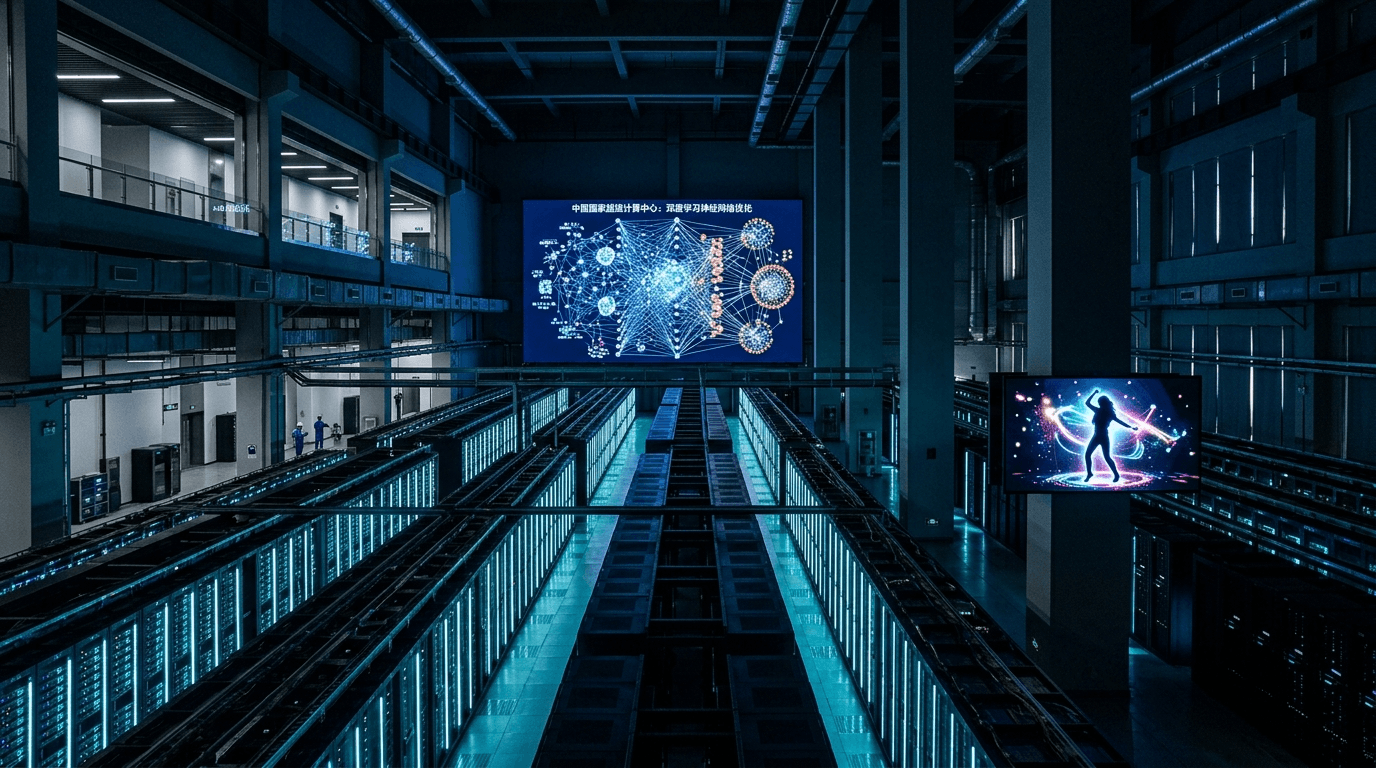
The company that brought you an endless stream of dancing videos is now trying to build China's most powerful artificial intelligence, and it is doing it without copying anyone.
ByteDance, the parent of TikTok, is training an AI model with as many as 10 trillion parameters, three people with knowledge of the matter told the Financial Times. That is three times larger than Moonshot's Kimi K3, the biggest Chinese model released so far, and roughly in line with Anthropic's most advanced systems, which industry estimates put at about 8 trillion parameters for Mythos 5 and 5 trillion for Fable 5.
The model is still in early pre-training, a stage that typically runs three to six months before fine-tuning and release. The exact size will only be set later, and the people familiar with the effort said ByteDance's management believes only independent development can produce a model that outperforms its rivals.
The no-copying bet
That last point is the unusual part. ByteDance's founder Zhang Yiming has decided that his company will not use model distillation, the common practice of training a smaller model to compress and copy the knowledge of a larger one. Many Chinese labs lean on distillation to catch up quickly with US frontier models. ByteDance has avoided it for more than a year, a choice some insiders say has slowed its development compared with rivals.
Two weeks ago, Zhang reiterated the stance in an internal meeting, telling the Seed team to target "world-leading model capabilities" in the long run without worrying too much about falling behind in the near term, according to a person who attended. Chinese media Latepost and The Information first reported his comments.
It is a calculated gamble. Parameter count sets the ceiling on what a model can store, but real capability depends on data quality and training method. By refusing the distillation shortcut, ByteDance is betting that its own data pipeline, its own infrastructure, and its own researchers will eventually beat a strategy of borrowing someone else's intelligence.
The machine behind the model
ByteDance has been building toward this for years. Over the past three years it has invested in AI more aggressively than any other Chinese tech giant, expanding data centers and hiring researchers. Its Seed division, led by former Google DeepMind scientist Wu Yonghui, has about 2,000 members across China and overseas, including core researchers, infrastructure engineers, a data-labeling team, and translators.
The company's consumer footprint is already enormous. Its flagship Doubao chatbot is the most popular AI app in China with 324 million monthly active users, and its SeeDance model ranks among the most advanced in the world for video generation. Its Volcano Engine cloud unit sells AI infrastructure to enterprises, and the company has ambitions to design its own AI chips.
In the past weeks alone, Chinese models from Moonshot and Alibaba have posted strong benchmark results, lagging only behind Anthropic's Fable 5 in some areas. Industry insiders say several Chinese labs are training models the size of Fable 5, with ByteDance pushing for the largest of all.
What it means
The obvious reading is that the Chinese AI race is accelerating and the gap with US labs is narrowing. ByteDance, the most aggressive investor of the Chinese giants, is staking its reputation on a model that could rival Anthropic's flagship within months.
The more interesting reading is the strategic bet behind it. ByteDance has kept a low profile in AI research, mostly keeping its models closed while peers open theirs. It has spent billions on data centers under US export controls that restrict access to advanced chips. And it is pursuing the hardest path, independent development, at the largest scale yet.
That combination is a statement: the company that made short video a global habit believes it can also make frontier AI, and it is willing to be slower to get there if that is the price of building something original. Whether the bet pays off, pre-training will answer in three to six months. Until then, the world's most popular video app is also quietly one of the world's most ambitious AI labs.
Sources
- ByteDance trains massive AI model in bid to rival Anthropic (Ars Technica / Financial Times)
- China's Largest AI Model Is Being Developed at ByteDance (The Decoder)
- ByteDance targets mega AI model nearing Anthropic's Mythos (Financial Times)
- ByteDance Begins Biggest AI Build in China, Rules Out Rival-Copying Shortcut (TechTimes)