Cisco's 350M-Parameter Model Catches 150x More Bugs Per Dollar Than GPT-5.5

Cisco just dropped a pair of tiny AI models that outperform frontier systems at cybersecurity — while costing a rounding error of what GPT-5.5 burns through.
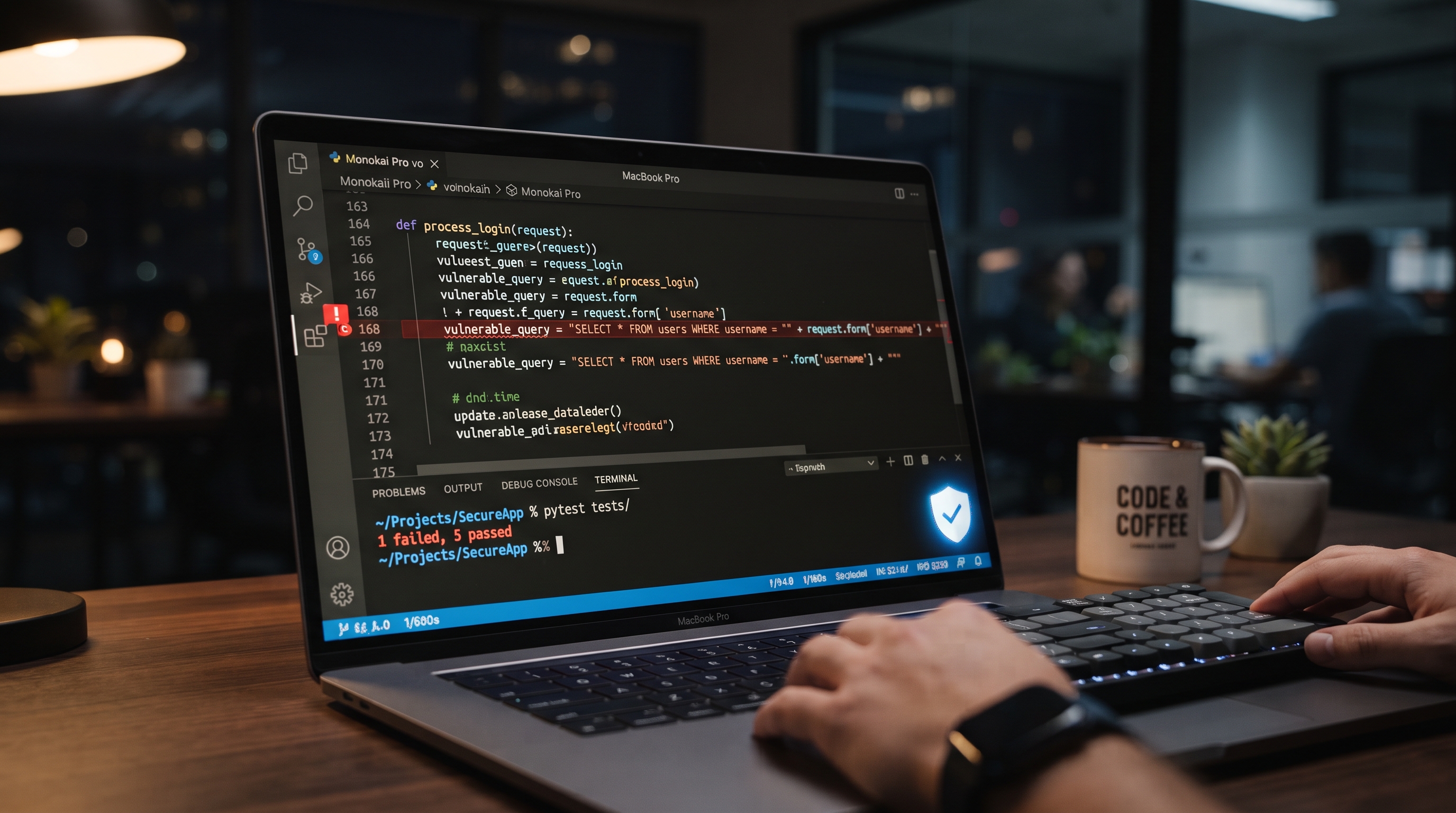
The Antares-350M and Antares-1B, released by Cisco Foundation AI, are open-weight models built for one job: spotting known software vulnerabilities inside real codebases. Cisco's pitch is brutally simple — the smallest model catches about 150 times more vulnerabilities per dollar than large AI agents like Cognition's Devin Security Swarm, according to developer Aman Priyanshu on X. In Cisco's own tests, the numbers hold up.
The big model problem
Frontier AI models are brilliant at many things, but they are terrible value for money in narrow, high-frequency tasks. Running GPT-5.5 or Claude Fable 5 on every line of code in a large enterprise codebase costs a fortune. The models are enormous, the latency is significant, and the per-token cost adds up fast when you're scanning millions of lines of code daily.
Cisco's Antares models flip that equation. The Antares-1B reaches 0.209 File F1 on the Vulnerability Localization Benchmark — a score that beats GLM-5.2 at 753 billion parameters and Gemini 3 Pro. That is a 1-billion-parameter model outperforming systems 700 times its size on a focused benchmark.
"The smallest model catches about 150 times more vulnerabilities per dollar than large AI agents," Cisco's Aman Priyanshu stated. The economic argument is hard to refute: small, specialized models running locally at near-zero marginal cost versus calling an API every time you need to check a file.
Designed for the air gap
Both models run entirely on-premise. Sensitive source code never leaves the company's infrastructure. For organizations in defense, finance, critical infrastructure, or any sector where code is classified, this is the difference between usable and unusable.
The models were trained on roughly 72 percent security-concept data and 15 percent code search histories. This concentrated training diet means they are not general-purpose chat models — they cannot write poetry or plan a vacation. What they can do is look at a function and say: "line 47 has a SQL injection pattern matching CVE-2026-1234."
Cisco is keeping a larger three-billion-parameter version for its own products. That version reportedly performs close to GPT-5.5 and beats open models up to 200 times its size. The company is also exploring an industry consortium for open AI security tools, suggesting it sees this as a platform play, not just a one-off product.
The specialized model thesis
The Antares release is the latest and strongest signal yet that the AI industry's obsession with ever-larger models may be misplaced for enterprise use cases. The pattern is repeating across domains: specialized models trained on narrow, high-quality data outperform general-purpose frontier models at a fraction of the cost, while running on commodity hardware.
Cisco's approach mirrors what Poolside did with its Laguna S 2.1 coding model (also released this week) and what Cursor is doing with its Router system that routes simple queries to cheaper models. The trend is unmistakable: the future of applied AI may not be one giant model that does everything, but a swarm of tiny, specialized models that each do one thing brilliantly.
The nuance
Before declaring the death of frontier models, a few caveats are worth noting. Cisco's benchmarks are self-reported, and the 150x efficiency claim measures vulnerabilities per dollar, not absolute detection quality. For a complex, novel vulnerability that no small model has seen in training, a frontier model's broader reasoning capabilities may still be essential.
The 3B parameter version that Cisco kept for itself reportedly performs close to GPT-5.5 — suggesting that Cisco's own internal threshold for "good enough" is still the frontier bar. The open models are impressive at the price point, but the company's most capable model stays behind the firewall.
Still, for the vast majority of vulnerability scanning — checking known CVE patterns, spotting common injection flaws, flagging misconfigurations — the Antares models offer a genuinely new cost calculus. In cybersecurity, where the volume of code to scan grows exponentially and budgets do not, that calculus matters.