Claude for Teachers: Anthropic's New AI Tool for K-12 Educators
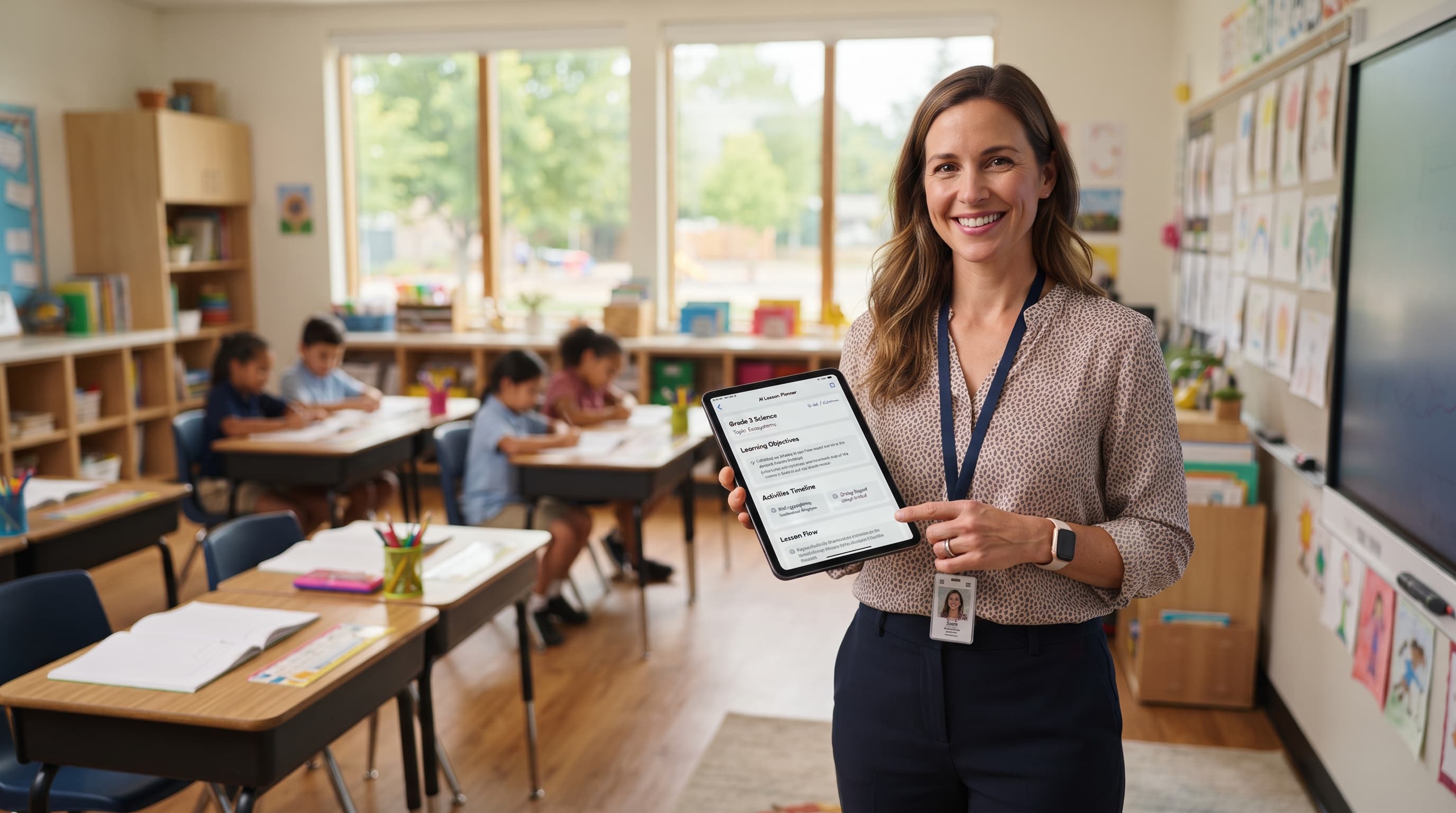
On July 14, 2026, Anthropic introduced Claude for Teachers, a version of Claude purpose-built for verified K-12 educators in the United States. It is a useful case study in what a properly scoped, evidence-based AI deployment looks like — not a generic chatbot pointed at a new market, but a tool built around the specific constraints and evidence base of a single profession.
Why Anthropic Built This
The gap Claude for Teachers is trying to close is a familiar one to anyone who has worked in education: research consistently shows that differentiation, mastery-based learning, and small-group instruction improve student outcomes. Teachers know this. What they usually lack is not the knowledge, but the time and resources to actually implement it for every student, every day.
Anthropic's framing is that the tool should protect what teachers value most — direct time with students — rather than compete with it. Whether that promise holds up in daily classroom use will take time to see, but the design choices behind the product suggest they built around that constraint deliberately rather than as a marketing line.
Built on Evidence-Based Curricula, Not a Blank Prompt Box
The most notable design decision is that Claude for Teachers is not a general-purpose assistant that happens to be used by teachers. It's connected to Learning Commons, giving it access to academic standards across all 50 US states, along with the underlying learning competencies and typical progression sequences behind them. It also incorporates trusted curriculum resources including OpenSciEd and Illustrative Mathematics.
On top of that, it connects into an existing K-12 tool ecosystem rather than trying to replace it:
- ASSISTments — auto-scored math problems
- Brisk Teaching — interactive activities
- Canva Education — lesson design
- Coteach — math diagrams
- Diffit — differentiated materials
- Eedi — diagnostic questions
- MagicSchool — classroom-ready content
- Snorkl — class analytics
- TeachFX — instructional feedback
This is the same lesson that keeps showing up across serious AI deployments, in education or anywhere else: the value is rarely in the model alone. It's in connecting the model to the right data, the right standards, and the right existing workflow tools.
What It Actually Does
Stripped of the partner list, Claude for Teachers focuses on four core capabilities:
- Lesson planning from high-quality materials, aligned to state standards
- Differentiation for multiple readiness levels, with personalized scaffolds for individual students
- Class data analysis, using rosters, diagnostics, and attendance records a teacher already has
- Automated task scheduling — for example, having exit-ticket review ready every day at 4pm without a teacher having to remember to trigger it
None of these are flashy. All of them target the unglamorous administrative load that eats into a teacher's evening rather than their classroom time.
Safety, Privacy, and Age Restrictions

Access is restricted to verified K-12 educators in the US, consistent with Claude's general 18+ policy — this is a tool for teachers, not a tool handed directly to students. Anthropic states that user data is not used for model training, and student information is protected under a K-12 Data Processing Addendum compliant with FERPA.
The American Federation of Teachers weighed in directly. AFT President Randi Weingarten said Anthropic committed to "industry gold standards for K-12 safety and privacy," and described the tool as "designed by and for educators to assist them instructionally and hopefully give them more time for the human relationships at the heart of learning."
Having a national teachers' union involved in shaping — and publicly commenting on — the privacy and safety approach is a meaningfully different posture than most consumer AI launches take, and worth noting for exactly that reason.
AI Fluency for K-12 Teachers
Alongside the product, Anthropic released AI Fluency for K-12 Teachers, a free, model-agnostic course released under Creative Commons and co-created with Teach For America and the American Federation of Teachers. It covers appropriate classroom applications of AI and responsible use — deliberately not tied to Claude specifically, which is a reasonable way to build trust with an audience that will rightly be skeptical of vendor-authored training.
Getting Started
Verified educators get free access through June 30, 2027. A dedicated offering for schools and districts is described as forthcoming; in the meantime, districts can access the tool through Claude for Nonprofits.
What This Means Beyond Education
The pattern here is one we talk about often with our own clients: the highest-value AI deployments are rarely the most general ones. Claude for Teachers works because it's narrow — one profession, one regulatory environment, one set of existing tools it plugs into, one clearly defined data-privacy boundary. The same logic applies whether you're building an AI agent for K-12 classrooms or for a mid-sized business's support desk: the model matters less than the specificity of what it's connected to and the discipline of what it's scoped to do.
Conclusion
Claude for Teachers is a genuinely useful case study for anyone evaluating how to bring AI into a specialized, high-trust profession: partner with the standards and tools already in use, be explicit and public about data handling, and involve the people whose trust you actually need before launch, not after. Whether it's a classroom or a business process, that sequence tends to be the difference between an AI tool people adopt and one they quietly ignore.