Doctors Ask: If AI Takes Over, What's Left for Us?
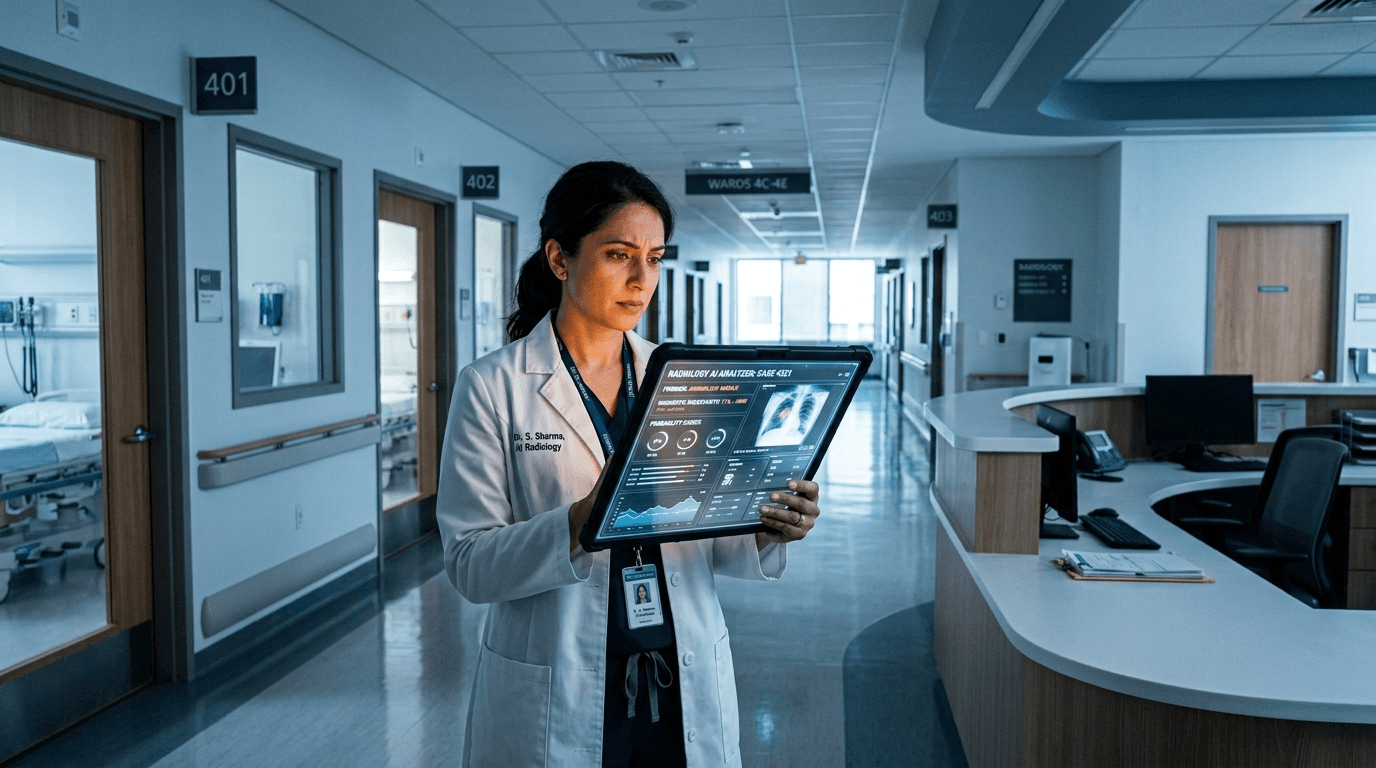
Doctors spent a decade training for a skill that a machine can now deliver in seconds. The profession isn't being replaced. It is being redefined from the inside out -- and nobody asked if they were ready.
A medical student typed her patient's symptoms into an AI tool that took their history, suggested a diagnosis, and recommended a treatment plan in seconds. She stared at the result, knowing the machine had done in thirty seconds what would have taken her supervising physician fifteen minutes and a decade of training to match.
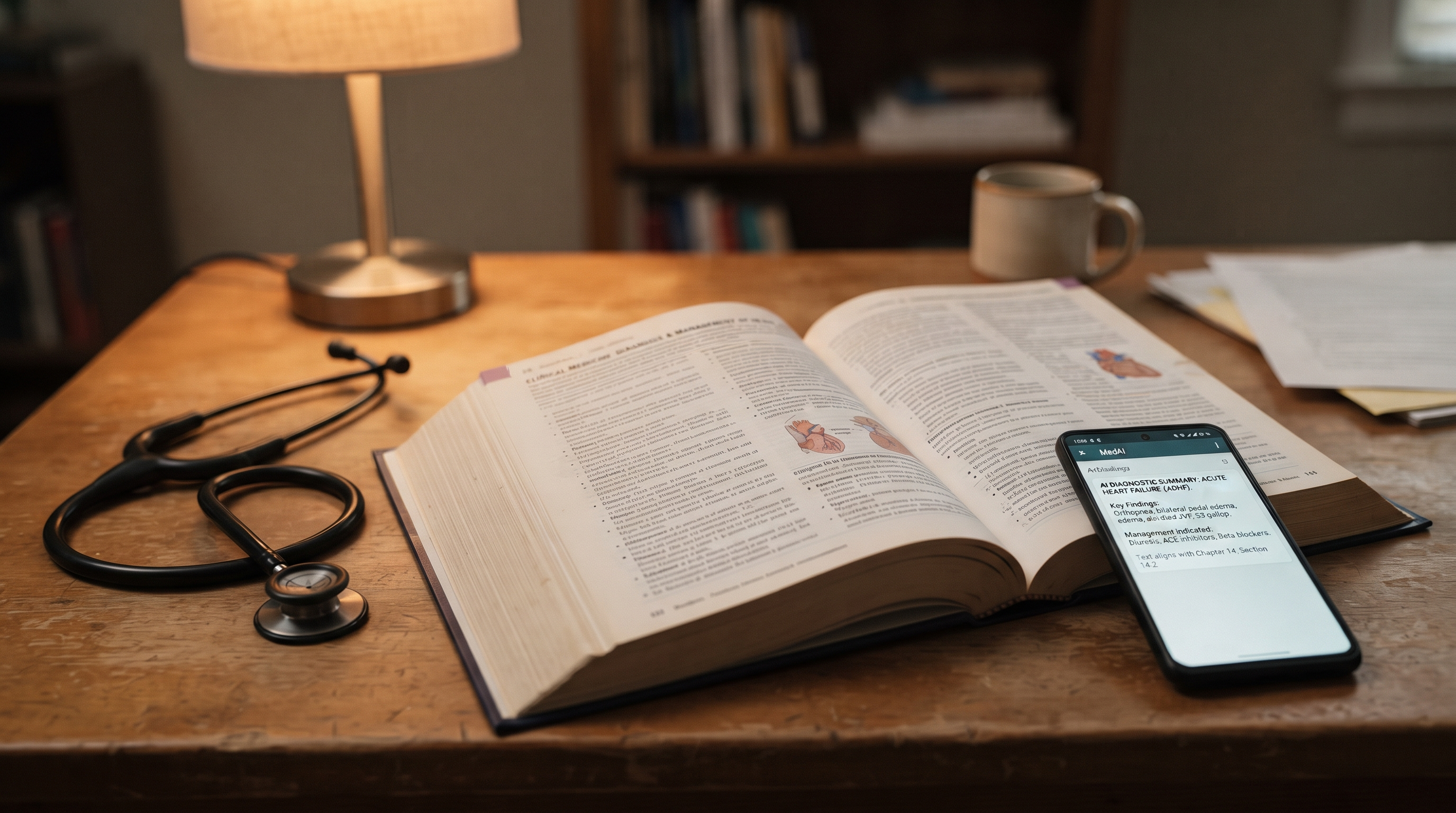
This is the quiet crisis the medical profession is waking up to. Not that AI will replace doctors tomorrow. But that the central premise of what it means to be a doctor -- the clinical expertise, the diagnostic instinct, the years of pattern recognition -- is becoming a commodity any smartphone can deliver.
The Paper That Broke the Dam
A study published this month lays the claim out bluntly. Authored by Ezekiel Emanuel -- chair of Medical Ethics at Penn, brother of Ari and Rahm, and a renowned oncologist -- along with Vinod Khosla and his son Neal, the paper surveyed all published research on AI in medicine from January 2024 onward.
Their conclusion: AI alone will likely exceed both physicians and physician-AI hybrids at five core medical tasks by 2030. Taking histories. Diagnosing. Ordering tests. Prescribing treatment. Managing chronic disease. The whole job description, summarized and ticked off.
"Humans in the loop degrade AI performance," the paper argues.
Emanuel did not start here. For years he dismissed Khosla's predictions as hype. At conferences in the 2010s, Khosla would insist AI would do 85 percent of what doctors do by 2035. "I said bullshit, there's no way," Emanuel told WIRED. "What doctors do is too complicated."
Then a friend sent him galleys of a book by Robert Wachter, head of medicine at UCSF, which sketched a world where first-class medicine would be a collaboration between AI and doctors, but the masses in "economy class" would mostly get AI alone. Emanuel suddenly asked himself a question that, once voiced, could not be unheard: "If AI takes over, what's left for doctors to do?"
The Profession Pushes Back
The American Medical Association is pushing back. CEO John Whyte pointed out that some of the studies the paper relies on are simulations, not blind experiments. A February 2026 Nature article found that in real-life cases, most patients could not effectively converse with large language models to access their expertise.
"The AMA does see the potential in these tools, but they have to be utilized in the context of a care plan that is governed by a physician," Whyte said.
But Emanuel has a counter that is hard to dismiss. "It's been less than four years since ChatGPT was introduced," he said. "We're making a prediction for four years from now. You don't think that AI is going to be way more advanced than a doctor?"
Even Wachter concedes the authors have a point. "The argument they're making is important," he said. AI is good, and AI plus humans is better -- for now. "But that can no longer be chiseled into a tablet. There will be times when humans will muck up the performance."
The Doorman Fallacy
Wachter still insists the human attributes of trained physicians are vital and irreplaceable. He invokes what he calls the "doorman fallacy" -- the fear that automatic door openers would eliminate doormen, when in fact doormen evolved into invaluable concierges.
"We're going to find a version of the doorman fallacy for doctors," Wachter said.
But what is being displaced here is not door-opening. It is expertise earned through the grind of medical training -- the all-nighters, the residencies, the board exams. The scenes in The Pitt where Dr. Robby relentlessly tests residents by demanding instant assessments? That will not be necessary when AI has the answer on demand.
This "de-skilling" process could accelerate the takeover. As new generations of doctors train alongside always-on AI, the incentive to internalize clinical knowledge fades. Why memorize rare disease presentations when the pocket AI can recite them instantly? The AMA's Whyte admits this is a real concern: "A lot of medical schools and residency programs are debating whether physicians need to spend years learning things they can now query."
The Irony at the Heart of the Story
The irony cuts deep. Medicine resisted AI longer than most professions, citing the gravity of life-and-death decisions. Now it finds itself in the most existential position of all: the profession that least wanted to be replaced may be the one AI is best suited to augment -- and ultimately, to lead.
There is a path forward. Doctors who lean into what machines cannot do: breaking bad news with empathy, navigating moral dilemmas, advocating for patients through bureaucratic labyrinths. But that path demands a redefinition of the profession so profound that it amounts to starting over.
The Kazakh poet Olzhas Suleimenov once wrote that "the horse is still useful, even after the car." The question for doctors is whether they want to be the horse.
Sources
- WIRED: "AI Has Human Doctors Asking: What's Left for Us?" (2026-08-28). The primary feature that broke the Emanuel/Khosla paper and the professional reaction to it. https://www.wired.com/story/ai-has-human-doctors-asking-whats-left-for-us/
- STAT News: "AI has created a shadow medical system" (2026-08-19). Context on how AI is quietly entering clinical practice outside formal channels. https://news.google.com/rss/articles/CBMiogFBVV95cUxQX0NvdjRndFF3d09VcG9XOFVxT1JFVXhzVXNsWWxySkY4SWxreS1feEMxbTdUcDBFNTVfTTJKWm4tQURvTmlBQXVkbXFsZXg0SWF3aU1mUXNrSkQtaUhfTmRCSTdGME1JVHpkVG4yd3NuSHBOc1lDNWlOYkNTXzhTYXRIanpMLUYtdFF3WUZIdDhCZFZiazdDaWlfNjZtUkJ1OWc?oc=5
- NPR: "In real-world test, an AI model did better than doctors at diagnosing patients" (2026-04-30). Background on the trajectory of AI diagnostic accuracy. https://news.google.com/rss/articles/CBMijgFBVV95cUxORjBRRG5ZenFUYnhKZ3E5bDZ0Z3lRNXM3WTFGdTNTbHBkTG9GVEczYnBlZXBHaG5yLTVGYnZ6dnlfcVVaRmhLOVRfVEp2V25QaUFqc0lBcElOVjdKYXVpbTdOZWR2MUF3NFJiV1duTzNLZnF5THFtOENDeVQzSnVrMG9wWXpuUzVEekYyZW1n?oc=5