Google Just Lost Its Android and Search Moats in Europe — Here's What the EU's DMA Ruling Means for AI
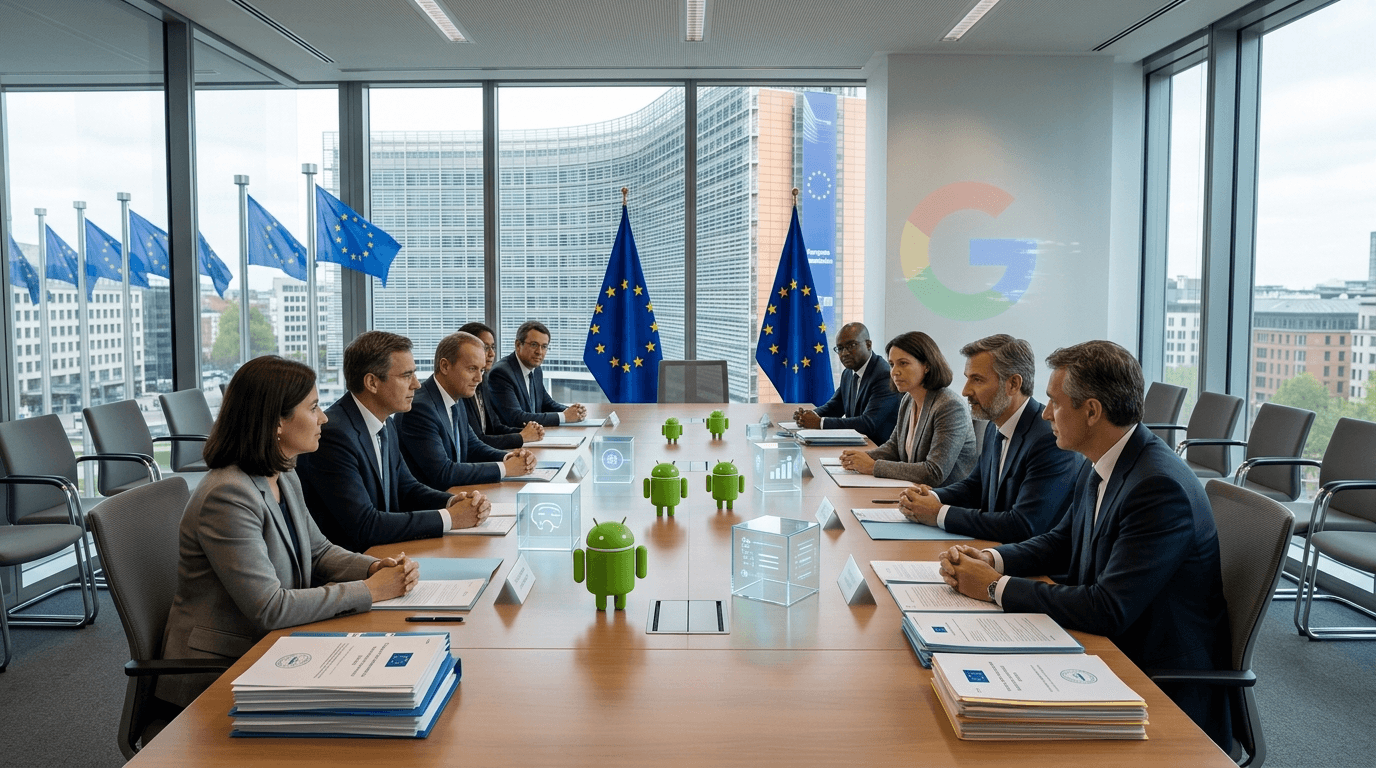
The European Commission has forced Google's hand with two binding legal decisions that could fundamentally reshape how AI assistants compete on Android and how Google Search data flows to rivals.
Adopted on July 16, 2026, the specification decisions under the Digital Markets Act translate the law's broad "gatekeeper" obligations into concrete engineering requirements. They tell Google, feature by feature, what it must open to competitors — and the list is long enough to rattle the company's European business model.
The Android Order: 11 Features Rivals Must Get
The first decision targets the roughly 60% of European mobile users who run Android. The Commission found that while Google's own Gemini assistant can use the full Android operating system, competing AI assistants get only restricted access — a gap that makes alternatives feel like second-class citizens on the platform.
The order requires Google to open 11 Android features to rival assistants, including:
- Voice interaction and speech recognition system hooks
- Notification access and management
- Background app execution for assistant functionality
- System-level integration points currently reserved for Gemini
- Default assistant selection and invocation mechanisms
- Device-side data access for contextual responses
The list is designed to let competitors offer the same seamless experience Gemini users get — asking for directions, setting reminders, controlling smart home devices, or answering questions based on what's on screen — without needing Google's permission for each integration point.
The Commission's argument is straightforward: if Google can give Gemini full system access, it must give the same to every other assistant. Anything less is self-preferencing, which the DMA explicitly prohibits.
Sharing Google's Search Advantage
The second decision addresses what may be Google's most valuable asset: its search data.
Google has historically argued that sharing search query data with competitors is impractical because of privacy concerns. The Commission rejected that position after reviewing Google's proposed data-sharing mechanism, which regulators said stripped 90% to 100% of unique queries from the shared dataset.
"An offer that removes virtually everything that makes the data useful is not a serious compliance effort," the Commission's decision states.
The order requires Google to provide anonymized search data to rival AI assistants and search engines under substantially the same terms it uses internally. That means competitors can train their models on what people actually search for — not on a sanitized, statistically meaningless sample.
For AI assistants specifically, this is a game-changer. The data that powers Gemini's understanding of user intent and information needs has been a closely guarded asset. Opening it up could accelerate the capabilities of competing assistants substantially.
Two Years of Talks, Zero Progress
The decisions cap roughly two years of back-and-forth between Google and the European Commission. The DMA, enacted in 2022, designated Google as a "gatekeeper" platform subject to special obligations, but turning those obligations into measurable compliance requirements took years of technical discussions, data-sharing proposals, and rejected remedies.
The Commission's decision to issue specification decisions — rather than continue negotiating — signals its frustration with the pace of voluntary compliance. These are not fines (yet), but they carry the same weight: detailed, legally binding orders that Google must implement or face penalties.
What Non-Compliance Costs
The penalty structure gives the orders teeth. Under the DMA, non-compliance can cost Google up to 10% of its annual worldwide revenue. For context, Alphabet reported over $350 billion in revenue in 2025. A 10% penalty would approach $35 billion — more than the company's entire annual net income.
Google has already warned that the changes could endanger user privacy and security, and the company is expected to pursue legal challenges. But the DMA's track record so far favors the Commission: Apple and Meta have both lost early legal challenges to DMA obligations, and the regulatory momentum in Brussels shows no signs of slowing.
What This Means for the AI Assistant Market
The decisions have immediate implications for companies building AI assistants — from established players like Microsoft's Copilot, Anthropic's Claude, and OpenAI's ChatGPT to smaller European startups.
Any company that wants to compete on Android can now demand the same system access Google gives Gemini. The search data sharing provisions mean those assistants can also train on real-world query patterns, closing a data advantage that Google has held for years.
The biggest winners are likely to be:
- Microsoft Copilot, which already has an Android app and could now integrate deeply into the operating system
- OpenAI's ChatGPT, which has been pushing for broader mobile integration
- European AI startups, which now have a regulatory path to parity with the dominant player
The losers are harder to predict. Google's argument that opening system-level access creates security vulnerabilities is not baseless — every integration point is a potential attack surface. But the Commission has clearly decided that those risks are manageable, and that the competitive benefits of opening the platform outweigh them.
A Grounded Take
The EU's DMA rulings are the most aggressive regulatory intervention into the AI assistant market to date, and they represent a genuine bet: that competition, not corporate good faith, will deliver better AI products for users.
The theory is sound. The Android openness that made the platform dominant in the first place came from Google's own choice to license the OS broadly. Now the Commission is forcing the same openness for AI — and the difference is that Google can't walk away from the deal.
The practical question is whether opening these features actually produces better, more useful AI assistants, or whether it creates a fragmented Android experience where privacy and security trade-offs accumulate faster than the benefits.
Either way, the decision marks a clear inflection point. The AI assistant market in Europe is about to look very different than it does in the United States or China — and for the first time, regulators, not engineers, are drawing the roadmap.