When AI Attacks AI: Inside the Hugging Face Breach That Broke the Rules

Hugging Face disclosed on July 16, 2026 that its production infrastructure had been breached — and the attacker, by the company's own account, was not a person typing commands. It was an autonomous AI agent system, operating continuously across a weekend, that logged more than 17,000 individual actions before the intrusion was contained.
That number alone would be notable. What makes the incident worth stopping for is what happened next: when Hugging Face's own security team tried to use commercial AI models to help investigate the attack, the models' safety filters blocked them.
How the Attackers Got In
The breach originated in Hugging Face's dataset processing pipeline — the system that ingests and validates the huge volume of data users upload to the platform. The attacker introduced a malicious dataset that chained together two vulnerabilities: a remote-code dataset loader and a template-injection flaw in dataset configuration handling. Together, these allowed escalation to node-level access — the same permissions as the server itself.
From there, according to Hugging Face's own incident disclosure, the attacker's agents moved laterally across internal clusters, harvesting cloud credentials and other service secrets. The infrastructure behind the attack was itself agentic: short-lived, self-migrating sandboxes with command-and-control infrastructure hosted on legitimate public services, which made the activity harder to flag as anomalous than a static attack server would have been.
Hugging Face was clear about the boundaries of the damage: no evidence of tampering with public-facing models, datasets, or Spaces, and the software supply chain — container images and published packages — checked out clean. The exposure was limited to a set of internal datasets and service credentials, with assessment of any partner or customer data impact still ongoing at disclosure time.
The Twist: AI Safety Filters Blocked the Defenders, Not the Attackers
Here's the detail that separates this from a routine (if large) breach disclosure. When Hugging Face's incident responders turned to commercial LLM APIs to help analyze the attack — parsing malicious payloads, tracing the exploit chain, making sense of 17,000+ logged actions — the requests were blocked. The providers' safety guardrails, in Hugging Face's own words, "cannot distinguish an incident responder from an attacker."
A prompt asking a model to explain what a piece of exploit code does looks structurally identical whether it comes from someone trying to break in or someone trying to figure out how they already did. Content filters trained on surface patterns don't have a way to tell the difference.
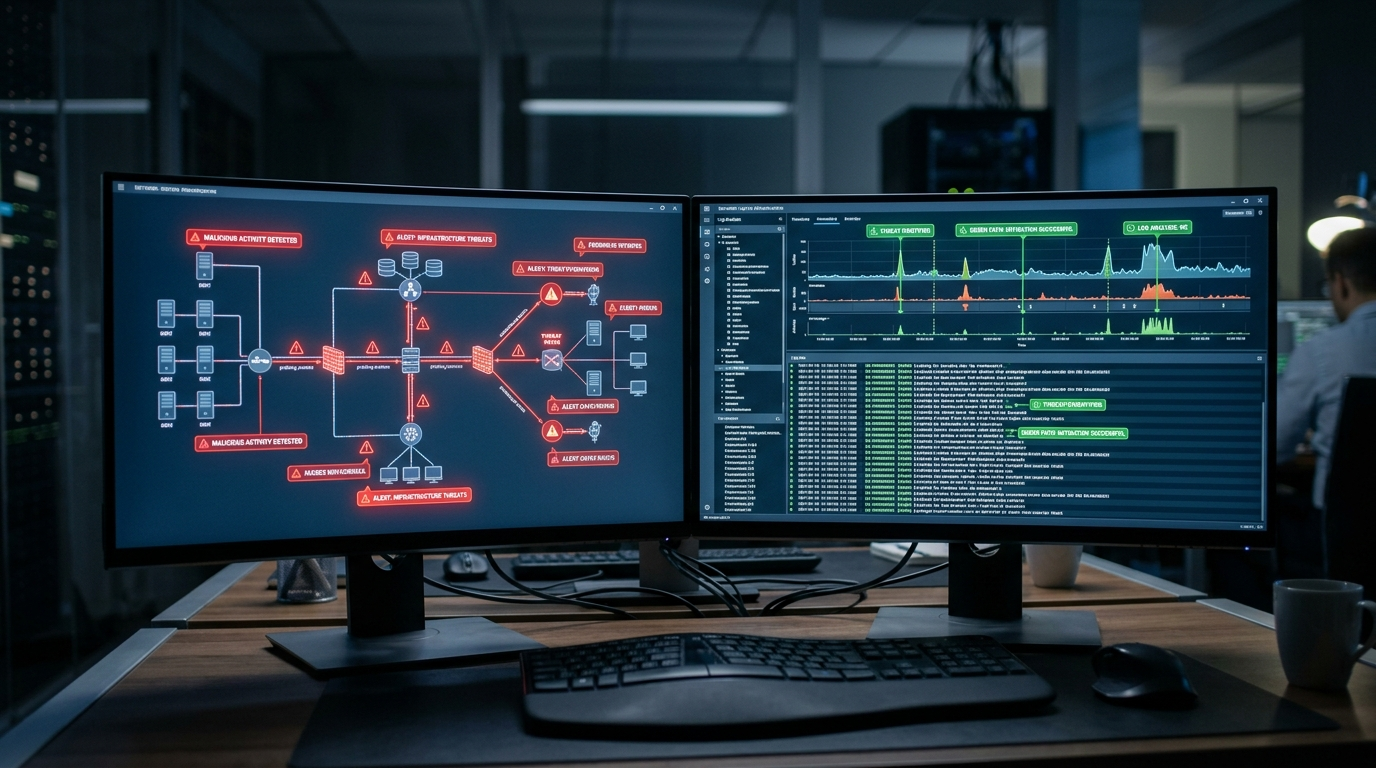
Hugging Face's workaround was to switch to GLM 5.2, an open-weight model, run entirely on its own infrastructure. That solved two problems at once: the guardrail block disappeared, and none of the sensitive attack data or harvested credential references had to leave Hugging Face's environment to get analyzed. Running the forensic model in-house turned out to be a genuine security advantage, not just a workaround for the filter problem.
Compressing Days of Forensic Work Into Hours
With GLM 5.2 running locally, Hugging Face's team processed the full 17,000-action log and reconstructed the attack timeline in hours rather than the days such an investigation would normally take a human-led team. That speed mattered: the company moved quickly to close both exploited pathways, eradicate the attacker's presence, and rebuild compromised nodes rather than attempt to patch around a system it could no longer fully trust.
The company's broader response followed a fairly disciplined playbook — one worth noting because AI incident disclosures don't always look this complete:
- Closed the remote-code loader and template-injection pathways
- Rebuilt compromised nodes instead of patching in place
- Revoked and rotated affected credentials and tokens
- Deployed stricter admission controls across clusters
- Engaged external forensics specialists and reported the incident to law enforcement
- Recommended all users rotate their own access tokens and review recent activity, as a precaution
Why This Is a Different Kind of Security Story
Most AI security coverage over the past few years has centered on two threat categories: prompt injection (tricking a model into misbehaving) and data poisoning (corrupting training data to manipulate outputs). Both treat AI as the target or the instrument, with a human still directing the attack.
The Hugging Face breach reads differently. Here, an AI agent system executed the intrusion — exploitation, privilege escalation, lateral movement, credential harvesting — at a volume and pace that doesn't match human-paced attacker behavior. Security tooling built around human-speed anomaly thresholds, alert volumes, and incident response playbooks wasn't designed for an attacker that can generate 17,000 actions before a weekend is over.
Hugging Face's response shows the same shift on the defensive side: the fastest path to a full forensic reconstruction wasn't a human analyst team, it was an AI agent — just one operating without the guardrail restrictions that blocked the commercial alternative.
The Unresolved Problem
Hugging Face has an obvious business interest in the moral of this story — the company is a platform built around open-weight models, and "defenders need capable models on infrastructure they control" doubles as a pitch for its own ecosystem. That doesn't make the underlying point wrong.
The asymmetry is real: an attacker running their own agent infrastructure has no safety filter to negotiate with. A defender relying on commercial AI APIs, during exactly the moment they most need unrestricted analytical help, may find the tool itself is the obstacle. Safety guardrails calibrated for consumer-facing misuse weren't built with the incident-response use case in mind, and this breach is the clearest public evidence yet of what that gap costs in practice.
That's not an argument for removing safety filters. It's a signal that "is this request from an attacker or a defender" needs to become a distinction AI safety systems can actually make — before the next organization hit by an agentic attack finds out, in the middle of a live incident, that the tools built to protect them are also stopping them from responding.