Samsung leads record $3.5B Mistral round, Europe's largest tech funding ever
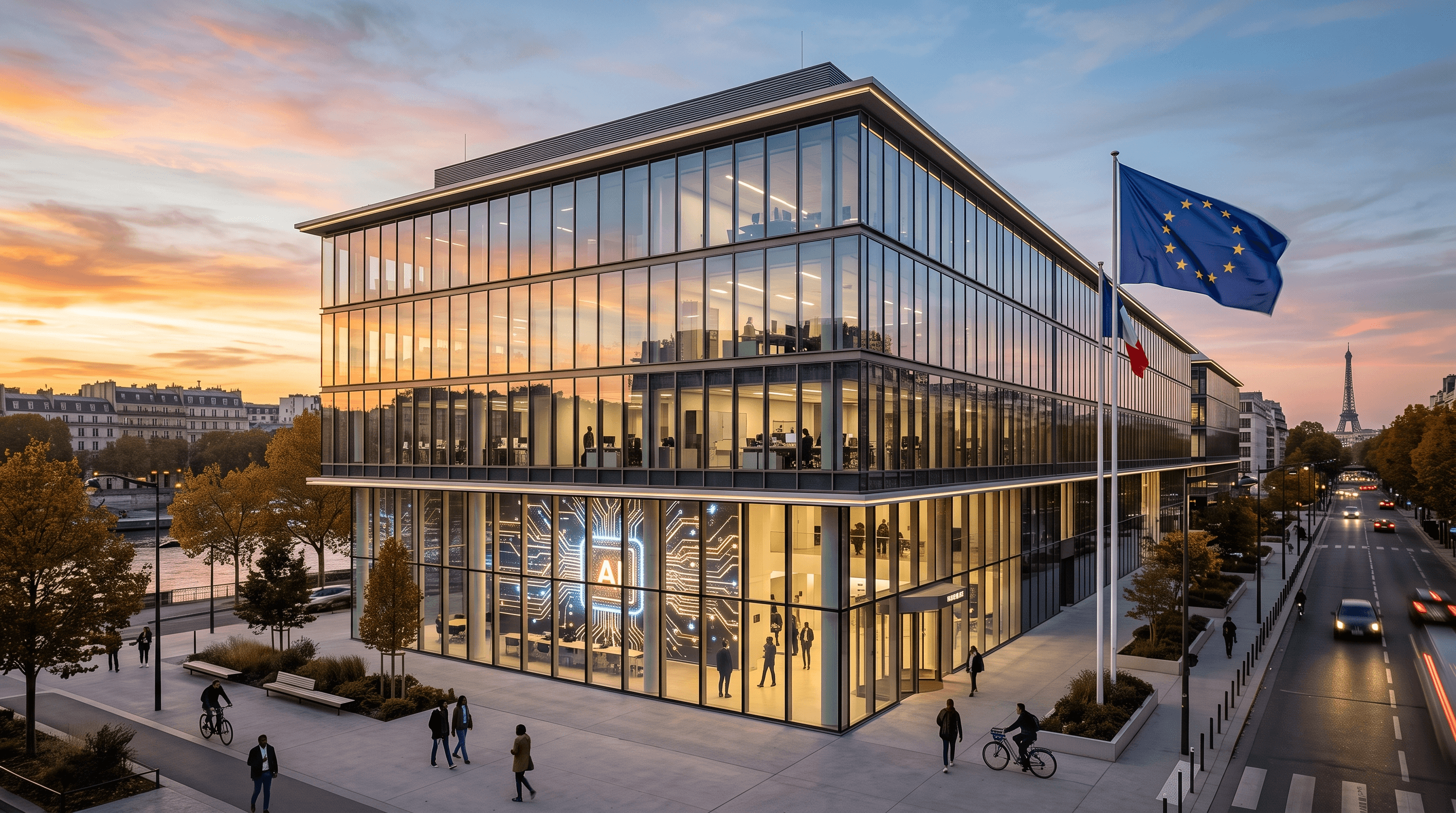
For years, the AI industry has operated on a simple geography: America builds the frontier models, China copies them, and Europe writes the regulations.
A French startup just rewrote that map.
Mistral AI, the Paris-based company founded just three years ago, has closed a 3 billion euro Series D funding round at a post-money valuation exceeding 21 billion euros. The round is the largest single equity fundraising ever completed by a European technology company, surpassing records set by Spotify, Celonis, and every other European tech name before it.
The person signing the check makes the story even more interesting. Samsung Electronics, the Korean semiconductor and consumer electronics giant, led the round. The chipmaker has no direct European AI footprint and has never led a European tech round of this size. Scaleup Europe Fund, managed by EQT, and existing investor PSG Equity joined as co-leads. New investors include Advent, funds managed by BlackRock, and the Grand Duchy of Luxembourg.
A full-stack pivot
Mistral's earliest pitch was a straightforward one: open-weight models that rivaled proprietary US systems at a fraction of the cost. The company released models like Mistral 7B and Mixtral 8x7B, and its technology powers products from enterprise customers including Airbus, ASML, and HSBC across 20 countries.
The strategy has shifted. Mistral now positions itself as the only AI company building the complete stack: open-weight models, the infrastructure layer to run them, and the compute capacity to power both. The company calls this a "sovereign AI" approach, where organizations can deploy AI without exposing their most valuable data, workflows, and institutional knowledge to external cloud providers.
"During the first wave of generative AI, the central question was who could build the most powerful model," the company said in its announcement. "Organizations and governments are now asking a different one: how to harness the power of AI for genuine productivity gains without surrendering control."
The round reflects investor appetite for that vision. The syndicate spans Europe, Asia, and North America, bringing together technology investors with industrial and financial backers. Mistral's Series C was led by ASML, the Dutch semiconductor lithography giant, and the new Series D deepens that industrial connection.
The numbers behind the record
The 3 billion euro round, approximately 3.5 billion dollars, more than doubles Mistral's valuation from its previous round. The company was worth about 12 billion euros after its Series C, led by ASML, and also took out an 830 million dollar loan in March 2026.
The new valuation of 21 billion euros places Mistral among the most valuable private AI companies globally, behind only OpenAI, Anthropic, and xAI. It surpasses Databricks and Stability AI in private market valuation.
The 3 billion euro figure is striking not just for its size but for what it says about the market. European venture capital has historically struggled to produce AI companies that compete at the frontier. Mistral's round alone is larger than the total AI venture funding in most European countries in 2025.
Why Samsung is the surprise
The lead investor is the most unexpected detail. Samsung Electronics is best known for its consumer devices, memory chips, and display panels. The company has made AI investments before, including participation in the 2024 Writ Large funding round, but it has never led a European tech round of this magnitude.
The deal signals a strategic bet from Samsung. The Korean company's semiconductor division competes with TSMC and SK Hynix in the AI chip market, and Mistral's compute needs will require significant hardware. Samsung's investment guarantees a seat at the table as Mistral scales its infrastructure, potentially opening a channel for Samsung's memory and foundry businesses.
The partnership also offers Samsung access to Mistral's enterprise customer base, which includes many of Europe's largest industrial companies. For a Korean conglomerate looking to expand its AI hardware business beyond Asia, the investment is as much about distribution as it is about returns.
European AI sovereignty in practice
Mistral's full-stack strategy has a political dimension that the funding round amplifies. European governments and institutions have grown increasingly uneasy about their dependence on US cloud providers for AI infrastructure. Data stored on AWS, Azure, or Google Cloud is subject to US law, including the Cloud Act, which creates tension with European data protection rules.
Mistral's pitch is that its open-weight models, deployed on infrastructure the customer controls, eliminate that dependency. The company's approach lets organizations keep their data within their own legal and geographic boundaries while still using frontier AI models.
The Grand Duchy of Luxembourg's participation in the round as a new investor underscores the political dimension. Sovereign wealth funds and state-backed investment vehicles across Europe are increasingly directing capital toward AI infrastructure that can operate independently of US hyperscalers.
What comes next
Mistral operates in 20 countries and serves more than 125 enterprise customers. The company has not disclosed its revenue figures, but its customer roster includes Airbus, ASML, HSBC, and other major European industrial and financial institutions.
The new capital will fund expansion of Mistral's compute capacity. The company has already built several data centers in Europe, and the Series D proceeds will accelerate that buildout. Like every major AI company, Mistral faces a compute bottleneck that becomes more acute as model sizes grow.
The company's open-weight approach also gives it a different competitive position. While OpenAI and Anthropic keep their most capable models behind API paywalls, Mistral releases weights that anyone can run. That strategy limits direct revenue from API access but builds an ecosystem of developers and enterprises that depend on Mistral's technology stack.
The risk is that Mistral spreads itself too thin. Building open-weight models, running infrastructure, and operating compute capacity simultaneously is a capital-intensive strategy that few companies have attempted. The 3 billion euro round gives Mistral the runway to try, but it also raises expectations for what the company will deliver.