Spotify Just Drew a Line Between Human and AI Music
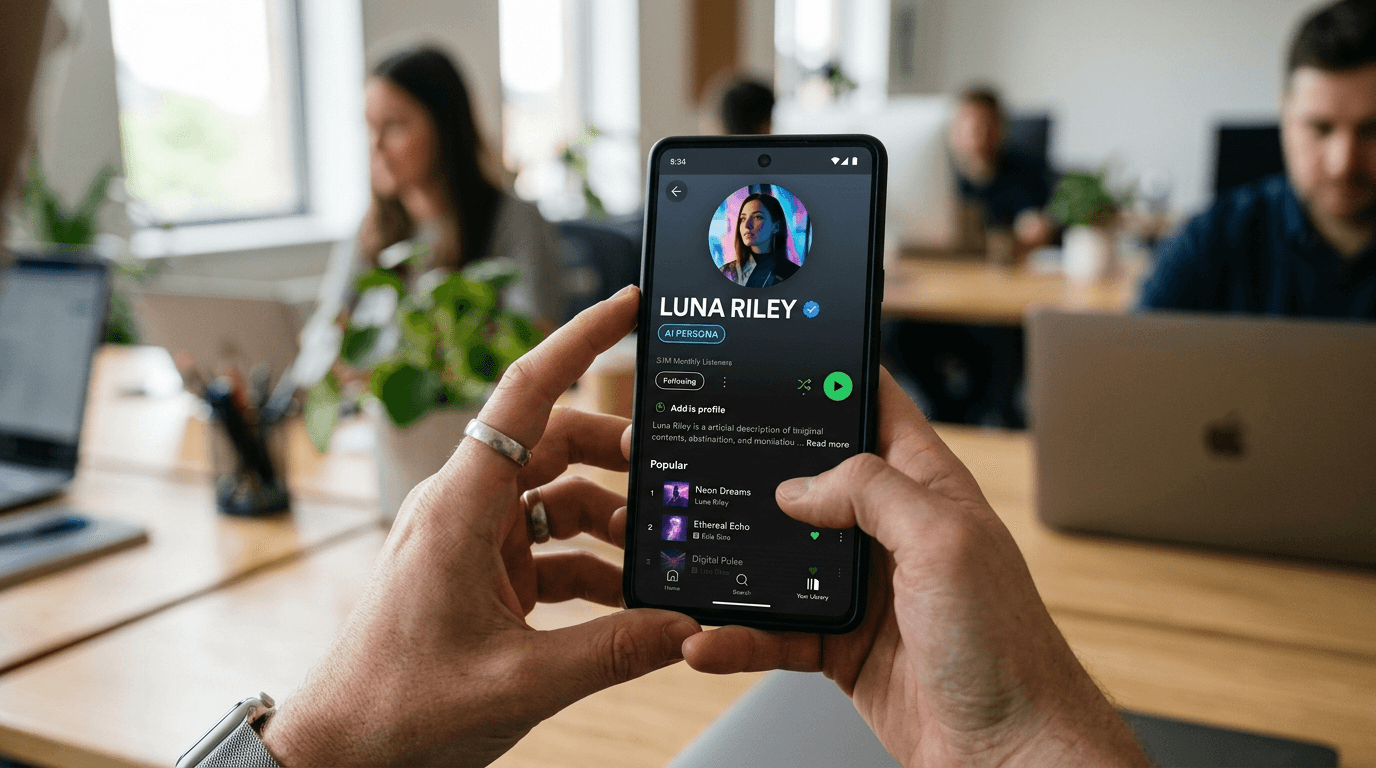
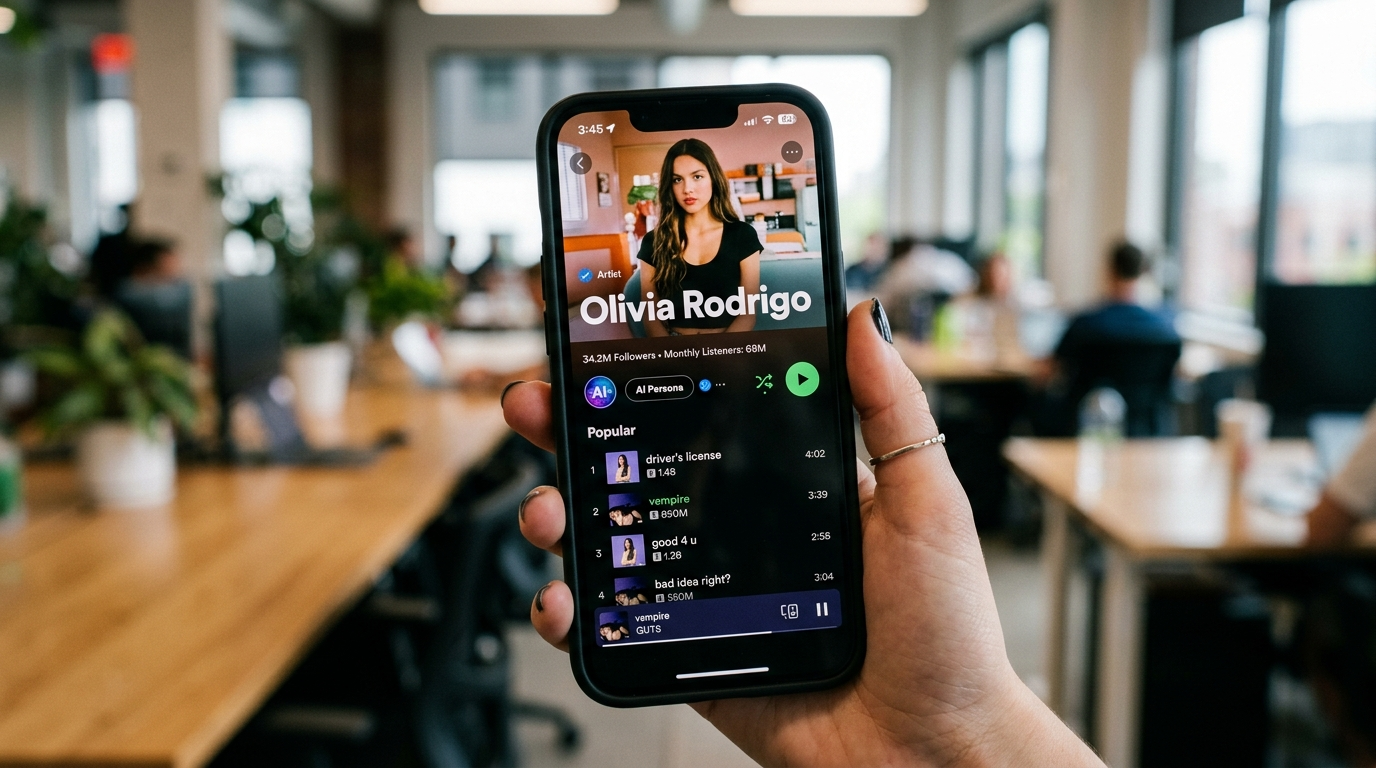
Spotify isn't banning AI-generated music. It's doing something arguably more consequential: it's quietly making sure the algorithm won't play it.
Starting mid-September, the streaming platform that shapes what 500 million listeners hear will begin labeling artist profiles with an "AI Persona" badge, and by default, those artists' music won't appear in editorial picks, algorithmic playlists, or personalized recommendations. If you don't follow an AI Persona, you'll never find their music through Spotify's suggestion engine.
The policy, in plain terms
Here's what Spotify's new rule actually does:
Artist profiles whose name and imagery represent an AI-generated or photorealistic non-human identity get an "AI Persona" badge. The badge shows up on the profile banner, the About section, Search results, and track rows across playlists. Tap it, and you'll see whether the artist self-disclosed their AI identity or was flagged by Spotify's review team.
Music from those profiles is excluded from editorial suggestions and algorithmic recommendations by default. The only exception: listeners who explicitly follow an AI Persona will still hear their music in personalized feeds.
Spotify is not relying on the honor system. Artists can self-disclose starting August 11, 2026 through Spotify for Artists, but the company will also run its own checks. Human review teams and internal AI tools will scan profiles, starting with the artists who have the largest audience. If Spotify's review team applies the badge, the artist is notified and can appeal. In the coming months, listeners will also be able to report profiles they believe should be labeled.
Not a ban on AI music, a ban on AI personas
There's an important distinction here. The AI Persona badge is about the artist's public identity, not about how the music was created. An artist who uses AI tools in their production process but presents as a real human would not get the badge. Conversely, a profile that looks like a photorealistic person who doesn't exist, even if a human writes every lyric, would be flagged.
This means the policy creates an interesting category: music that is partially or heavily AI-assisted is fine, as long as the face on the profile belongs to an actual human. Spotify already has separate tools for that kind of transparency: AI Credits and SongDNA let artists disclose how AI was used in the creative process.
As Spotify itself put it: "the question of whether a profile represents an actual human is one where Spotify can help make a clear determination."
The AI music flood is real
The move comes as AI-generated tracks are overwhelming streaming platforms at staggering scale. Deezer recently revealed that AI-generated music now makes up half of its daily song uploads. The volume is so high that platforms can no longer treat it as a niche issue, it's becoming the default.
Meanwhile, industry groups are scrambling to catch up. The RIAA, the Grammys, and SAG-AFTRA launched their own AI music labeling program in July 2026, signaling that the entire music industry sees this as an urgent problem.
Spotify itself has a complicated relationship with AI. The company aggressively builds AI-powered features: Prompted Playlists, an AI DJ that talks to you, and AI-powered chat. It has also signed licensing deals to permit AI remixes and covers on the platform. The new AI Persona policy is Spotify's attempt to have it both ways, embrace AI as a creative tool while walling off AI-as-identity from the discovery engine that drives the platform.
What this actually changes
The immediate effect is subtle but structural. AI Persona artists don't disappear from Spotify, they just become invisible to the discovery layer. A listener who knows what they're looking for can still search for and follow an AI Persona. But the casual listener, the one who depends on Discover Weekly and Release Radar to find new music, will never encounter them. Over time, that creates two separate music economies: human artists surfaced by the algorithm, and AI artists discoverable only by deliberate search.
That's a bigger deal than it sounds. Spotify's recommendation engine is arguably the most powerful gatekeeper in the modern music industry. Being excluded from it, even by default rather than by ban, is effectively being exiled from the mainstream discovery pipeline. It's the difference between a store putting your product on the front shelf versus stacking it in the back room where only people who ask for it will find it.
A line in the sand
Spotify's AI Persona policy is not a dramatic ban. It's a quiet, technical decision about how recommendation algorithms treat certain profiles. But those are exactly the kind of decisions that shape markets. The platform that controls discovery for half a billion people has drawn a line: you can be AI, but you can't be recommended.
Whether that line holds as AI music gets better at sounding human is another question entirely.
Sources
- Spotify: Introducing a New Label for AI-Generated Artist Identities (Spotify For the Record)
- Spotify will label 'AI Persona' profiles and exclude their music from recommendations (TechCrunch)
- Spotify will apply an 'AI Persona' badge to AI-generated artist profiles (The Verge)
- Spotify to label AI artists and remove them from recommendations (Los Angeles Times)
- Spotify Strikes Back Against AI Artists With 'AI Persona' Label (Variety)
- Spotify to distinguish AI artists from real people, and stop recommending them (The Guardian)
- Spotify to Label AI Artists on the Platform With New 'AI Persona' Badge (Billboard)
- RIAA, Grammys, SAG-AFTRA and Other Groups Launch New Labeling Program for AI Music (Variety)