Ukraine's War Footage Now Trains AI Drones
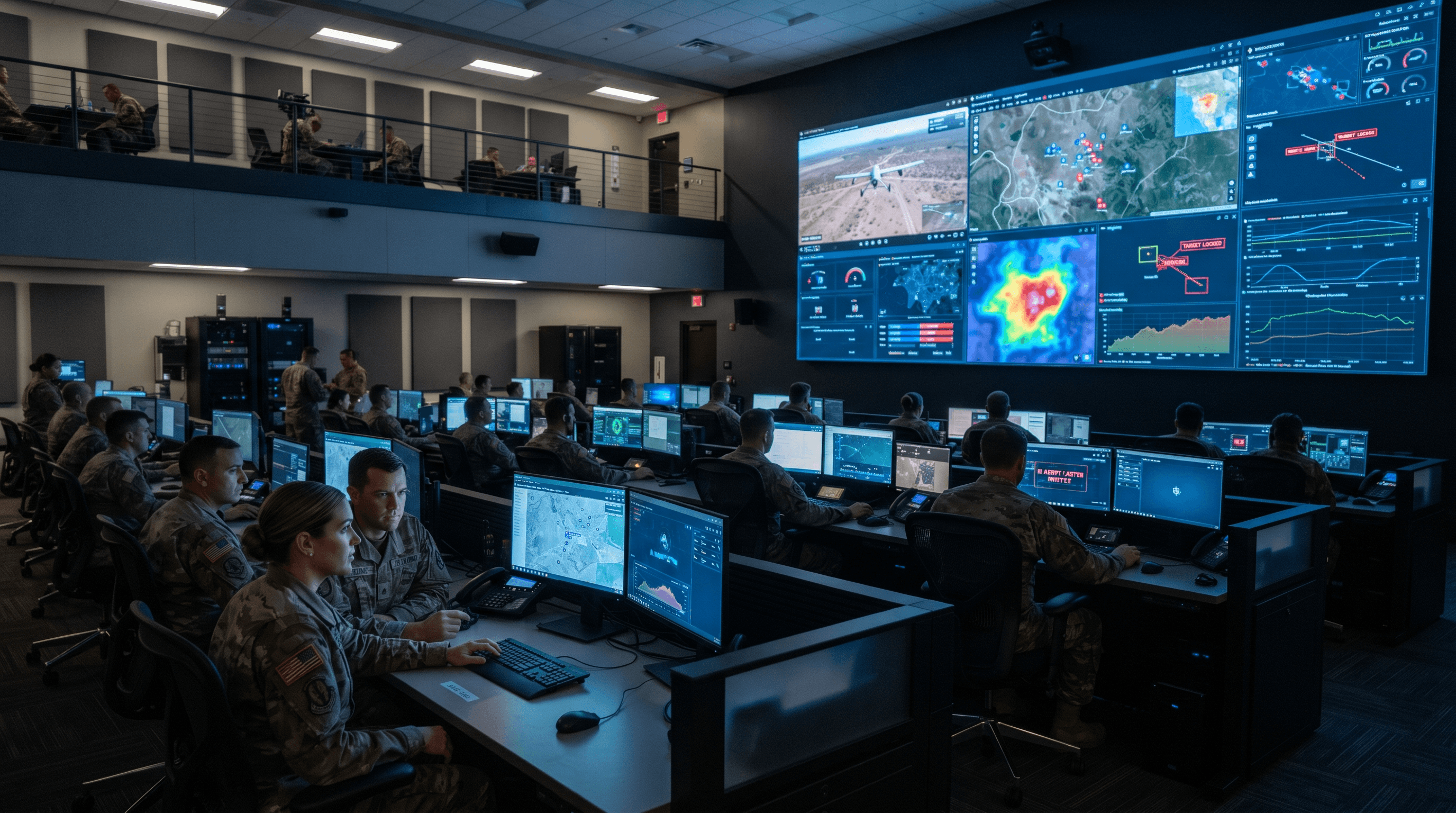
It is one thing to train an AI on synthetic data in a lab. It is another to train it on five million images from an actual warzone, where every labeled tank, drone, and artillery piece was verified by a human who watched it fire.
That line has just been crossed. Ukraine has opened its Avengers Labs data platform to British defense firms and researchers, making the UK the first country to access a classified dataset of real combat imagery. The partnership, signed by Prime Minister Andy Burnham and President Zelensky in Kyiv, marks a turning point in how autonomous weapons systems are trained -- no longer on simulations, but on the actual footage of war.
Real Combat Data Is the Rare Resource
The platform draws on millions of observations gathered from thousands of cameras and sensors along Ukraine's front line. According to Ukraine's defense ministry, a system trained on this data now processes more than 100,000 drone video streams per month. The core of the dataset is the so-called Universal Military Dataset: a manually labeled collection of combat imagery from drones and acoustic sensors, used to train models that classify military equipment in real time.
Until now, this data was shared only with Ukrainian domestic firms, giving local drone makers an edge over foreign rivals whose image recognition was trained on synthetic data and performed worse in combat. "High-quality, labeled battlefield data is one of the biggest constraints on developing reliable AI for autonomous systems," Misha Nestor of Swarmer, a Ukrainian drone software company, told the Financial Times. Ukraine has built something "extremely difficult to replicate anywhere else," he said.
The deal centers on roughly five million annotated images, with much of the material coming from the DELTA digital combat system -- a platform that ties together drone feeds, satellite imagery, and sensor data into a real-time picture of the battlefield. Approved British firms can only train their models inside a secured dataroom built in partnership with Palantir, and any finished AI system stays with Ukraine. One detection system already in the field identifies 70 percent of enemy equipment shown in video streams, requiring just 2.2 seconds per object.
Three British startups are already running pilot projects: Sintela (Bristol) is working on fiber-optic cable sensors that can detect threats through buried infrastructure; Mind Foundry (Oxford) is developing low-power AI chips for autonomous drones; and Skyral (London) is building acoustic detection systems for incoming Russian drones. The UK's military is especially interested in acoustic sensor data, which trained properly can be more accurate than radar at identifying incoming threats.
From Target Tracking to Autonomous Kill Decisions
What this data ultimately trains falls into three stages of drone autonomy. The first stage -- autonomous navigation without GPS -- and the second -- last-mile target tracking, where a human selects the target and the AI follows it -- have been in use in Ukraine since 2024. The third stage, autonomous target selection, where the machine itself decides which object to attack, is now the subject of intense debate.
Ukraine's interceptor drones already operate about 95 percent autonomously. Swarmer's software coordinates drone swarms in over 100 real missions. In April 2026, Ukraine tested a fully autonomous AI system in occupied Crimea that hit fuel depots and military equipment without civilian casualties, according to recently dismissed defense minister Mykhailo Fedorov.
But the other side is also using this technology. In July 2026, a Russian Molniya drone killed three civilians in the city of Zaporizhzhia, among them 19-year-old student Tetiana Bubynets. Operators had programmed the drone to hit a gas station, but the software itself picked the specific target -- likely propane tanks near the station. Forensic investigators found an Nvidia Jetson Orin computer on board that made the targeting decision. Kateryna Bondar of the Center for Strategic and International Studies calls it the first documented case in which a Russian drone with a self-selecting AI system caused civilian deaths.
This is not the first autonomous deadly drone strike anywhere in the world, but it is the first documented Russian case with civilian casualties -- and it shows how thin the line has become between assisted targeting and autonomous killing.
The New Arms Race Is in Data, Not Just Hardware
The Ukraine-UK deal is framed as part of a "100 Year Partnership" between the two countries, but the practical implications are immediate. While the world debates whether to ban autonomous weapons, Ukraine is sharing the actual training data that makes them work. British defense contractors now have access to a labeled combat dataset that no simulation can replicate -- and the resulting AI systems will not stay in the lab.
What makes this data so valuable is also what makes it so uncomfortable: it was collected in real time, under real fire, with real consequences for every labeling error. A model trained on synthetic data that fails to identify a tank is a research note. A model trained on this data that succeeds is a weapon.
The deal also raises a question that the industry has not yet answered: if the best military AI is trained on actual battlefield data, and the only way to get that data is to fight a war, what happens to countries that do not have a war to feed into their algorithms?
Sources
- The Decoder: Ukraine opens its massive labeled battlefield dataset to British firms in a landmark AI weapons partnership
- Financial Times (via The Decoder): UK-Ukraine AI partnership background and data platform details
- Reuters: UK, Ukraine sign AI defence partnership linked to battlefield technology
- The Guardian: UK to use Ukraine battlefield data to train AI to protect sensitive sites
- New York Times (via The Decoder): Russian Molniya drone autonomous targeting incident in Zaporizhzhia