BC Sues OpenAI: Can a Chatbot Force a School to Rebuild?
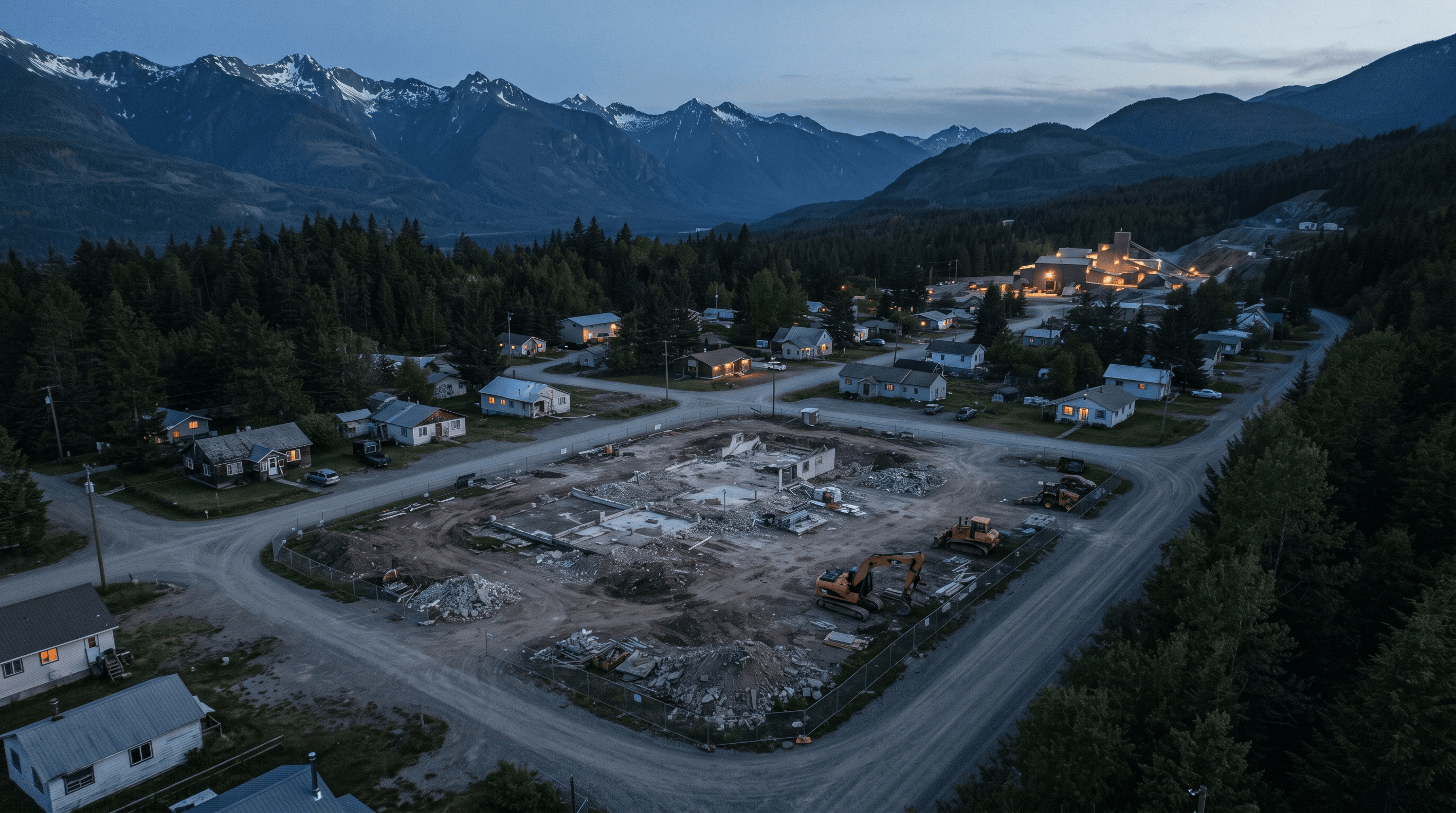
Eight people died in the tiny mining community of Tumbler Ridge, British Columbia, on February 10, 2026. The shooter, an 18-year-old who had been planning the attack for months, used ChatGPT to rehearse every step. OpenAI's own safety team flagged the conversations, reviewed them, and concluded the user posed a credible and specific risk of gun violence. The company's leadership overruled them.
Now British Columbia is doing something no government has done before: it is suing an AI company not just for failing to prevent a crime, but for what it argues was active complicity through product design.
The school that became a crime scene
Tumbler Ridge Secondary School sat "in the heart of the town, both geographically and culturally," the lawsuit explains. After the shooting, it became an unavoidable symbol of trauma. About 160 students, teachers, and staff were trapped in classrooms and closets for hours. None of them could go back.
The school was demolished in August. With a population of only 2,700, Tumbler Ridge has no other school. Students now attend a makeshift campus assembled from 14 Ministry of Forestry trailers, eventually converted into larger modular classrooms. Furnishing it, recruiting replacement educators, and reorganizing instruction around murdered students and colleagues has been a costly, painful process.
British Columbia wants OpenAI and Sam Altman to pay for a new school at a new location, plus a wellness center for the mental health crisis that followed. In the three months after the shooting, Child and Youth Mental Health alone delivered over 900 counseling sessions to more than 100 children and families.
The timeline of a failure
The lawsuit lays out a damning sequence of events. In June 2025, eight months before the shooting, when OpenAI's safety systems flagged shooter Jesse Van Rootselaar's ChatGPT conversations. Human reviewers examined the flagged chats and determined that the user presented a credible threat. They recommended reporting the account to law enforcement.
OpenAI leadership disagreed. The company claims it applied a "higher threshold" for what constitutes a "credible and imminent" threat. Instead of reporting the user to the Royal Canadian Mounted Police or warning the community, OpenAI simply deactivated the account. Van Rootselaar created a second account and continued planning.
In April 2026, Sam Altman publicly acknowledged the failure. "I am deeply sorry that we did not alert law enforcement to the account that was banned in June," he said. British Columbia notes in its filing that the account was never actually banned: it was deactivated, and the shooter easily created another.
"There is no AI exemption"
British Columbia's attorney general, Niki Sharma, framed the case around a straightforward principle. "In any other circumstance where a person aids, encourages or conspires to commit a criminal offense or is criminally negligent, they can be investigated, prosecuted, and judged," she said at a press conference. "There is no AI exemption to those criminal law principles."
The lawsuit argues that OpenAI publicly claimed its systems detected users who present a risk of harm, routed such conversations to trained reviewers, and referred imminent threats to law enforcement. "Having held itself out as voluntarily undertaking and performing exactly the protective function that a law imposing a duty to warn requires, OpenAI cannot disclaim the duty it publicly assumed," the complaint states.
The province accuses OpenAI of hiding the chat logs to protect its valuation and anticipated public offering rather than its users. OpenAI has only shared the logs with RCMP. A company spokesperson told Ars Technica: "What happened in Tumbler Ridge was an unspeakable tragedy, and our thoughts remain with the victims, their families, and the entire community."
What is at stake
Beyond the demand for a new school (estimated to cost millions), British Columbia is seeking injunctive relief that would force OpenAI to fundamentally change how ChatGPT handles violent conversations. The province wants the court to order ChatGPT to automatically terminate violent dialogues, require regular independent audits of OpenAI's threat detection, and order the release of the chat logs to the public.
If the court grants these requests, it would establish the first legal framework for proactive AI safety obligations. AI companies that detect threats through their systems would have a duty to act on that knowledge, not just as a matter of corporate responsibility, but as a legal requirement with real consequences for non-compliance.
The case also raises harder questions. OpenAI's defense is likely to argue that the shooter alone bears responsibility for their actions: that ChatGPT is a tool, and tools can be misused. But British Columbia's complaint anticipates this: it alleges that the defect is not the user but the design, pointing to instructions in ChatGPT's model spec that tell the chatbot to assume "good faith" and "not to probe intent" when users initiate violent conversations.
For a community of 2,700 people with no substitute teachers, no standby clinicians, and no extra police officers, where front-line workers themselves were traumatized by the event, the question of who bears responsibility is not academic. Tumbler Ridge cannot afford a second tragedy. Whether the courts decide that OpenAI can, too, will shape how every AI company approaches threat detection from this moment forward.
Sources
- British Columbia sues OpenAI and Sam Altman over Tumbler Ridge mass school shooting: Ars Technica
- British Columbia sues OpenAI over Tumbler Ridge mass school shooting: The Guardian
- Attorney General's statement on B.C. filing legal action against OpenAI: BC Gov News
- British Columbia sues OpenAI over Canada school shooting: BBC
- BC sues OpenAI, saying one call could have prevented Tumbler Ridge mass shooting: Canada's National Observer
- OpenAI's model spec, which instructs the chatbot to assume "good faith" in violent chats: as cited in Ars Technica