Flock's AI IDs Anyone, No Crime Needed
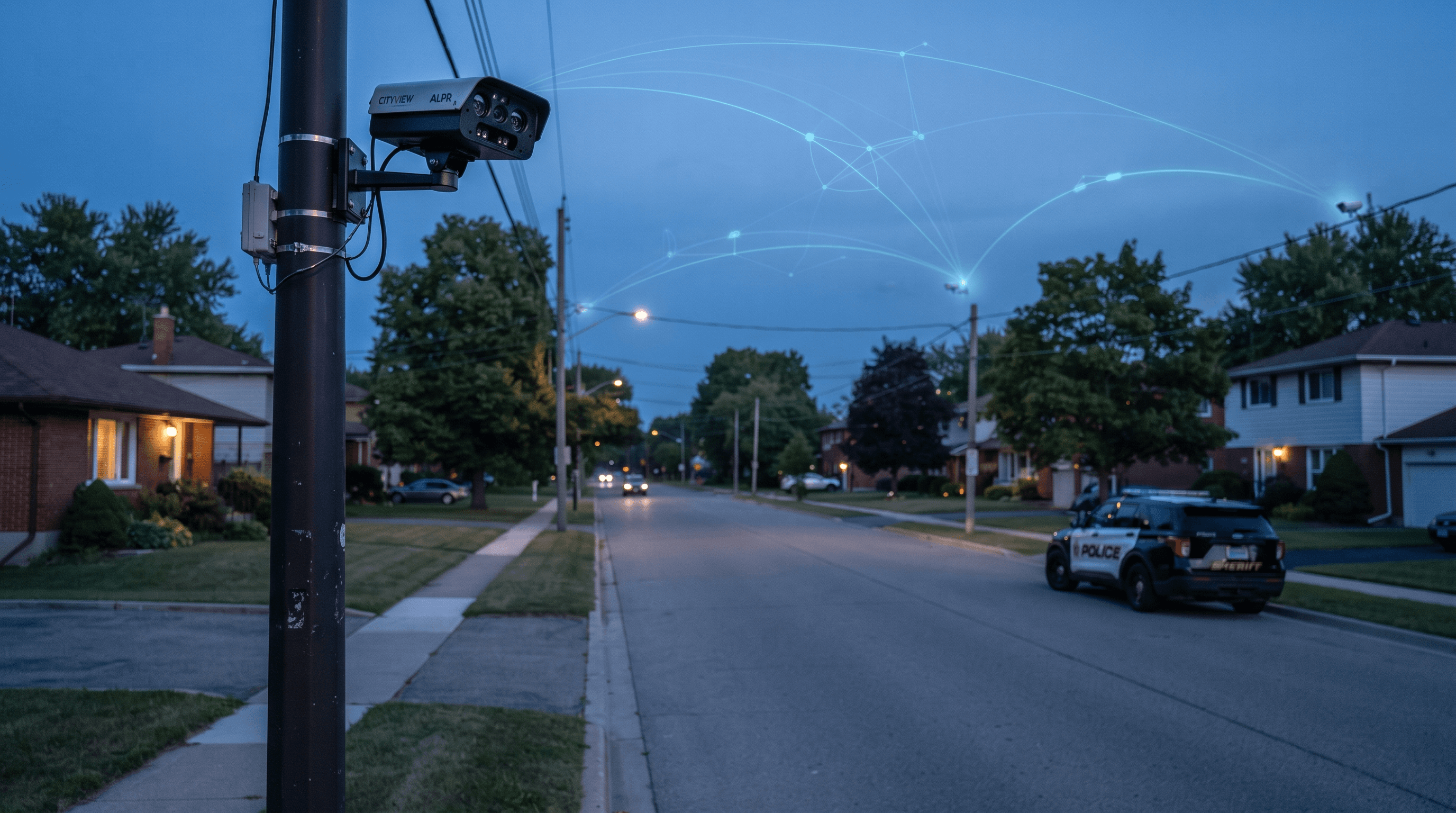
Vehicle surveillance giant Flock Safety has told the public for years that its technology "cannot recognize, identify, or track individuals." It has now built a system that does both -- an AI tool for police that can identify drivers and track them by their patterns of movement alone, no plate, no name, and no crime needed.
WIRED obtained the full code. It's called OS Investigate, and it ships with 69 prewritten prompts.
From plate checks to pattern hunting
Flock built its $7.5 billion business on a simple promise: a camera photographs a passing car, converts the plate to text, and checks it against a list of vehicles police are already looking for. Cars not on the list are recorded and otherwise ignored. The company's own trust pages tell customers its technology is built for specific, case-based investigations and "not for watching people."
OS Investigate describes an inversion of that arrangement. An officer no longer needs a plate, a name, or a crime to begin. They supply a place, a stretch of time, and a behavior pattern -- and the system is designed to hand back the people who fit.
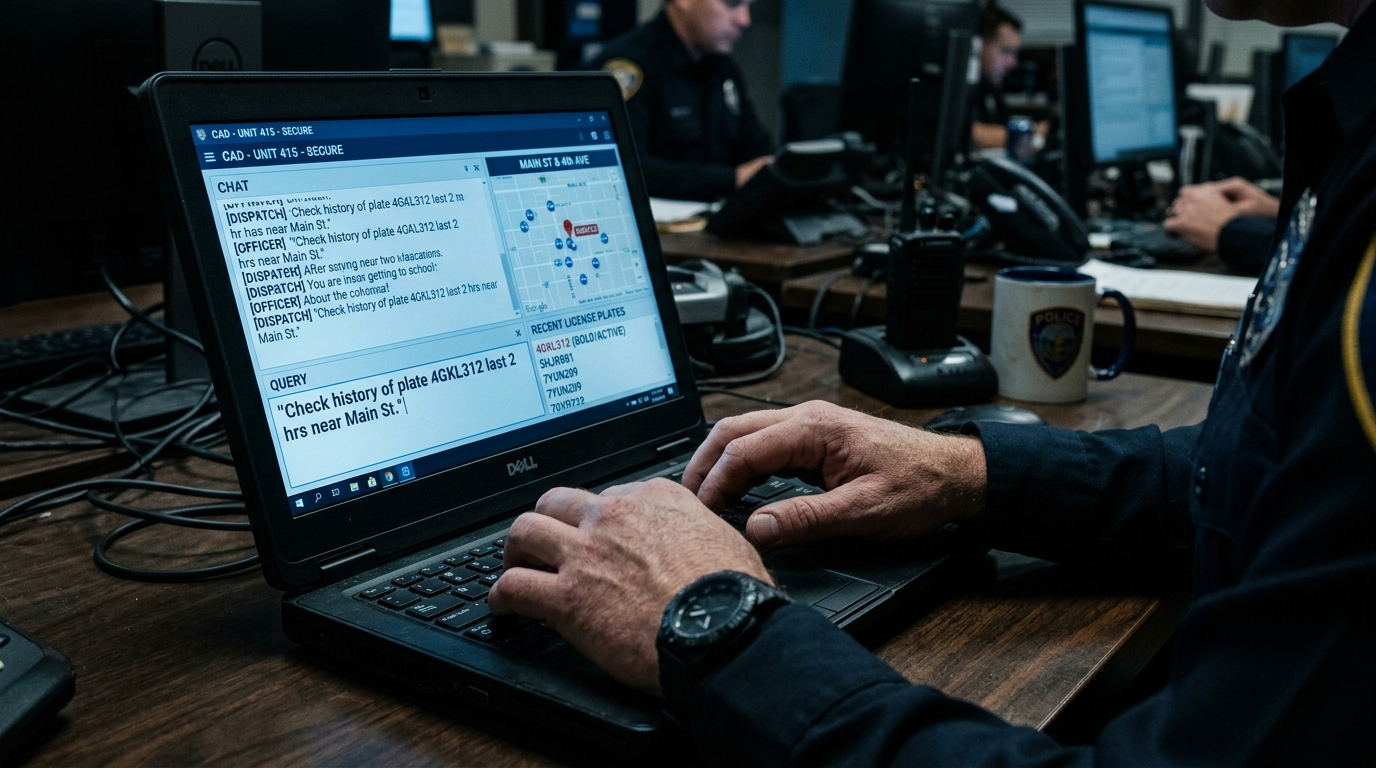
The AI has access to 45 tools: Flock's network of 20 billion monthly plate scans from 6,000 communities, arrest records, case files, 911 dispatch logs, ballistics results, and commercial databases that contain Social Security numbers, dates of birth, phone numbers, email addresses, relatives, and associates. Officers type prompts into a chat box -- or select from a menu of 69 prewritten ones -- and the system returns names, home addresses, and movement histories.
The prompts Flock wrote for itself
Some of the 69 prompts give police powers the company previously said its technology could not do. One reads: "Find me witnesses based on vehicles most seen in [neighborhood] during [last 14 days] during [daily timeframe]." The officer fills in the blanks and submits. The output is a list of plates, which other tools convert into names and home addresses.
Another prompt instructs the system to list everyone arrested more than twice in two years for "any offense" (excluding only narcotics), map where those people live, retrieve the calls for service at their homes, and "do a workup on the top 3 individuals." A "workup" returns vehicles, prior suspect listings, relatives, phone numbers, and online accounts -- all in one command.
Several prompts describe hunting for patterns rather than looking up a record. Fourteen call for no plate, no name, and no description at all. The officer simply supplies a location, a time window, and a behavior. One group asks for vehicles that visited three or more retail locations in a city in three days, or multiple banks in a week, or multiple gas stations between midnight and 5 am. A built-in filter strips out buses, semi trucks, work vans, and trailers so delivery drivers are excluded and ordinary drivers remain.
Then there is the associate finder. It counts how often other plates appear within a two-minute window of a target vehicle and reports any car that shows up next to it three or more times with a confidence threshold of 0.75. The officer supplies one plate. The software finds up to 20 associates.
The company's promises, exposed by its own code
Flock's long-held position has been that its cameras record plates and not the drivers behind them. CEO Garrett Langley once told Vanity Fair that Flock would have solved the disappearance of Nancy Guthrie had its cameras been deployed where she vanished. The company's tagline: "the first public safety operating system that eliminates crime."
The gap between those claims and what OS Investigate does is visible in the code itself. The system can search for people in an area drawn on a map based on a physical description: "male, ~6ft, black hoodie, forearm tattoo." It can filter by sex, race, ethnicity, height, weight, build, scars, marks, and tattoos from police records.
The disconnect comes against a mounting record of officer abuse. A Texas officer searched more than 83,000 Flock cameras across the country while looking for a woman who had a self-administered abortion, according to logs obtained by 404 Media. The Washington Post found 50 officers charged with or accused of misusing plate reader systems -- 26 of them to track wives, girlfriends, exes, and women they wanted to meet. The Electronic Frontier Foundation reviewed over 12 million searches logged over 10 months and found that roughly 20 percent gave only a vague reason like "investigation," "suspect," or "query," while more than 50 agencies ran hundreds of searches referencing protest activity.
Why experts are alarmed
The Supreme Court held in June that people keep a privacy interest in records of where they have been, and that the Fourth Amendment applies when police demand those records from a company. OS Investigate inverts that protection: police departments buy the capability outright, opening space for fishing expeditions on a scale the ACLU says has no precedent.
Jay Stanley of the ACLU reviewed the prompts for WIRED. "In some ways, like China, very little space between what can be done and what is being done," he said. Noel Pichardo, a former Rhode Island police officer who spoke out against Flock technology before state lawmakers, was more direct after seeing the code: "I don't know how anyone can argue against the idea that Flock literally tracks people."
Chad Marlow, the ACLU attorney leading its "Get The Flock Out" campaign, worries about the officer who asks an AI which people it considers most likely to be committing crimes. "It's going to develop not a legal standard of criminal suspicion, but whatever that AI standard is."
The safeguards that arrived late
Flock announced last week that it will monitor for abnormal searches, lock out flagged users automatically, and require officers to attach case codes to their searches -- by the end of 2026. The audit tool that scans an agency's own searches arrived in April 2026, a year after officers began facing consequences for misuse.
That timeline matters. By the time the guardrails show up, OS Investigate will already be in the field. Job postings show the company is hiring engineers to "drive the architectural evolution" of the system, wire it into Flock's larger data platform, and build multi-step AI workflows that act on behalf of investigators -- including automated lead generation and cross-camera correlation.
A system that will not unsee what it was built to see
Flock says OS Investigate is still in development and its capabilities may not reflect what it eventually sells. Noel Pichardo, speaking to WIRED, was blunt: "I don't know how anyone can argue against the idea that Flock literally tracks people."
The temptation, once a tool like this exists, is to normalize it. The detective who spoke to WIRED said his department would use it: "We'll use whatever tool is available to solve crime. It isn't controversial." What makes OS Investigate different from every earlier generation of surveillance tech is not what it does -- it is how easily it does it, and who it does it to. Earlier systems needed a plate. This one needs a place and a hunch.
The safeguards Flock announced last week -- monitoring abnormal searches, locking out flagged users, requiring case codes -- are a response to a problem the company's own technology created. Whether they arrive before or after OS Investigate reshapes what policing means in the communities that buy it is a question the code itself cannot answer.