Sequoia Bets $500M on the Robot Data Bottleneck
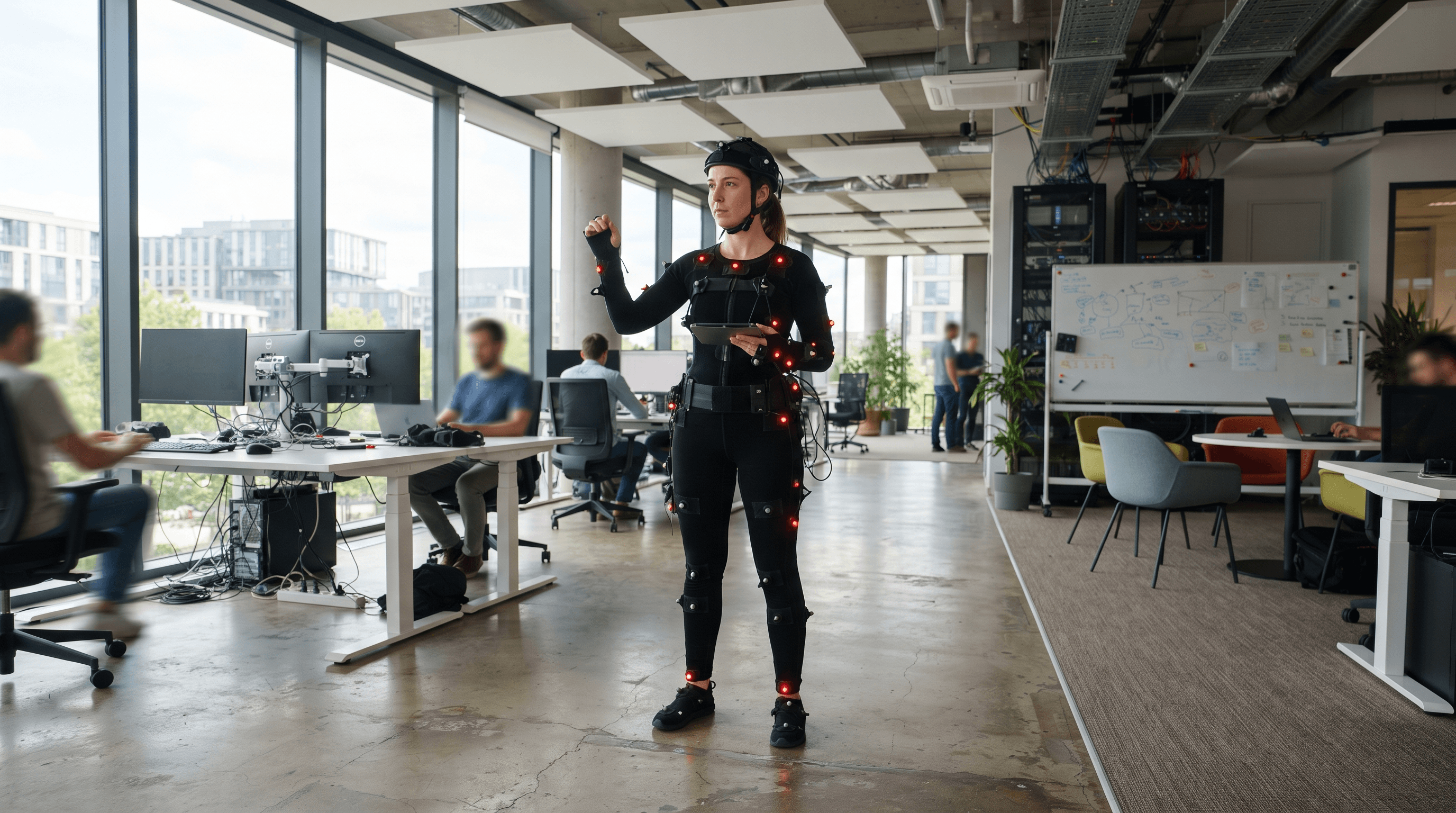
For years, the AI industry operated on a simple assumption: the data problem was solved. Text was exhaustible but abundant. Code was everywhere. Synthetic data would fill whatever gaps remained. A two-year-old startup called Mecka AI just proved that assumption wrong — the real bottleneck is the physical world.
Mecka AI, which pays humans to record everyday tasks using body sensors and smartphones, is nearing a $500 million valuation in a new round led by Sequoia Capital, according to two people with knowledge of the deal reported by TechCrunch. The financing comes just three months after the company announced a $60 million Series A led by Framework Ventures with participation from Menlo Ventures, SV Angel, and Kindred Ventures.
The round values a company that didn't exist two years ago, whose four co-founders have zero background in robotics, and that has not publicly disclosed a single customer name, at half a billion dollars. The reason: Mecka occupies what increasingly looks like the scarcest input in the AI pipeline.
The Physical Data Desert
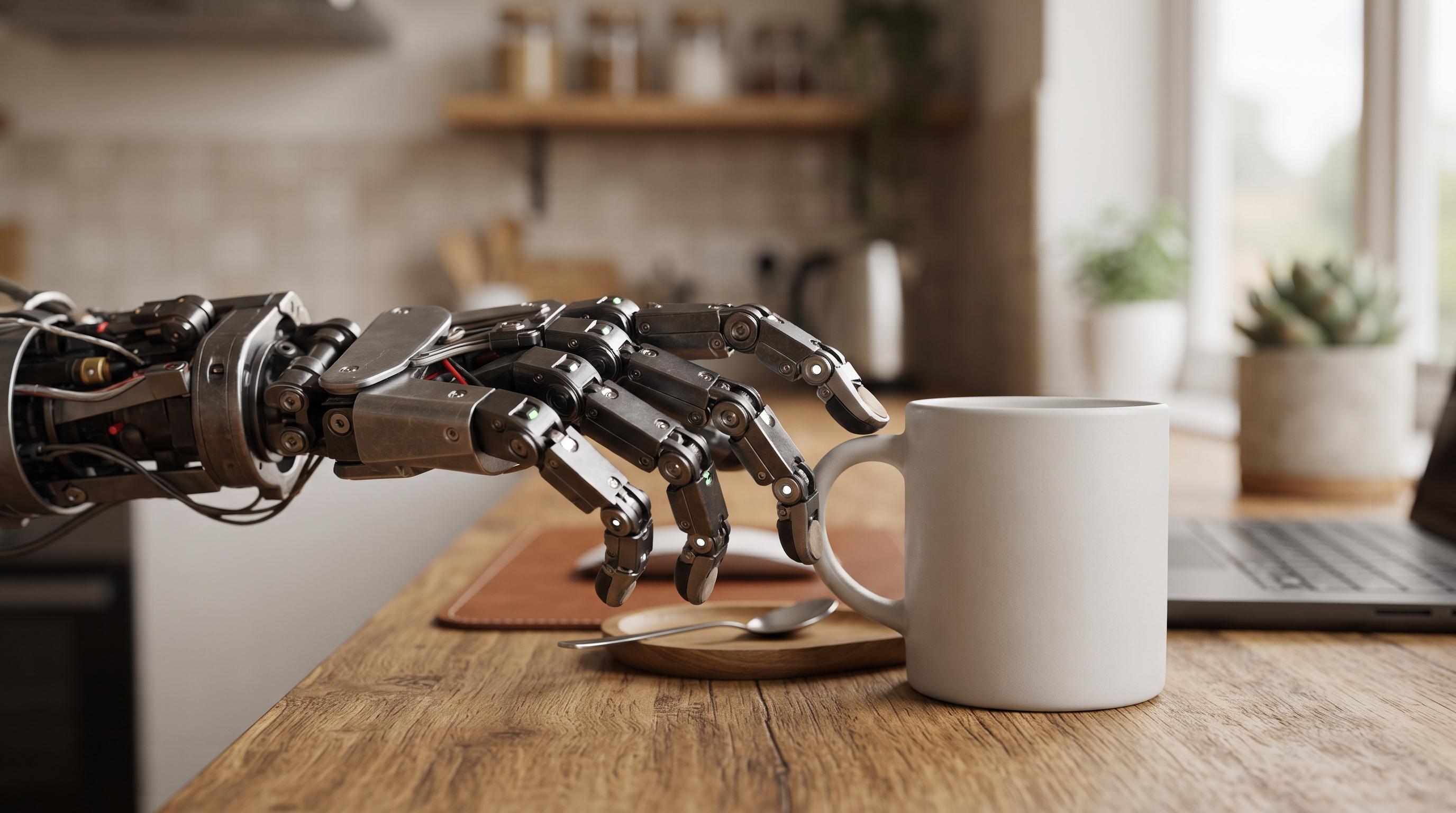
Large language models were trained on the accumulated text and code of the internet. But robots need something fundamentally different: data with gravity, friction, temperature, and resistance. They need to know how a coffee cup feels when it is full versus empty, how a door handle turns at different angles, how a car engine responds to different wrenches.
That data does not exist on the internet. It has to be physically collected.
Mecka AI's approach is straightforward but labor-intensive: the company pays people to wear motion sensors and record themselves doing everyday tasks. Cooking, cleaning, assembling furniture, repairing vehicles. Each recording captures the full kinematic chain — joint angles, muscle activation, pressure points — that a robot needs to replicate the same movement.
As of early June, Mecka was projecting it would end 2026 at an annual run rate of $100 million, co-founder Josh Gao told Fortune when the startup announced its previous fundraise.
A Sector Taking Shape
Mecka is not alone in the physical data gold rush. XDOF, a competitor that collects real-world manipulation data, is nearing a $1.2 billion valuation just months after leaving stealth, TechCrunch reported last week. Figure, the humanoid robot company backed by Jeff Bezos and Nvidia, announced its "Index" dataset in August — described as the "world's largest and most diverse physical dataset."
The pattern is unmistakable: the same venture capitalists who poured billions into LLM training data companies like Scale AI, Mercor, and Surge are now betting that the next Scale AI will be a company that handles physical data, not text.
Industry analysts draw a direct parallel to the LLM era. Scale AI was valued at $14 billion in its last round for labeling text and image data. If the robot training data market follows a similar trajectory for the physical world, the companies that control the pipeline from human movement to robotic action could become the infrastructure layer of the next AI wave.
Why Not Simulation?
A natural objection is that robots could train in simulation. Companies like Nvidia have invested heavily in Isaac Sim and other simulated environments. But the gap between simulation and reality — known as the sim-to-real gap — remains stubbornly wide. A robot that can perfectly pour coffee in simulation often spills it in the real world because no simulator perfectly models fluid dynamics, cup material properties, or human hand tremor.
Mecka and its competitors offer a brute-force solution: real data from real people doing real tasks. It is slower, more expensive, and harder to scale than simulation. But it works in ways that simulation cannot yet match.
The Narrative Spine
What makes Mecka's story surprising is not the valuation — it is the inversion of a widely held assumption. For most of the last decade, the AI industry believed that more data meant more intelligence, and that the data supply was effectively infinite if you knew where to look. The physical world turns out to have a very finite amount of usable training data, and the companies that can collect it are becoming the gatekeepers of embodied AI.
A Grounded Outlook
The $500 million valuation carries obvious risk. Mecka has not disclosed its customer list. Its technology — paying humans to perform tasks while wearing sensors — is not a defensible moat on its own; any well-funded competitor can hire people with cameras. The company's true value may lie in the software that processes the raw motion data into usable training signals, a layer that is harder to replicate than the data collection itself.
The broader question is whether the market for robot training data will be large enough to sustain multiple billion-dollar companies. If humanoid robots are a trillion-dollar market, as optimists predict, then the data pipeline alone could be worth tens of billions. If humanoids remain a niche industrial tool, the data companies that serve them will stay niche too.
Either way, one thing is clear: the next AI bottleneck is not in the cloud. It is in the physical movements of people making coffee.
Sources
- TechCrunch: "Mecka AI nears $500M valuation in Sequoia-led deal amid rush for robot training data" (https://techcrunch.com/2026/09/11/mecka-ai-nears-500m-valuation-in-sequoia-led-deal-amid-rush-for-robot-training-data/)
- Fortune: "Exclusive: Mecka AI raises $60 million to train robots with human data" (https://news.google.com/rss/articles/CBMiiwFBVV95cUxOM2N6Y0dWTTNJTHdyMlZKSlZXSTlSRk5mOE9ydFk0VEVzRWlQY29LUnp4VXJYSEZBSFkteGpEU1puQlFRVkF1QUVPRzk5bkhuS19OdDB6MURUMXpPQUhFSVZTYmdGdmFLQnJHRHhLcGdtbEhDWERpTENMdy1fVENIcU10R1lCWVVsTUNr?oc=5)
- TechCrunch: "XDOF, just 3 months out of stealth, is in talks for a Series B at a $1.2B valuation" (https://techcrunch.com/2026/09/04/xdof-nears-1-2b-valuation-just-months-after-leaving-stealth/)
- Figure: "Introducing Index: Building The World's Largest and Most Diverse Physical Dataset" (https://news.google.com/rss/articles/CBMiV0FVX3lxTE82Y1ZiUmFmWXlBQTBud3BzS3k5dkFQQlNaMW1TR2J6Yzk1ZzlfQWdyZXYxU2tuTVlrWWpYaXR3WklSellZSlJCblh2TTY5NXBabF8yc09SMA?oc=5)