AI 'Experiments' Save Meta Billions
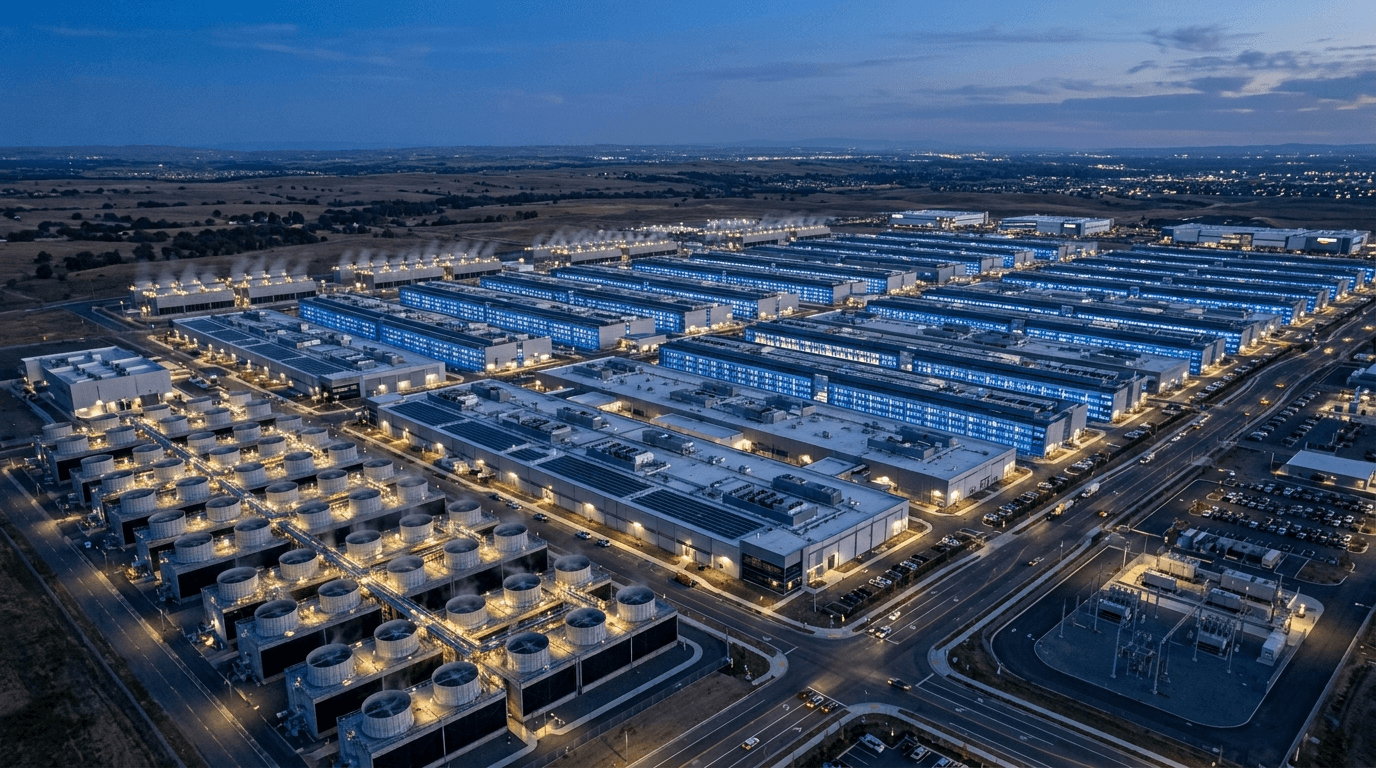
The absurdity of calling a 5 GW data center an experiment
Meta saved $3.9 billion in federal taxes last year by doing something almost too simple to believe. It called its AI data centers "pilot models." It called its Nvidia GPU clusters "experimental materials." And a 44-year-old tax credit designed for small-scale laboratory research handed the company billions.
The strategy is both legally creative and, on its face, preposterous. Meta tells investors it is building the world's largest AI infrastructure, a single data center so big it would cover a significant part of Manhattan, scaling to 5 gigawatts over several years. Mark Zuckerberg himself said in January 2025 that these data centers would "drive our core products and business." But when the tax bill arrives, those same facilities are suddenly one-of-a-kind pilot projects pushing the boundaries of science.
The gap between what Meta tells Wall Street and what it tells the IRS is $3.9 billion wide.
The 1981 law that made it possible
The tax credit Meta is using dates back to 1981, when Congress passed the Research and Development Tax Credit to encourage American companies to invest in innovation. The idea was straightforward: if a company spends money on genuine scientific or technological experimentation, the government shares the cost through a tax reduction.
James Shannon, the former congressman who introduced the legislation, told the New York Times that the credit was intended for "people power, knowledge, information." He said Meta's use has "gone way, way beyond what anybody could have imagined."
What nobody in 1981 imagined was a data center the size of a small city. The law contains no cap on facility scale or investment amount, and Meta exploited that gap aggressively. In 2023, the company claimed $700 million through the credit. In 2024, that grew to $2 billion. In 2025, it reached $3.9 billion, making Meta the largest beneficiary of the credit among all publicly traded companies.
Even Meta's own accountants are nervous
Meta defends the strategy by pointing to $200 billion in research and development spending over the past five years. The company argues that AI infrastructure qualifies because the technology is evolving rapidly and each new cluster configuration represents a novel engineering challenge.
But internal documents tell a more cautious story. Meta's SEC filings explicitly warn that the tax savings could be challenged by the Internal Revenue Service. The company's reserves for uncertain tax positions jumped 45 percent to $18.74 billion last year, essentially, Meta is setting money aside in case the IRS comes to collect.
And here is the key detail: even if the IRS eventually claws back every dollar, Meta still wins. The company got years of use out of that capital, deploying it into operations and stock growth before any potential tax bill arrives. The delay alone is worth billions.
The auditor who wrote the rules
Ernst and Young, Meta's auditor, approved the tax strategy. More notably, EY helped Meta design the credit structure in the first place. The same firm is now pitching the approach to other companies looking to offset their AI hardware purchases, according to the New York Times.
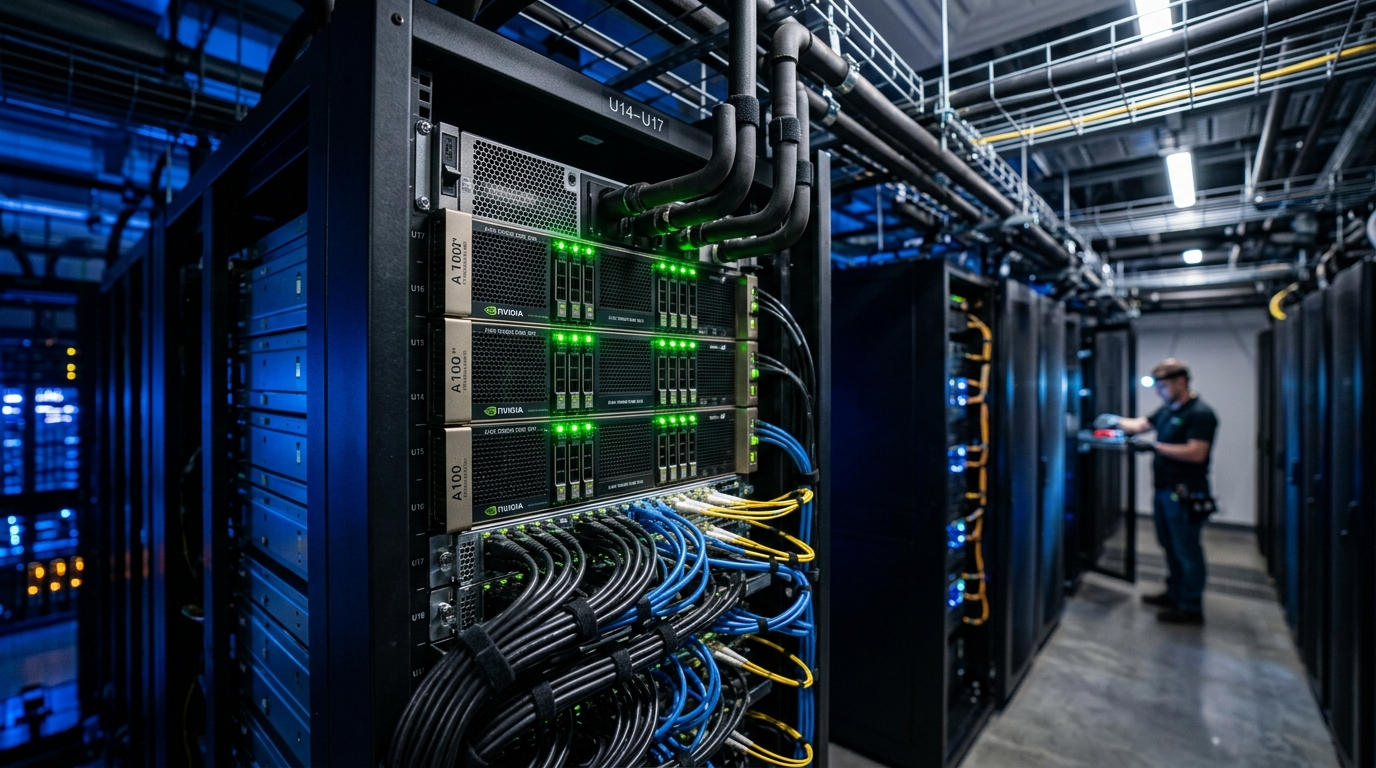
This is the part of the story that should worry policymakers. EY is not just certifying that Meta's strategy complies with existing law. It is actively marketing the playbook to Meta's competitors. Every company buying Nvidia H200 or Vera GPUs at scale will soon know that those chips can be labeled "experimental materials" and that a data center can be called a "pilot model", as long as the paperwork is right.
Quartz reported that Meta slashed its federal tax bill by an estimated 71 percent in 2025 through this approach. At that rate, the largest AI infrastructure buildout in corporate history is being substantially subsidized by American taxpayers.
What the $3.9 billion buys
The $3.9 billion Meta saved in 2025 is not pocket change. It is roughly the size of an average Series C funding round for an AI startup. It is more than the entire annual revenue of companies like CoreWeave and Lambda Labs. It is the kind of money that changes corporate strategy.
Zuckerberg has been clear about where that capital goes. He announced plans to "invest hundreds of billions of dollars into compute to build superintelligence." The company works with Nvidia, AMD, AWS, Arm, and Broadcom alongside its own custom MTIA chips. "We have the capital from our business to do this," he wrote in July 2025.
The statement is revealing, and it is the crux of the tension here. Meta has the capital because the tax code is, in effect, subsidizing its AI spending by nearly $4 billion a year. A 1981 law meant for laboratory scientists with test tubes is now the financial foundation for one of the most ambitious infrastructure projects in history.
A tax code built for a different era
The research and development tax credit was written for an America where technology innovation meant a few engineers in a rented building. It was never designed for multi-gigawatt data centers, tens of thousands of interconnected GPUs, or companies spending $200 billion on research in half a decade.
Meta is not breaking the law. The company is following it, and that is exactly the problem. The tax code has not caught up to the scale of AI infrastructure, and until it does, every major AI company has a strong incentive to classify its most expensive assets as experiments.
The question is not whether Meta will continue this practice. It is whether lawmakers will update a 44-year-old tax credit before the IRS reserves judgment on a strategy that has already reshaped how the world's largest companies pay for AI.
Sources
- Meta dodges billions in US taxes by calling its AI data centers experiments, The Decoder
- Meta slashed its federal tax bill nearly 71% by labeling AI data centers experimental, Quartz (via Google News)
- Taxpayers Have Been Subsidizing Meta's AI Data Centers: Report, Gizmodo (via Google News)
- How Meta Uses A.I. Data Centers to Avoid Billions in Federal Taxes, The New York Times (via Google News)
- Meta shields billions in taxes by classifying AI data centers as experimental models, Anado (via Google News)