Microsoft's $24B AI Problem: It's All OpenAI

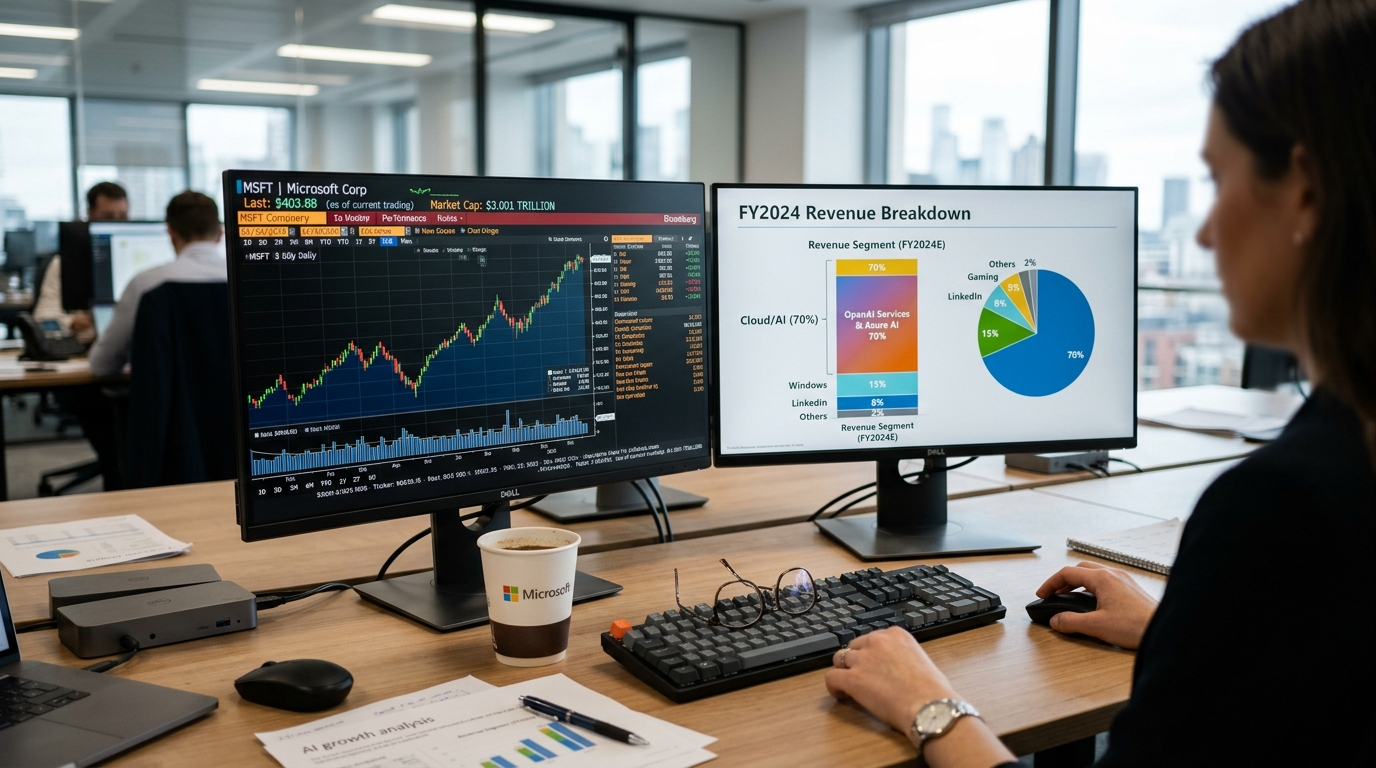
The worlds most valuable software company has an AI business on track to hit $37 billion. The catch: three out of every four dollars come from someone else's technology.
A Bloomberg analysis released this week put a specific number on a long-suspected reality. Microsoft generated $24.1 billion from OpenAI in the fiscal year ending June 2026, accounting for roughly 70 percent of its total AI revenue. The relationship, which began with a $13 billion investment in 2023, has grown into a dependence so lopsided that Microsoft effectively functions as a distribution channel for a partner it cannot afford to lose.
The $24.1 Billion Number That Changed Everything
The figure comes from Microsoft disclosures that Bloomberg analyzed to determine how much of the companys AI business relies on the OpenAI relationship. The payments flow through several channels: computing infrastructure that Microsoft provides to OpenAI, reimbursement for model development costs, and a revenue-sharing agreement on OpenAIs commercial products.
CEO Satya Nadella had signaled the scale in March 2026, stating the AI business was on track to exceed $37 billion annually. What the Bloomberg analysis reveals is that the vast majority of that trajectory depends on a single contractual relationship with a company that Microsoft does not control.
For context, Microsofts total revenue for the fiscal year was approximately $260 billion. The AI segment represents about 13 percent of the overall business, but it is the fastest-growing part and the centerpiece of Nadellas strategy to reinvent the company around artificial intelligence.
The Strategic Contradiction at the Heart of Redmond
The revenue dependency explains a paradox that has puzzled industry observers for months. Microsoft, the company that built its empire on proprietary software and vendor lock-in, has become one of the loudest advocates for open-weight AI models. Satya Nadella has publicly warned against a few proprietary AI models capturing the value of entire industries. Microsoft has also criticized AI labs like OpenAI and Anthropic for opposing distillation, the practice of training models on proprietary model outputs.
The contradiction makes more sense when read against the Bloomberg numbers. Microsofts AI future depends on OpenAI succeeding and remaining commercially tied to Microsoft, but the company also needs a hedge. Championing open-weight models and developing in-house alternatives hedges against the risk that OpenAI becomes a competitor rather than a partner.
Microsoft has been steadily adding its own AI models across Office products, including the Microsoft 365 Copilot suite. But the disclosure suggests those internal efforts still represent a fraction of the revenue flowing through the OpenAI pipeline.
What Happens If the Relationship Sours
The $24.1 billion figure concentrates risk in ways that Microsofts financial statements do not fully convey. The OpenAI partnership is governed by a complex agreement that includes Microsofts right to a share of OpenAIs profits, but the terms are not publicly known in full detail. OpenAI itself is in transition, reportedly preparing for a corporate restructuring that could change the economics of the relationship.
If OpenAI were to reduce its reliance on Microsofts cloud infrastructure, or if the revenue-sharing terms were renegotiated, the impact on Microsofts AI revenue line would be immediate and severe. Meanwhile, Microsoft has limited alternatives at the scale of OpenAI. Google has its own Gemini models. Anthropic has Amazon. And building frontier AI capability in-house from scratch would take years and billions more.
The Market Hasnt Priced the Risk Yet
Wall Street has responded to the AI narrative with enthusiasm, driving Microsofts market capitalization above $3 trillion on expectations that AI will transform the software industry. The Bloomberg disclosure raises a question that investors have not fully grappled with: how much of that valuation depends on a partnership that could change or dissolve?
Microsofts stock barely moved on the news, suggesting the market either already priced in the dependency or hasnt fully absorbed its implications. Either way, the $24.1 billion number is now public. The next time Microsoft reports earnings, everyone will be watching the OpenAI line.
Sources
- Microsofts AI revenue reportedly depends on OpenAI for 70 percent - The Decoder
- Microsofts AI Sales Mostly Come From OpenAI, Disclosures Show - Bloomberg (via Google News)
- Around 70% of Microsofts AI business still depends entirely on OpenAI - Windows Central (via Google News)
- Microsofts AI business is booming. A filing shows most of it is just OpenAI - TNW (via Google News)