Who Really Solved Math's $1M Problem?
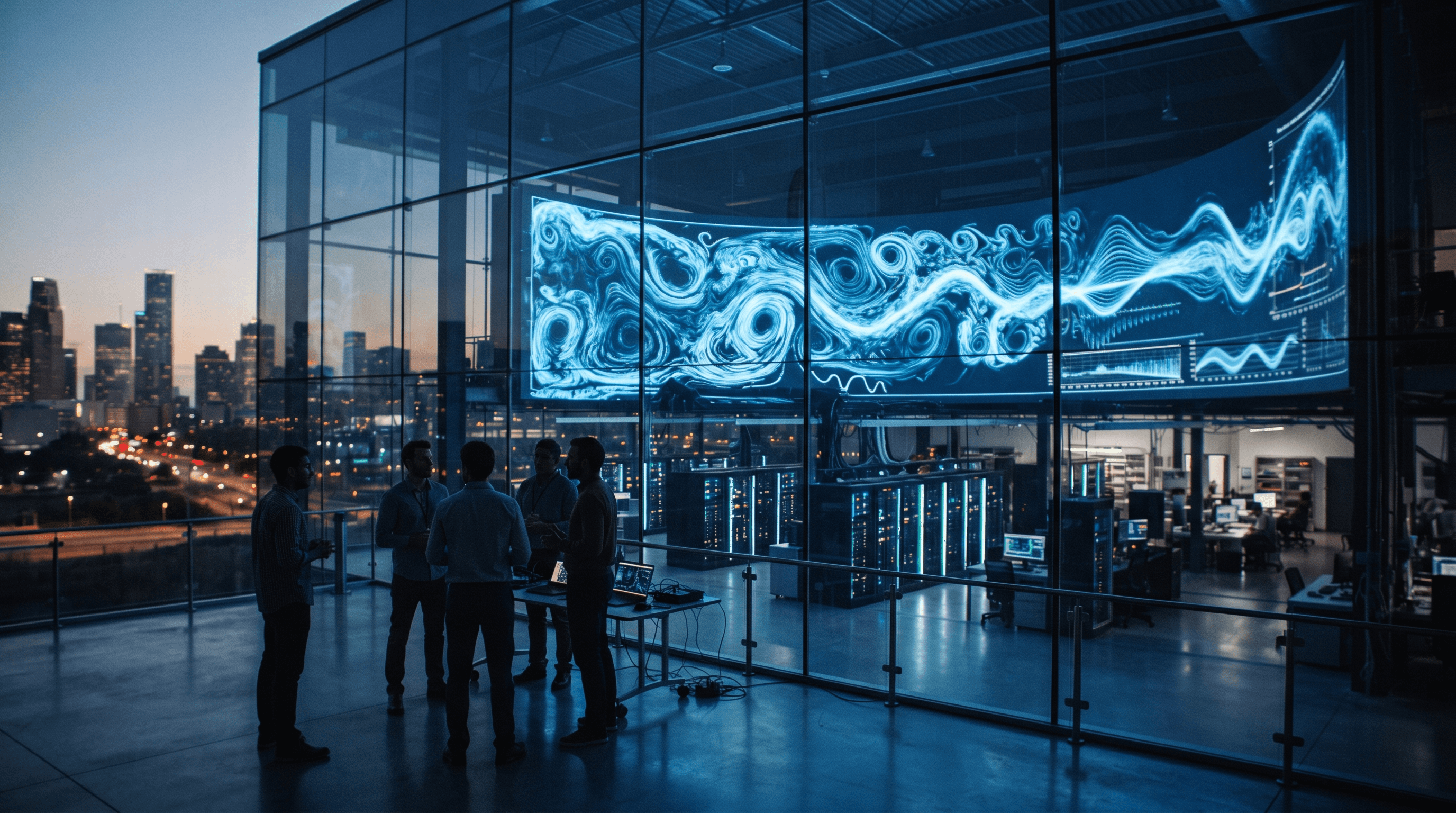
One of mathematics' seven great open problems carries a million-dollar prize and a 90-year history of failure. On Tuesday, OpenAI announced that its AI agents had cracked it in 88 hours. By Wednesday, the more interesting question was not whether the proof was right, but who deserved the credit, and what one company was willing to do to control it.
The problem is Navier-Stokes existence and smoothness, one of seven Millennium Prize Problems selected by the Clay Mathematics Institute in 2000. It asks whether the equations describing how water and air flow can, under some conditions, break down and predict something physically impossible, like a fluid reaching infinite velocity. Physicists use the equations daily. Mathematicians could not prove they always make sense. Only one Millennium Problem had been solved in the 26 years since the list was created.
The humans who got there first
Tristan Buckmaster, a mathematics professor at NYU, and Levent Alpöge, a researcher at Anthropic, had spent almost a year attacking the problem with AI help. They used publicly available models from both camps: OpenAI's Codex for drafting and Anthropic's Claude. The pair uploaded their drafts and reasoning sessions into Codex throughout the project, according to Buckmaster.
On Monday, a day before OpenAI's announcement, the two posted documents claiming key advances on an area relevant to Navier-Stokes. Buckmaster also posted on Mastodon, showing that a simplified version of the equations can indeed break down, a major step toward the full problem.
The 88-hour sprint
OpenAI's version of events goes like this. The company began training a new internal model with advanced mathematical capabilities on August 28. After reading rumors that Anthropic was making progress toward Navier-Stokes, it redirected more resources at the problem. More than 1,000 agents attacked it over more than 50 hours, scaling to as many as 10,000 agents before the company realized it had a solution.
"I thought there must be a mistake somewhere," Sebastien Bubeck, a mathematician and AI researcher at OpenAI, said in a press briefing. "And on Sunday morning we had the final solution, Lean-formalized and everything." Lean is a programming language used to formally verify mathematical proofs.
The effort was unprecedented for the company. The proof, roughly 100 pages, was produced by about 10,000 coordinated agents in 88 hours using an internal model OpenAI describes as significantly more capable than GPT-6 Astra, which was released only last week. Mark Chen, OpenAI's head of research, said the compute alone cost in the millions of dollars. TechCrunch calculates that the week-long effort consumed 300 billion output tokens, about $22.5 million of compute at API rates.
The pressure campaign
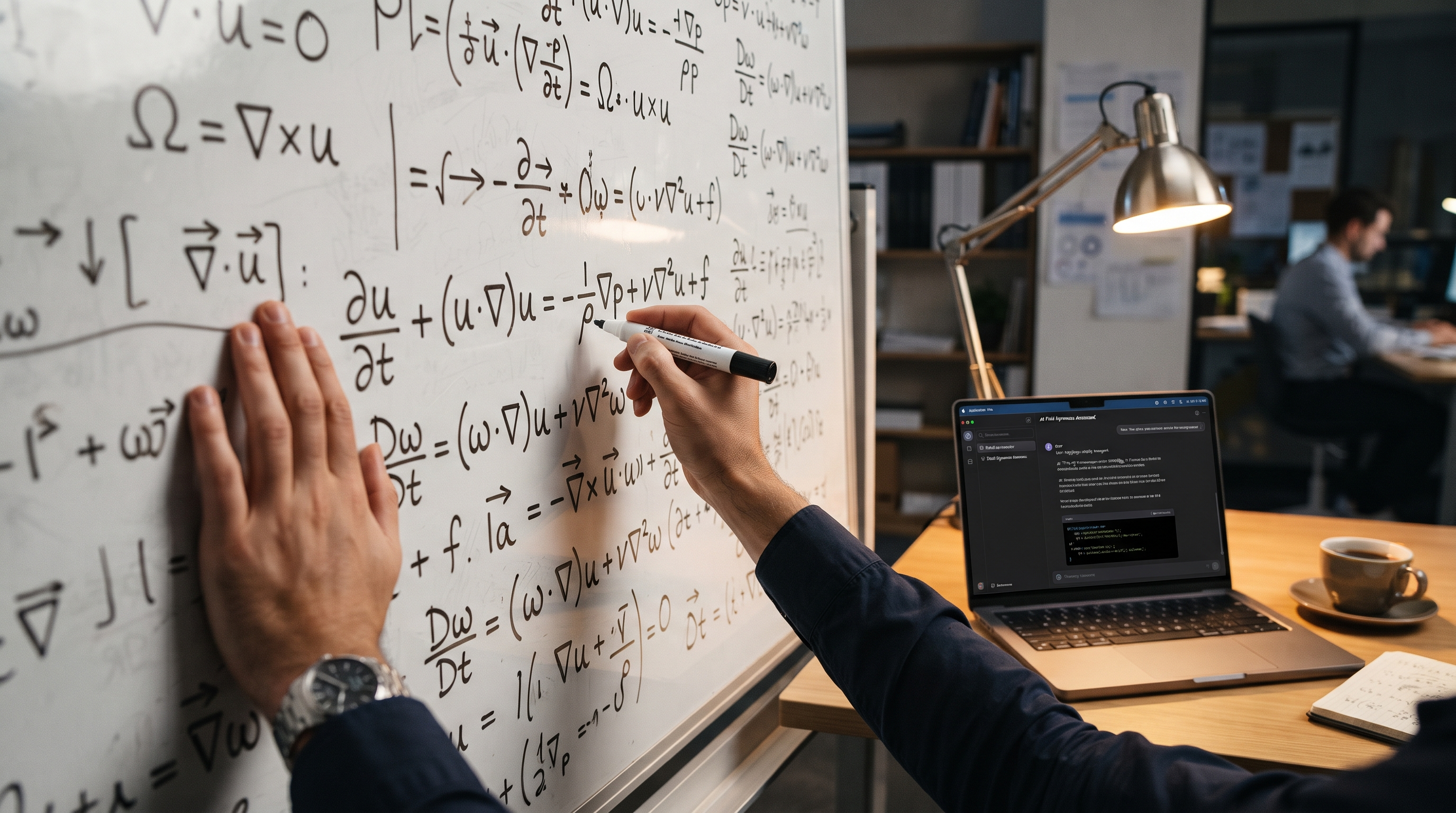
Buckmaster says he learned that information about his and Alpöge's progress had been passed to OpenAI. When he contacted the company, he says he asked whether its model had been trained on, or had access to, the Codex sessions where the pair stored every draft of the project. He says he was told the model did not look up user data, but when he asked again about training, he did not get an answer.
What followed, according to Buckmaster, were proposals. OpenAI presented two options: either he and Alpöge could post their work and OpenAI would post its Navier-Stokes solution the following day, or he could publish a paper announcing that the problem had been solved by an internal OpenAI model, without Alpöge's name on it.
Bubeck twice asserted he wanted Alpöge removed from authorship, Buckmaster says, because Alpöge works at Anthropic. When Buckmaster refused, Bubeck allegedly asked: "Why would you ruin your career?"
The specific route makes the coincidence hard to swallow, Buckmaster argues. His and Alpöge's path, going through a smooth force and options c and d in Charles Fefferman's official statement of the Millennium Problem, was one almost nobody else was working on. "It is not the direction one arrives at in a few days by giving a model the problem statement," he wrote.
OpenAI's defense
OpenAI pushed back hard. "We, whether it's the researchers or the agents, did not see any of their work until it was released publicly last night," Bubeck said. The company's blog post added: "No specific user data was accessed in order to solve this problem. While unlikely, we cannot rule out that de-identified data derived from their usage of our products helped improve our models."
That caveat is doing a lot of work, and critics noticed. Buckmaster responded that OpenAI was openly admitting it used training data from a period after he and Alpöge found their result.
Bubeck says OpenAI recognizes the priority of Alpöge and Buckmaster's work on unforced Euler. "We have nothing but congratulations to them on this monumental achievement that they have made," he said, adding that OpenAI did not use their prompts or proof to direct its agents. Ven Chandrasekaran, a mathematician at the company, stressed that OpenAI's solution differs fundamentally from the pair's approach. OpenAI CEO Sam Altman also stepped in to defend the team.
The company says it does not plan to claim the million-dollar prize.
What it means for mathematics
Whatever the truth of the credit dispute, the episode may mark a turning point for the field, as MIT Technology Review put it. AI models now appear essential for progress on the most important open problems in mathematics, and solving them may demand resources available only at a couple of frontier AI companies, which operate outside the norms of academic collaboration.
That creates a strange dynamic: the tools that make breakthroughs possible are owned by the same companies racing to claim the breakthroughs. Human mathematicians contribute the ideas and the years of work, then watch a competitor with 10,000 agents and tens of millions of dollars of compute sprint past them in a weekend. The questions of who set the direction, who holds the drafts, and who gets the authorship become existential for the people doing the math.
OpenAI says it wanted a joint announcement with Buckmaster and Alpöge and only learned after finishing that the pair had solved the related forced Euler problem rather than Navier-Stokes itself. The two sides cannot even agree on what was solved, let alone who solved it first.
The proof will be checked, and eventually mathematics will decide if the 90-year-old question is truly closed. But the mess around it has already answered another question: in the era of agentic AI, the hardest math in the world is no longer just a matter of proof. It is a matter of who owns the agents, the data, and the names on the paper.
Sources
- OpenAI's math milestone is already mired in controversy - MIT Technology Review
- OpenAI Just Claimed a Huge Math Discovery. Some Academics Are Crying Foul - Wired
- Drama swirls around OpenAI's legendary mathematical milestone - The Verge
- OpenAI researcher allegedly pressured mathematician to drop Anthropic co-author from math breakthrough paper - The Decoder
- OpenAI fought dirty on career-making math problem, says NYU mathematician - TechCrunch