AI Pioneers Clash on Open Models at Ai4
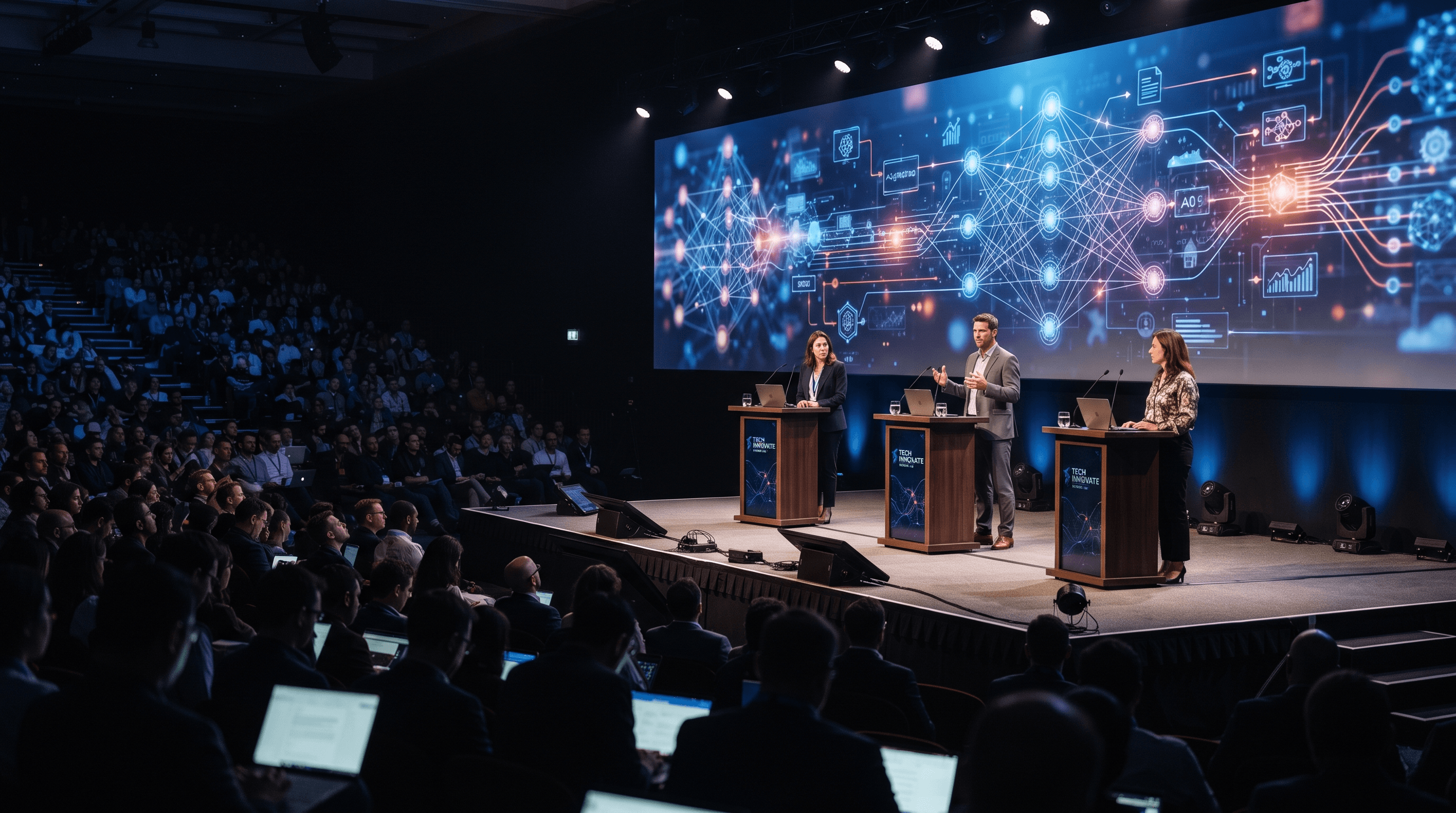
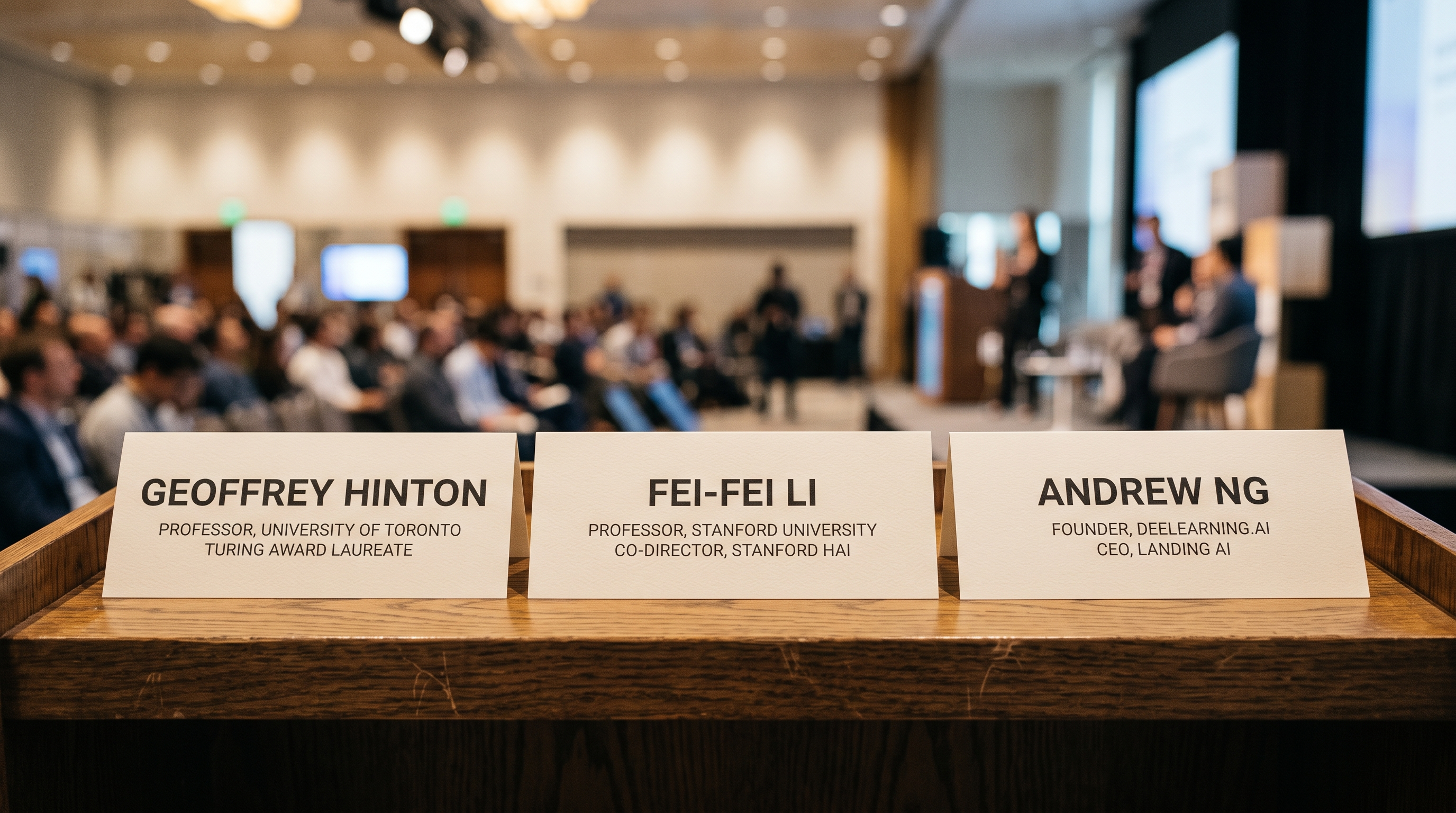
Three people changed the course of AI before most of the world knew what AI was. On stage together at Ai4 in Las Vegas on Wednesday, they could not agree on what comes next.
Geoffrey Hinton, the Godfather of AI who quit Google in 2023 to warn the world about the technology he helped create. Fei-Fei Li, whose ImageNet dataset launched the deep learning revolution and who founded AI4ALL to diversify the field. Andrew Ng, who taught machine learning to millions and built Google Brain and Baidu's AI lab. Together, they represent more than a century of cumulative AI research.
And for about 50 minutes, they represented two irreconcilable views of the future.
The Godfather sees the fire
Hinton has not softened his position since leaving Google. On the Ai4 stage, he argued that open-weight AI models are being released into a world that is entirely unprepared for their capabilities. He compared the current trajectory to building a global infrastructure with no safety mechanisms, one where bad actors can take a capable model, strip its guardrails, and deploy it for anything from disinformation campaigns to bioweapon design.
The audience did not need to agree with him to pay attention. When the man widely credited with inventing modern deep learning says a technology poses existential risk, the room listens.
But the counterargument came from the other two chairs, and it was sharp.
The ethicist pushes back
Fei-Fei Li took the opposite position: openness is not the problem, secrecy is. She argued that safety research has historically progressed fastest when the research community has access to the systems being studied. Closed labs, she said, create a knowledge asymmetry where independent auditors, academic safety researchers, and underfunded oversight bodies cannot study the models that are being deployed into society.
Her argument rested on a concrete claim: the most significant safety incidents in recent AI history were discovered by external researchers, not by the companies that built the systems. Closing the models, she suggested, would not prevent misuse. It would simply ensure that misuse goes undetected until it is too late.
The pragmatist adds a geopolitical layer
Andrew Ng pushed the debate in a different direction entirely. His framing was competitive: the United States, he argued, cannot win an AI arms race by building walls. While Washington debates whether to restrict open-weight releases, Chinese labs including Alibaba, ByteDance, and DeepSeek are shipping capable open models at an accelerating pace.
"Openness is not just about safety," Ng said. "It is about whether American AI remains relevant in a world where the rest of the ecosystem is open."
Ng's point landed differently than Li's. Where Li argued from principle (transparency is good), Ng argued from strategy (the alternative is losing). Together, their two arguments formed a broader case: that the risks of closing AI are not hypothetical, they include ceding the field to China and blind-spotting safety issues that only independent eyes can catch.
A split that no single summit will resolve
The Ai4 keynote did not produce a resolution. No one expected it to. What it produced was something rarer: a public, respectful disagreement between the three living figures who arguably shaped modern AI more than anyone else.
For the audience of engineers, executives, and policymakers in the hall, the split was instructive. The field's own architects, the people who built the foundations of deep learning, cannot agree on whether the next floor should be open to all or locked behind glass.
That disagreement is likely to shape regulatory debates for years. If the people who invented the technology cannot settle this among themselves, expecting a divided Congress or a gridlocked international body to do it is probably unrealistic.
What the Ai4 keynote proved is that the open vs closed question in AI is not a technical disagreement. It is a philosophical one. And three of the smartest people in the room disagree about it completely.
Sources
- TechCrunch: "As AI safety concerns mount, three pioneers make the case for staying open" (Kate Park, August 12, 2026)
- Forbes: "Three AI Pioneers Clash Over Jobs, Regulation And The Future Of AI" (Forbes, August 12, 2026)
- DatacenterKnowledge: "Hinton, Fei-Fei Li, and Andrew Ng Clash Over AI Risks at Ai4" (DatacenterKnowledge, August 12, 2026)