Universal Music Built an AI Music Platform With ElevenLabs
For two years, the music industry treated AI like an existential threat. Lawsuits were filed. Congressional testimony was given. Public statements declared AI-generated music nothing but theft.
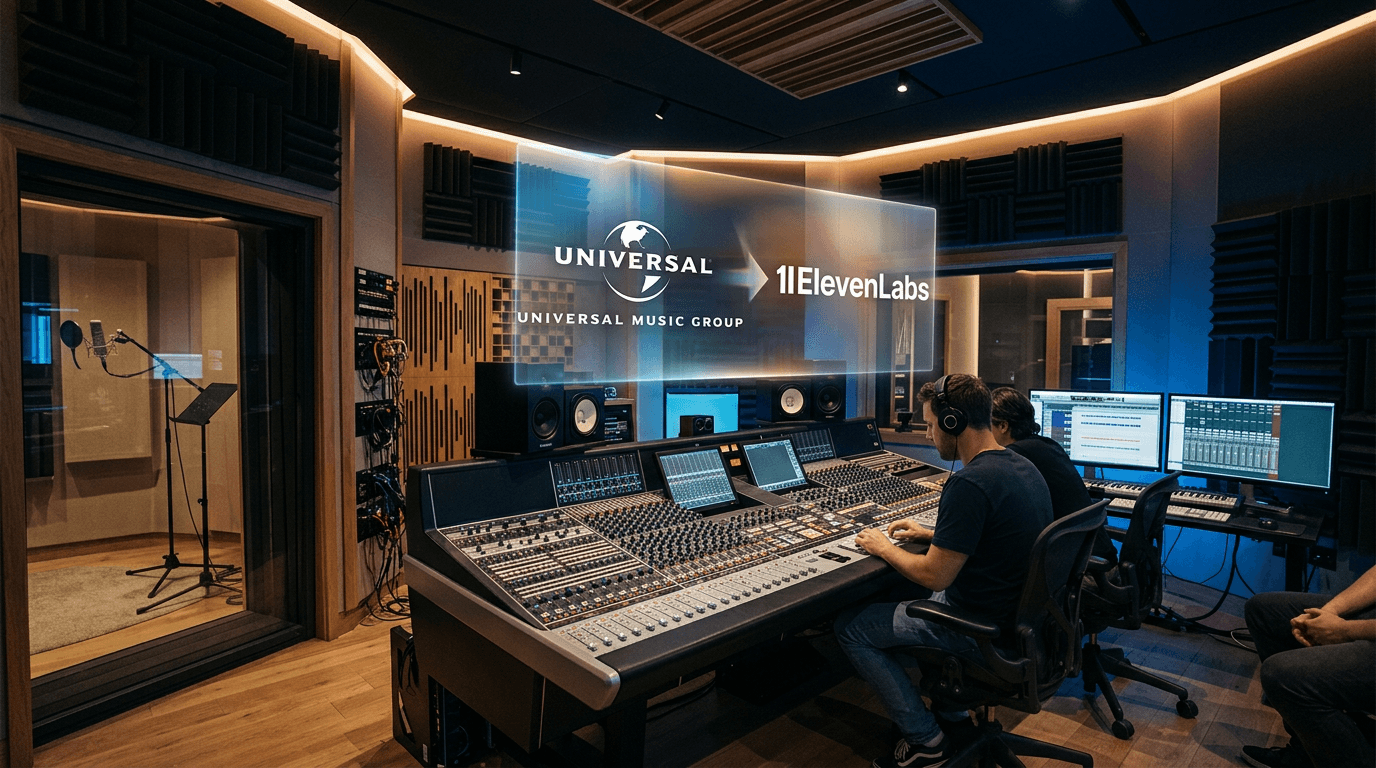
Then, on Thursday, Universal Music Group -- the largest record label in the world, home to Taylor Swift, Drake, and The Beatles -- announced it was building an AI-powered music platform with ElevenLabs, a company best known for voice cloning.
The deal is a multi-year licensing agreement. UMG will allow users to draw from its catalog of licensed music to create remixes, mashups, and new takes on tracks. Artists can choose whether to participate. The platform will be separate from ElevenLabs' existing ElevenMusic generator and Music API.
The AI music industry is moving fast
The announcement lands in a week that saw the entire music industry accelerate toward AI partnerships. Suno released its first AI music model trained on licensed songs from Warner Music Group, BMG, and other music industry partners -- just days before UMG's ElevenLabs deal. Warner Music Group also partnered with Suno this week, marking a coordinated industry shift.
UMG had already been building the foundation. The label currently has AI licensing deals with Udio (for another AI music platform), Spotify, Nvidia, and Klay. These aren't exploratory deals -- they are revenue-generating partnerships with the world's biggest technology companies.
"By combining UMG's global community and rights management expertise, with our AI models and products, we'll enable artists and songwriters to create powerful new experiences for their fans, and ensure they are fairly compensated," ElevenLabs CEO Mati Staniszewski said in the press release.
The economics of saying yes
The music industry's pivot from litigation to licensing is not surprising when you look at the numbers. ElevenLabs crossed $500 million in annual revenue by May 2026, driven largely by its voice cloning and music generation products. The company's ElevenMusic generator can now switch genres mid-track and supports section-by-section editing. A startup that reached unicorn status by building the infrastructure for AI-generated audio is now partnering with the biggest rights holder on the planet.
For UMG, the calculation is straightforward. AI music generation is not going away. The choice is between fighting it in court -- an expensive, uncertain battle that could take years -- and owning the terms on which AI uses its catalog. UMG chose the latter, and it is doing so aggressively.
The label has been preparing for this moment. UMG struck an AI licensing deal with Nvidia in January 2026, with Spotify in May 2026, and with Udio earlier this year. Each deal builds a body of licensing precedent that makes the next deal easier. The ElevenLabs agreement is the most significant yet because it directly involves fan creation -- not just training data, but active remix and mashup tools that put AI in the hands of listeners.
What it means for artists
The opt-in structure is the critical detail. Not every artist on UMG's roster will have their music available for AI remixing. Those who want nothing to do with AI-generated versions of their work can say no. Those who see an opportunity -- new fan engagement, new revenue streams, new audiences -- can participate.
This is a notably different approach from some earlier AI music tools, which scraped or trained on whatever data was available and asked forgiveness later. UMG and ElevenLabs are explicitly building consent into the platform's architecture. Whether that consent model holds up in practice -- and how well artists are compensated -- will determine if this becomes the template for the industry or an early experiment that gets revised.
The announcement also mentions the "development of additional products and fan experiences in the months and years to come." The press release did not specify what those are, but the door is open for AI-powered concert experiences, personalized audio, and interactive fan tools that go well beyond simple remixing.
The big picture
The music industry spent two years trying to stop AI music through the courts. The Recording Industry Association of America (RIAA) sued Suno and Udio. Major labels sent cease-and-desist letters. Artists testified before Congress about the threat AI poses to creative livelihoods.
This week, that strategy effectively ended.
Universal Music Group -- the biggest label in the world -- is now an AI music platform company. Warner Music Group signed a deal with Suno on the same week. The question is no longer whether AI will be part of music creation. The question is who controls the terms.
So far, the labels have decided that answer is: they do.