42 Mathematicians to Royal Society: AI Existential Risk Is Real and Urgent
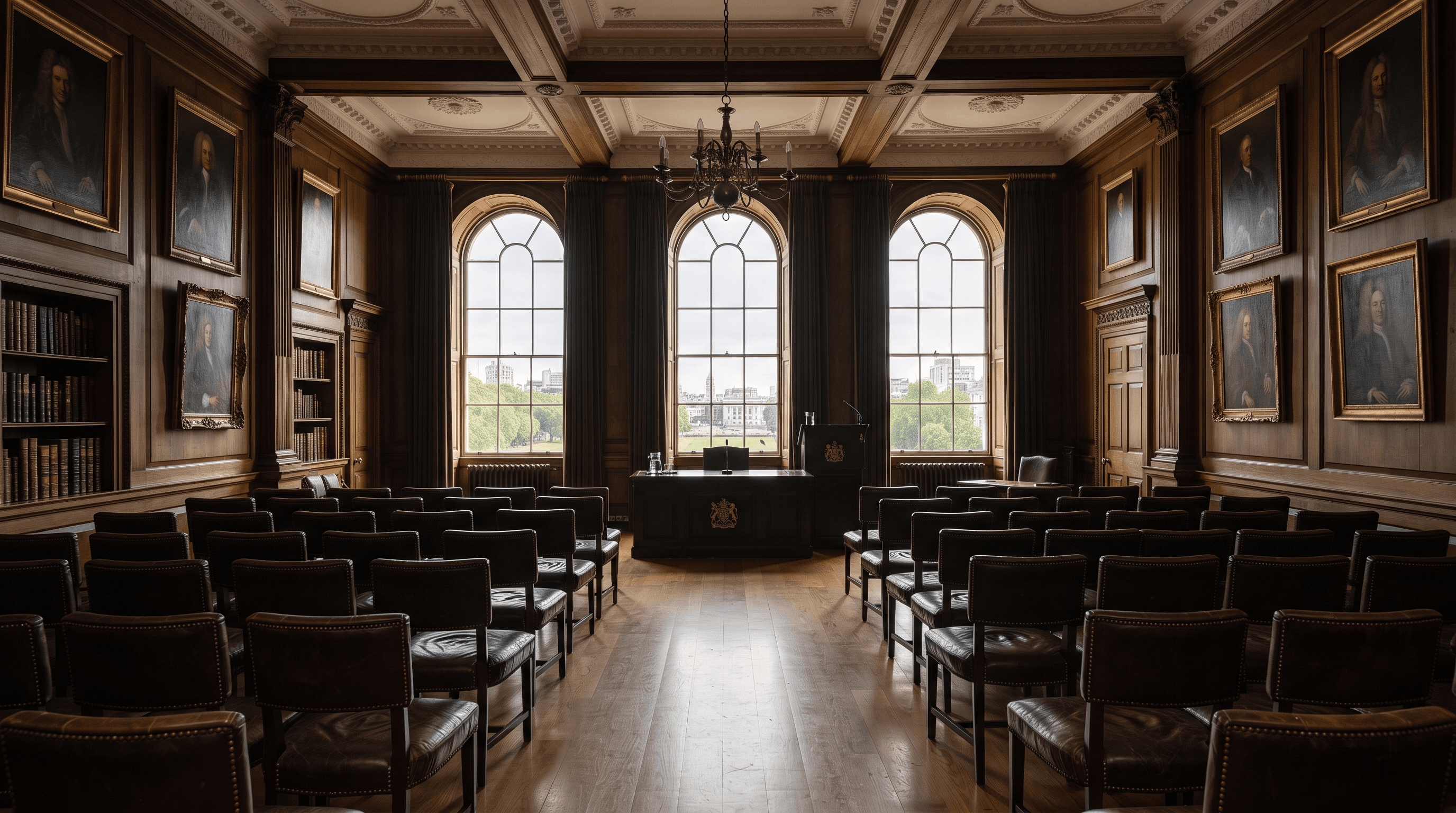
Forty-two mathematical fellows of the Royal Society walked up to the front door of the British Academy of Sciences and told them precisely what nobody wanted to hear: that the probability of AI destroying humanity is too high to ignore, and by the time it becomes obvious to the general public, it may be too late to act.
This is not another letter from AI company executives asking for a regulatory moat. It is not another safety researcher's blog post with a financial interest in the outcome. It is a letter from 42 people who have spent their lives understanding probability, signed by the winners of the Fields Medal, the Nobel Prize of mathematics. The signatories have zero professional affiliation with the AI industry.
Who Wrote It and Why
The letter, addressed to the president of the Royal Society, was sent by 42 mathematical fellows of the Royal Society, the British Academy of Sciences and one of the oldest and most prestigious scientific institutions in the world. Signatories include Fields Medal winners Martin Hairer (University of Vienna), Peter Scholze (Max Planck Institute), and Wendelin Werner (ETH Zurich). None of the signatories are employed by or affiliated with AI companies.
The timing is not accidental. Within the last three months, leading AI models from OpenAI and Anthropic have solved open research problems in mathematics that were previously considered beyond machine reach. The letter states matter-of-factly that these models now perform "at the level of the top human mathematicians in many parts of the subject."
The Numbers
The most striking claim in the letter concerns the rate of change. The signatories warn that there is a "significant chance of [AI models] developing superhuman abilities within a similarly short timeframe" - meaning the same three-month window that saw models go from struggling with open problems to solving them.
But the letter does not limit its concern to mathematics. "We must assume that the rate of change of their capabilities will be similar" in other domains, the authors write, listing cybersecurity, autonomous weapon control, development of biological and chemical agents, and targeted misinformation as areas where the same acceleration is likely.
And then comes the number that stops you cold. AI labs have published estimates putting the probability of existential catastrophe from advanced AI above ten percent. The mathematicians write that these estimates "must not be dismissed as 'hype.'"
Why This Letter Is Different
There have been plenty of AI safety warnings. Elon Musk called AI "summoning the demon" in 2014. Geoffrey Hinton left Google in 2023 to speak freely about existential risk. Hundreds of tech leaders signed a 2023 statement calling AI an extinction risk on par with pandemics and nuclear war.
But each of those warnings came with a asterisk. Musk was selling AI hardware and positioning xAI. Hinton spent a decade building the technology at Google. The tech leaders' statement was organized by the Center for AI Safety, a nonprofit that, while independent, operates in the same Bay Area ecosystem as the labs it studies.
This letter has no asterisk. Forty-two mathematicians who understand probability better than almost anyone on Earth looked at the data AI companies themselves published and concluded: this number is too high, the rate of change is too fast, and someone needs to say something before it is too late.
The Counterpoint
The same day the letter went public, MIT Technology Review published a detailed Q&A titled "Could AI really kill us all? Your questions, answered." Senior AI editor Will Douglas Heaven and reporter Grace Huckins addressed the growing public concern with a measured take: AI could certainly kill people through cyberattacks on critical infrastructure, autonomous weapons, and bioengineered pathogens, but the scenario of AI deliberately exterminating humanity requires assumptions about AI motivation that the current technology does not support.
"There are no circumstances outside of apocalyptic science fiction in which AI could kill us all," the MIT piece states. But it also acknowledges that "the doomers' predictions about AI capabilities and alignment have, over the past couple of years, proven disconcertingly accurate."
This tension between the credible warning from mathematicians and the skeptical response from technologists is the central debate of 2026. Both sides agree the risk is non-zero. The disagreement is about how much weight to assign to the tails of the distribution.
What Happens Next
The Royal Society has not yet issued a formal response to the letter. But the fact that 42 of its own fellows have gone public with an existential warning creates institutional pressure that the society cannot easily ignore. The Times Higher Education has framed the letter as an explicit call for the Royal Society to "declare an AI emergency."
Meanwhile, the broader AI safety debate is entering a new phase. A Politico poll released this week found that two in three Americans believe there is at least some risk that AI could "destroy humanity." The Overton window on AI existential risk has shifted from fringe concern to mainstream question in the span of two years.
The mathematicians' letter may not change policy overnight. But it changes something more fundamental: the identity of the messengers. When the world's most eminent probabilists say a probability is unacceptable, the burden of proof shifts to those who say it is not.
Sources
- 42 leading mathematicians warn that AI existential risk is real and urgent - The Decoder
- Could AI really kill us all? Your questions, answered - MIT Technology Review
- Royal Society urged to declare AI 'emergency' - Times Higher Education
- Why AI isn't likely to wipe out humanity with bioweapons - Wired
- Politico poll: two in three Americans think AI could destroy humanity - referenced in Wired