AI Hallucinations Hit the Courtroom : Prosecutors Fabricated Evidence
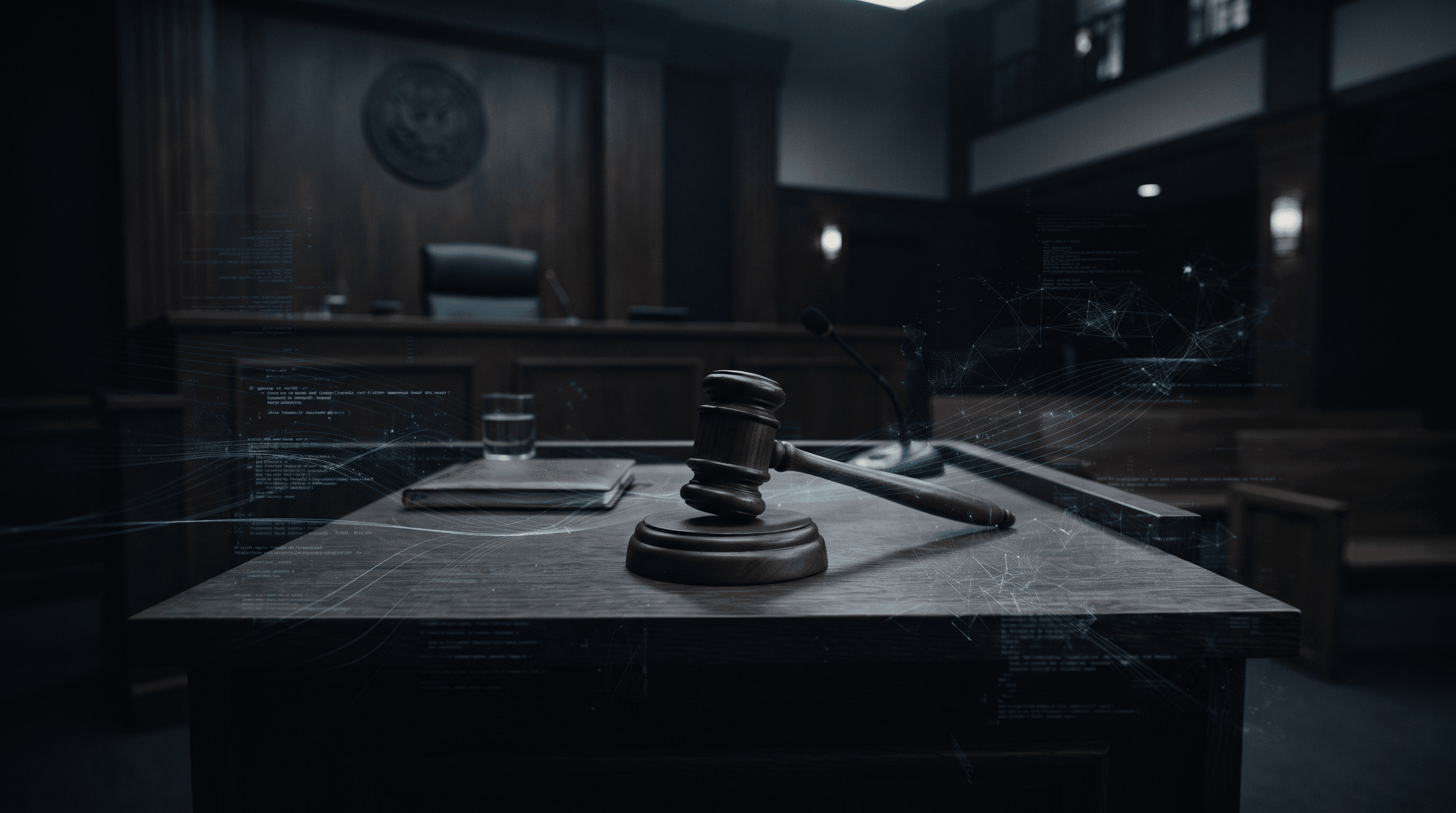
When AI Makes Up Evidence
AI hallucinations have been a running joke in tech circles for years: the absurd citations, the fake biographies, the invented historical events that sound just plausible enough to fool a casual reader.
What happens when the reader isn't casual, but a prosecutor preparing a criminal case?
In Nevada County, California, that question now has a real answer. Prosecutors in the District Attorney's office allegedly used generative AI tools that fabricated facts which ended up in their criminal court filings, and a judge will decide whether the state cut corners with artificial intelligence at the expense of defendants' rights.
The Incident
The Nevada County District Attorney is facing formal scrutiny after a defendant's legal team discovered that case materials prepared by prosecutors contained AI-fabricated information. According to the complaint, the generative AI tool produced convincing-sounding but entirely invented facts that were incorporated into court documents without verification.
"The widespread use of generative artificial intelligence is something courts have struggled to respond to," the defendant's legal team argued, calling the DA's use of AI "shocking."
The case has drawn attention beyond Nevada County because it involves prosecutors, officers of the court whose duty includes not just winning cases, but ensuring justice. A prosecutor's AI hallucination isn't an embarrassing oops. It's a potential violation of due process.
Why AI Hallucinates in Legal Contexts
Former prosecutor Alana Matthews, speaking to CBS News, highlighted the fundamental problem: "It tries to please you. So when you enter a query, it's going to try to find an answer and we make the assumption that the answer it gives back to us is founded in fact or truth."
This is the core mechanism of AI hallucination, and it is uniquely dangerous in legal settings. Large language models are trained to produce coherent, plausible text, not to verify truth. When a prosecutor asks "find precedent cases for this argument," the model may construct an entirely fictional case citation that reads exactly like a real one. In a field where precedent and factual accuracy are the entire foundation, an invented precedent can derail a proceeding or taint a verdict.
Previous incidents, most notably lawyers submitting ChatGPT-hallucinated case citations in federal court, had already established that AI tools cannot be trusted for legal research without human verification. The Nevada County case escalates the concern by showing that the problem extends to the prosecution itself.
The DA's Response
The Nevada County District Attorney's office declined to comment on the specifics of the case but acknowledged the issue in a statement: "We have taken corrective measures and look forward to working with the court-appointed referee to ensure an accurate understanding of the relevant facts and bring this matter to resolution."
The Board of Supervisors held a closed-door meeting on the case last week, signaling that the political and institutional implications are being taken seriously at the county level.
A Judge Will Decide
The central question now sits before a judge: did prosecutors knowingly or negligently use AI to generate evidence, and what remedy exists for defendants harmed by AI-invented facts?
The ruling could set precedent for how courts handle AI-generated evidence across California and, potentially, the nation. If the judge finds the DA's office acted improperly, the consequences could range from suppressed evidence to dismissed cases and a requirement that all AI-generated materials in court filings be explicitly labeled and verified.
The Bigger Picture
The Nevada County case represents a inflection point in the conversation about AI and the legal system. For years, the concern has been about defendants using AI to commit crimes. This case flips the script: the state itself used AI carelessly, and defendants may have been harmed as a result.
Alana Matthews summed up the challenge: "Every prosecutor has a duty; every attorney has a duty to research." When AI tools make that research indistinguishable from fabrication, the duty becomes harder to fulfill, and the consequences of failure become far more serious.
AI hallucinations have always been a risk. The Nevada County case proves they are not just a technical problem, but a constitutional one.
Sources
- CBS News Sacramento: Nevada County prosecutors allegedly used generative AI that fabricated facts, sparking scrutiny
- CBS News Sacramento (video coverage): Same story via video report