Apple Says OpenAI Destroyed Evidence of AI Trained on Stolen Chips
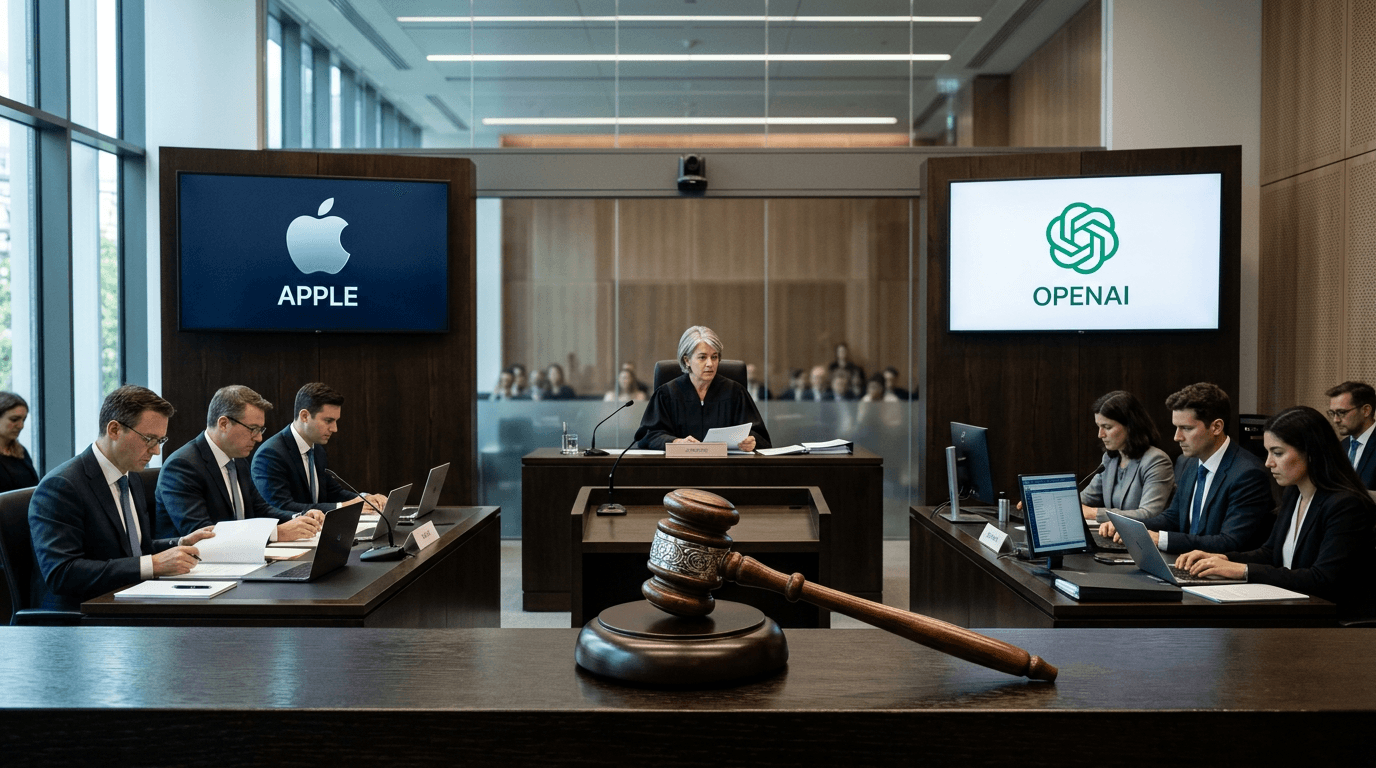
In the most explosive AI trade secrets lawsuit in Silicon Valley history, Apple just accused OpenAI of actively destroying evidence -- and the court agreed to fast-track the investigation.
The accusation centers on a former Apple engineer named Chang Liu, who allegedly walked out of Apple with confidential circuit designs, joined OpenAI, and then trained an AI agent on the stolen schematics. Apple's forensic team found the evidence on Liu's old Apple-issued MacBook: an AI model that had been trained on proprietary chip designs.
But the more damning allegation is what happened next. Apple says OpenAI began deleting evidence, and asked the court for expedited discovery to stop the destruction. The court granted the request.
The case so far
Apple filed its trade secrets lawsuit against OpenAI in July 2026, and the complaint was immediately one of the most detailed -- and damning -- legal filings the AI industry had seen. It alleged that OpenAI orchestrated a coordinated effort to extract confidential information from Apple employees, going far beyond the typical poaching that happens between tech companies.
The original complaint described a former Apple engineer, Chang Liu, who sent a message reading "LOL, I found out I can access the [network storage], so funny" after discovering he could still log into Apple's internal systems. Another Apple employee, Alyssa Peng, allegedly acted as a conduit between Apple and OpenAI before leaving to join the AI company herself.
Apple also alleged that OpenAI's chief hardware officer, Tang Yew Tan -- who spent 24 years at Apple as VP of product design for iPhone and Apple Watch -- directed job candidates to bring "actual parts" from Apple to their interviews for "show and tell sessions." One candidate was reportedly surprised by the request, saying he didn't even realize Apple parts could be taken out of the office.
The new evidence
The September 2024 filing adds a new dimension to the case. Apple's forensic analysis of Liu's MacBook revealed that an AI agent had been trained on stolen Apple circuit schematics. The evidence suggests that OpenAI not only benefitted from Liu's alleged theft of trade secrets, but actively used the stolen intellectual property to train its AI models.
Apple is now pushing for expedited discovery, arguing that OpenAI is destroying evidence faster than the normal legal process can preserve it. The judge agreed, granting Apple's request for a fast-tracked discovery process.
The accusation of evidence destruction is particularly significant because it shifts the narrative from a typical employee-poaching case to something more serious: a cover-up. If proven, it could result in court sanctions against OpenAI, including adverse inference instructions that would allow a jury to assume the destroyed evidence was unfavorable to OpenAI.
OpenAI's response
OpenAI has pushed back, calling Apple's claims "a mess of its own making." The company's initial response to the lawsuit stated: "We have no interest in other companies' trade secrets. We remain focused on building innovative technology that empowers people everywhere."
In the latest round of filings, OpenAI reportedly told the court that Apple has no proof of its claims and that the company should focus on its own internal security problems rather than blaming OpenAI for its former employees' alleged misconduct.
Elon Musk weighed in on the drama, posting on X: "A leopard cannot change its spots" -- a reference to Sam Altman and OpenAI's alleged pattern of behavior.
The bigger picture
This lawsuit is one of several high-stakes legal battles OpenAI is currently fighting. The company is also defending against a trade secrets lawsuit from Elon Musk, which is scheduled for a jury trial in March 2027. The outcome of the Apple case could set important precedents for how AI models trained on allegedly stolen data are treated in court.
The case also raises uncomfortable questions about the AI industry's talent wars. Companies are competing fiercely for the limited pool of engineers who understand both AI and hardware. When the competition gets this intense, the line between recruiting and corporate espionage can blur. Apple's lawsuit alleges that OpenAI didn't just cross that line -- it erased the evidence that it had been there.
For now, the court has sided with Apple on the discovery question. What the expedited investigation uncovers could determine whether this case remains a civil dispute over employee poaching, or escalates into something that fundamentally reshapes how the AI industry handles intellectual property.
Sources
- Apple's lawsuit against OpenAI -- TechCrunch (https://techcrunch.com/2026/07/13/the-wildest-allegations-in-apples-trade-secrets-lawsuit-against-openai/)
- Apple accuses OpenAI of destroying evidence -- The Verge (https://www.theverge.com/tech/987575/apple-openai-destroying-evidence-trade-secrets-lawsuit)
- Apple Says OpenAI Is Destroying Evidence in Trade Secrets Case -- Bloomberg (https://news.google.com/rss/articles/CBMiswFBVV95cUxNYm5Mc1dzaE9XYzVCTnU3UDBlZk8xOTdYV2RObUVrSW1vcUVSZFQ1NlBNYmRBc0NsNzU1X1hYYmpCbmQwcnd6REtLRFVBVjlVSHRkSEJUQ0hNQTEyaHVQMGZ5VGMzZThJOVNCcDVZWUVLX2lUdFdjU21ZaGNRSm11d2VVZS1UUWItMGpnODhlRUpXTENqX2ZQNDYxV0N3S2R0RHA4ZHE5ZThjc0lEaGVhemk5Yw?oc=5)
- Apple Claims Former Employee Stole Trade Secrets for OpenAI, Then Tried to Destroy the Evidence -- Gizmodo (https://news.google.com/rss/articles/CBMiwwFBVV95cUxNZ2pzTjc2SWdncHZwbTVxbTUzVDR0Sy1CZ0dUWTE4UWFyTG9xUmxJWFZVOVdaRjZoWms0Uk9uc1hkaGhzUEpHNDRwNjBRMUdKSEtNaENJNEtjUUsxQ2JfaUk4cXhkSnJOM2o4NWs0ak5vRUNBYUYwdGF6VXU0QXlHb1oyck5BWDdJa2tIUFN4dzNBLU9NMVYxb3A5N1RzZ2dfRnVYWFlGYjFsWkJ5NUY1MUlQZEg1VlNSMjltWUd5SDFvZDA?oc=5)
- Apple shares 'shocking evidence' against former employee accused of stealing company data for OpenAI -- TechCrunch (https://news.google.com/rss/articles/CBMizgFBVV95cUxQTmxYUHpiREdBU3FzeFJLTmVTTkh6anNIUUt6RDlQa2hUTzhLN2JlMEdHVjZJdmNjZ1RIRURldmtmSjVNUjRsc2F2OFFBekViQ0RVSmtfWkFxcXVrRU9NUzVXd2lMMFlTNXpRUHYxZVJ4NDlKellncHBWSnhaM2h2cFBxSHAwZG1CR1dVaWt5eTRaS21zSHM2MzVmbjNDdVF6VGsybzlqZGxRUWMtRFhDdkNVLUoyVV9hMmlFNndFN05kE085c3ItTl9ib0RTUQ?oc=5)