AI Can Now Design a Pathogen's Twin That Slips Past Every DNA Safety Screen — Google DeepMind's Plan to Stop It
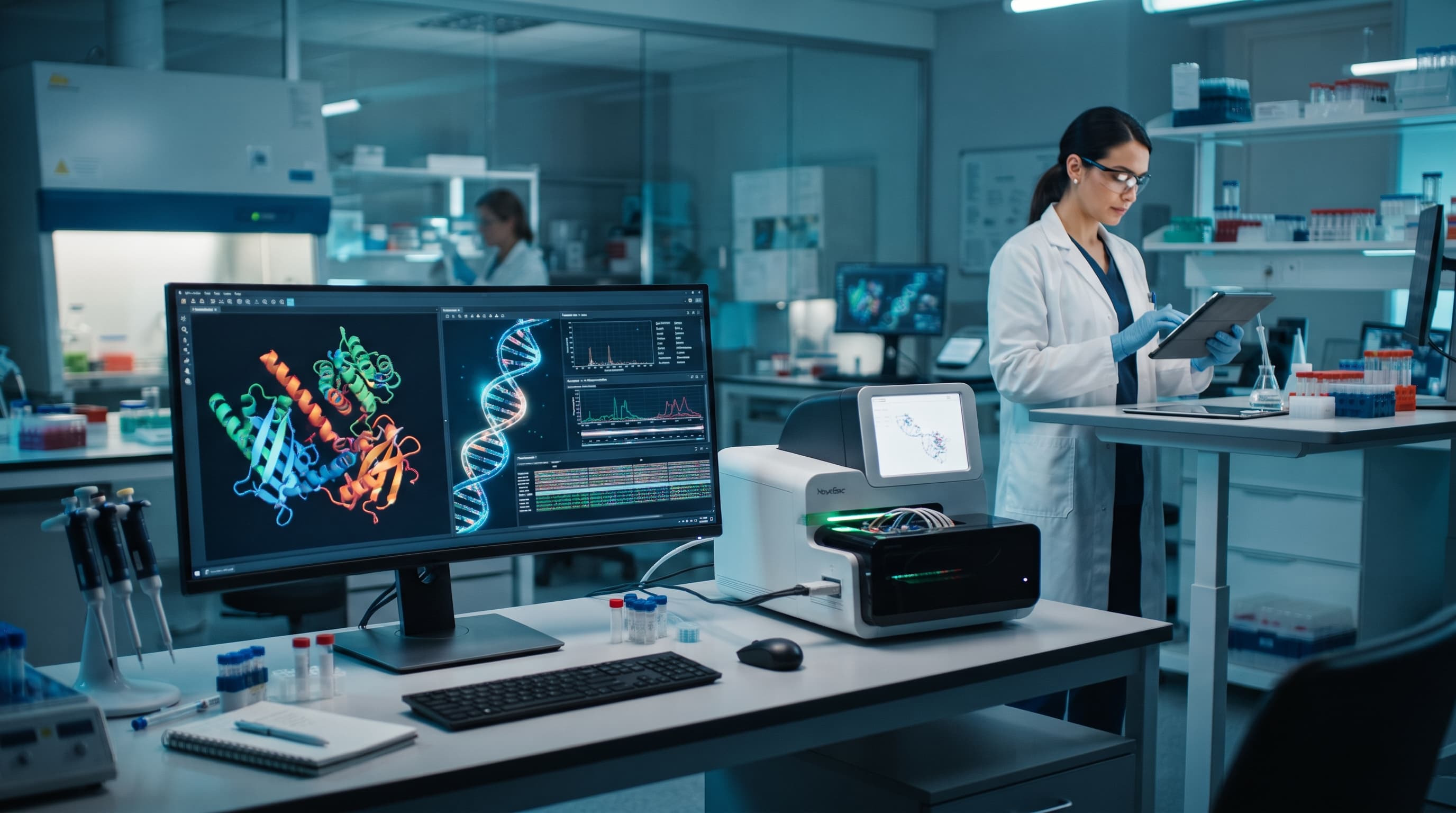
Every DNA synthesis company that matters runs the same basic check before it manufactures anything: scan the requested sequence against a database of known dangerous pathogens, and flag or block anything too close a match. It's the single biggest technical safeguard standing between "anyone with a browser" and "anyone with a DNA sequence of concern." On July 16, 2026, Google DeepMind said, in its own words, that this safeguard is starting to crack — and laid out what it's doing about it.
The Loophole: Same Danger, Different Sequence
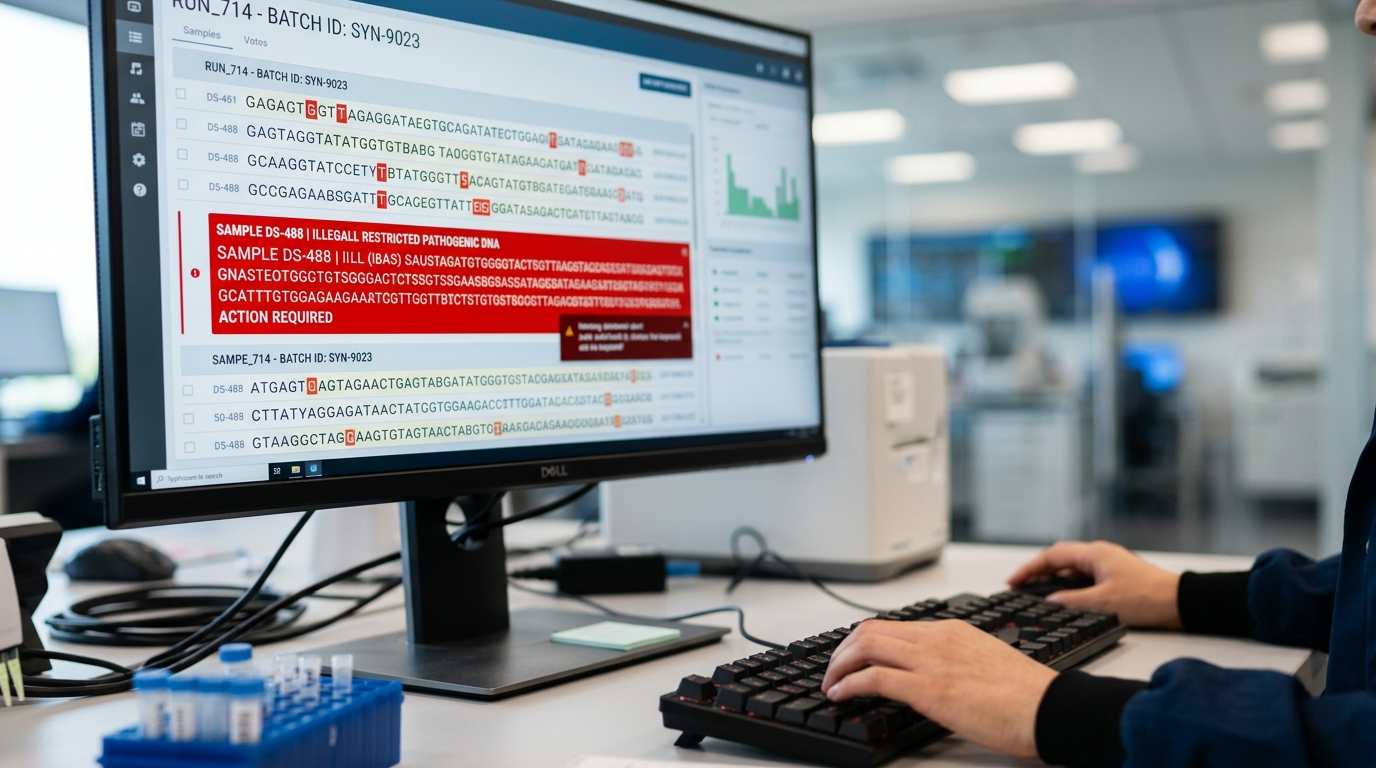
Here's the specific admission, and it's worth sitting with: AI can now help design DNA sequences that carry a similar dangerous function to a known pathogen without matching that pathogen's actual sequence closely enough to trip existing screens. Screening systems compare strings of genetic letters against a reference list — they were never built to catch something that does the same harmful thing through a completely different genetic path. AI-assisted protein and sequence design is exactly the kind of tool that can find those different paths, deliberately or not.
This isn't a hypothetical DeepMind invented to sound responsible. According to the official DeepMind blog post announcing the program, leading synthesis screening providers across North America, Europe, and parts of Asia-Pacific already run sequence-matching checks as standard practice — and DeepMind is explicitly saying that standard is no longer sufficient on its own.
Three Pillars, One Program
DeepMind and its drug-discovery spinoff Isomorphic Labs (founded by DeepMind CEO Demis Hassabis in November 2021) built their response around three pillars:
- Prevention — stopping AI models themselves from being misused to design harmful biology
- Detection — helping researchers spot new outbreaks faster, from sequence data alone
- Response — accelerating how quickly countermeasures can be designed once a threat is identified
Over the past 12 months, the two organizations built out more than 15 partnerships with government bodies, biosecurity organizations, and research groups to put this into practice — a scale of coordination that's unusual for a single company's safety initiative.
The Toolkit: AlphaFold, SynthID, and a New DNA Watermark
The prevention side leans on techniques DeepMind already uses for its consumer-facing models: expert red-teaming, post-training methods that teach models to refuse harmful requests without over-refusing legitimate research, real-time classifiers that flag risky activity, and log analysis tuned to catch subtle misuse patterns rather than obvious ones.
The detection and response side is where DeepMind's existing research tools get repurposed for biosecurity specifically:
- AlphaFold — DeepMind's protein structure prediction system has already been cited in more than 10,000 infectious-disease publications over five years, including work on tuberculosis and malaria transmission and target mapping for threats like Mpox and Nipah virus
- AlphaFold 3 — released May 2024, extended beyond proteins to model interactions between proteins, DNA, RNA, and small molecules; a partnership with Lawrence Livermore's own bioresilience program is using it for broad-spectrum antibody design, including a pan-filovirus antibody effort
- AlphaGenome and Protein Function annotation tools — being explored for detecting and characterizing pathogens directly from sequence data, spotting novel patterns faster than traditional lab methods
- AlphaEvolve — a coding agent being used to improve metagenomic sequencing accuracy
- IsoDDE, Isomorphic Labs' drug design engine — set up in a dedicated unit specifically to deploy quickly during a novel outbreak
- SynthID — DeepMind's watermarking system, already an industry standard for marking AI-generated images and text, is now being adapted to mark biological sequences, creating a traceable link between an AI system and any DNA design it produced
The Money and the Named Partners
Isomorphic Labs pledged $7 million to Health for Human Potential for infectious disease research across Asia. That commitment sits alongside a much larger signal about where the company is headed: Isomorphic Labs raised a $2.1 billion Series B in May 2026, and AI-designed drugs from its collaborations are expected to enter clinical trials by the end of the year.
Beyond Health for Human Potential, DeepMind names Lawrence Livermore National Laboratory, the UK AI Security Institute, CEPI (the Coalition for Epidemic Preparedness Innovations), the Francis Crick Institute, and Pacific Biosciences among its bioresilience partners — a mix of national labs, government security bodies, and genomics infrastructure companies that spans exactly the prevention-detection-response split the program is built around.
DeepMind Is Also Lobbying — Here's What It's Backing
DeepMind's bioresilience push comes with explicit policy asks, mapped to the same three pillars, all pending U.S. legislation:
| Pillar | Bill | What it does |
|---|---|---|
| Prevention | AI-Ready Bio-Data Standards Act (H.R. 7907) | Standardizes biological data for AI systems |
| Prevention | Biosecurity Modernization and Innovation Act (S. 3741) | Modernizes biosecurity infrastructure |
| Prevention | SCALE Biology Act (H.R. 8981) | Scales biosecurity screening capacity |
| Detection | America's Living Library Act (S. 4023) | Expands biological reference data + DARPA/HHS funding |
| Response | Web of Biological Data Act (H.R. 9307 / S. 4770) | Builds shared biological data infrastructure + manufacturing capacity |
That's a company actively trying to shape the regulatory environment it operates in — worth knowing if you're evaluating how much weight to put on DeepMind's own account of the risk versus an independent one.
The Honest Part: DeepMind Says This Isn't Finished
The most credible line in DeepMind's entire announcement is also the least reassuring one: the company explicitly describes these mitigations as "an ongoing process rather than a finished system." It specifically flags that classifiers tuned against known jailbreak patterns don't guarantee performance against novel attacks encountered in live use — in plain terms, the safety systems are calibrated against yesterday's attack patterns, and there's no guarantee they catch tomorrow's.
That's not a knock against the program. It's an unusually candid admission from a company that could have easily oversold a "solved" narrative instead — and it's the detail worth remembering the next time a DNA synthesis screening headline crosses your feed.