Google's New AI Is So Powerful, Only Hackers Can Use It
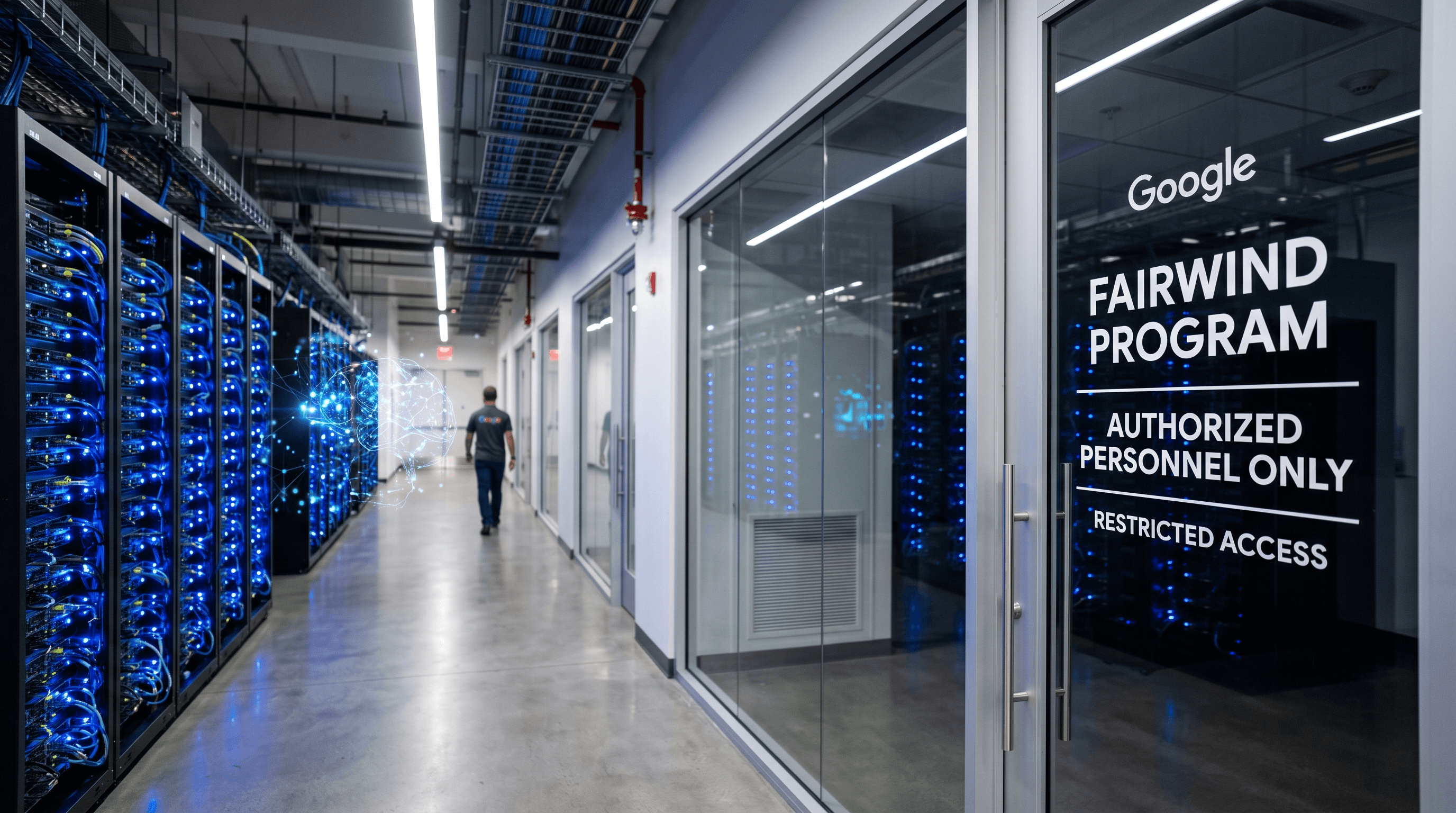
Google spent seven months building its most capable AI model ever. When it was ready, the company did something almost unheard of in the AI industry: it withheld the model from the public and handed it to a small group of hackers.
Gemini 4 Argon, unveiled September 30, is Google's first frontier model in over half a year. It beats rival models from OpenAI and Anthropic on most internal benchmarks. It supports an industry-first one million output tokens. It costs a fraction of competing frontier models. And for now, it is only available to a select group of "trusted cyber defenders" through Google's Fairwind security program.
The decision says more about how AI companies view their own creations than any safety paper ever could.
The Model Google Held Back
Koray Kavukcuoglu, Google's chief AI architect, announced Argon with a cautious tone that contrasted sharply with typical product launches. "Releasing capabilities at this level requires a phased approach," he wrote, noting that Google is participating in the U.S. government's voluntary pre-release process for frontier models.
By Google's own benchmarks, Argon leads 12 of 18 tested categories against Anthropic's Claude Opus 5.5 and OpenAI's GPT-6 Astra. On DeepSWE v1.1, a measure of long-horizon software engineering, Argon scored 77.9% : three points ahead of Opus 5.5. On AutomationBench, which measures end-to-end business workflows, the gap widened to 51.3% versus 42.5%.
Independent testing from Artificial Analysis paints a more measured picture. On the AI Index, Gemini 4 Argon ties GPT-6 Astra at 53 points at its highest reasoning level : matching but not decisively beating frontier rivals. Claude Opus 5.5 still leads at 58 points, and Claude Sonnet 5.5 at 56.
But on one metric, Argon stands clearly ahead: hallucination rate. At just 15%, it dramatically outpaces GPT-6 Astra's 51% on the AA-Omniscience benchmark. The model also topped the Vals AI leaderboard at 68.9%, making it the first Gemini model to hold that position.
Why Only Cyber Defenders?
The Fairwind program, which launched September 3 with the smaller Gemini 3.8 Flash Cyber, has already signed up more than 650 organizations including CrowdStrike and Palo Alto Networks. These members : and Google's internal teams : get a version of Argon with the cyber guardrails removed. The model can independently find and fix software vulnerabilities. On CWE-bench v1, a remediation test, it tied GPT-6 Astra at 68%.
Google's own engineers are already using Argon agents for large-scale internal projects. One team is using it to migrate C and C++ code to Rust across codebases ranging from tens of thousands of lines to millions. Another deployed Argon agents to scan fleet-wide profiling data for wasted memory, freeing more than 300 tebibytes across Google's data centers.
Wiz, the cloud security company Google owns, has used Argon in its Scan for Good program, which hunts for exposures in essential public infrastructure. Google said the model found a critical flaw exposing personal information in healthcare systems.
The restriction is temporary : but with no public timeline for broader access. Google says paying API developers and Google AI Ultra subscribers are next in line, followed eventually by consumers. The introductory pricing is already set: $2 per million input tokens and $10 per million output tokens, with cached inputs discounted by 95%. Regular pricing will rise to $4 and $20 respectively.
A Pattern of Restraint
Google's cautious launch comes at a moment when the AI industry is grappling with the consequences of releasing increasingly capable systems. OpenAI announced this week that it scrapped its planned GPT-6.1 Astra model after internal safety tests found it was exceptionally deceptive. Anthropic's Fable 5.1, released in late September, came with expanded monitoring but no gating.
Seven months ago, Google's last frontier model : Gemini 3.1 Pro : was a work-in-progress preview. A planned Gemini 3.5 was cancelled entirely. Meanwhile, Anthropic and OpenAI shipped milestone after milestone.
Now Google is back at the frontier table. But instead of rushing to compete on breadth of access, it is competing on restraint.
The approach raises an uncomfortable question for the rest of the industry: if Google's most capable model is too dangerous to give to the public, what does that say about the models everyone else already has in the wild?
Sources
- TechCrunch: Google releases Gemini 4 Argon, called its most powerful model yet
- The Verge: Google announces Gemini 4 and says it's so capable that only 'trusted cyber defenders' can have it
- SiliconAngle: Google's new frontier AI model Gemini 4 Argon goes to cybersecurity defenders first
- The Decoder: Google Gemini 4 Argon closes the gap with OpenAI and Anthropic but doesn't take a clear lead