OpenClaw 2.0: Personal AI Agents for Everyone

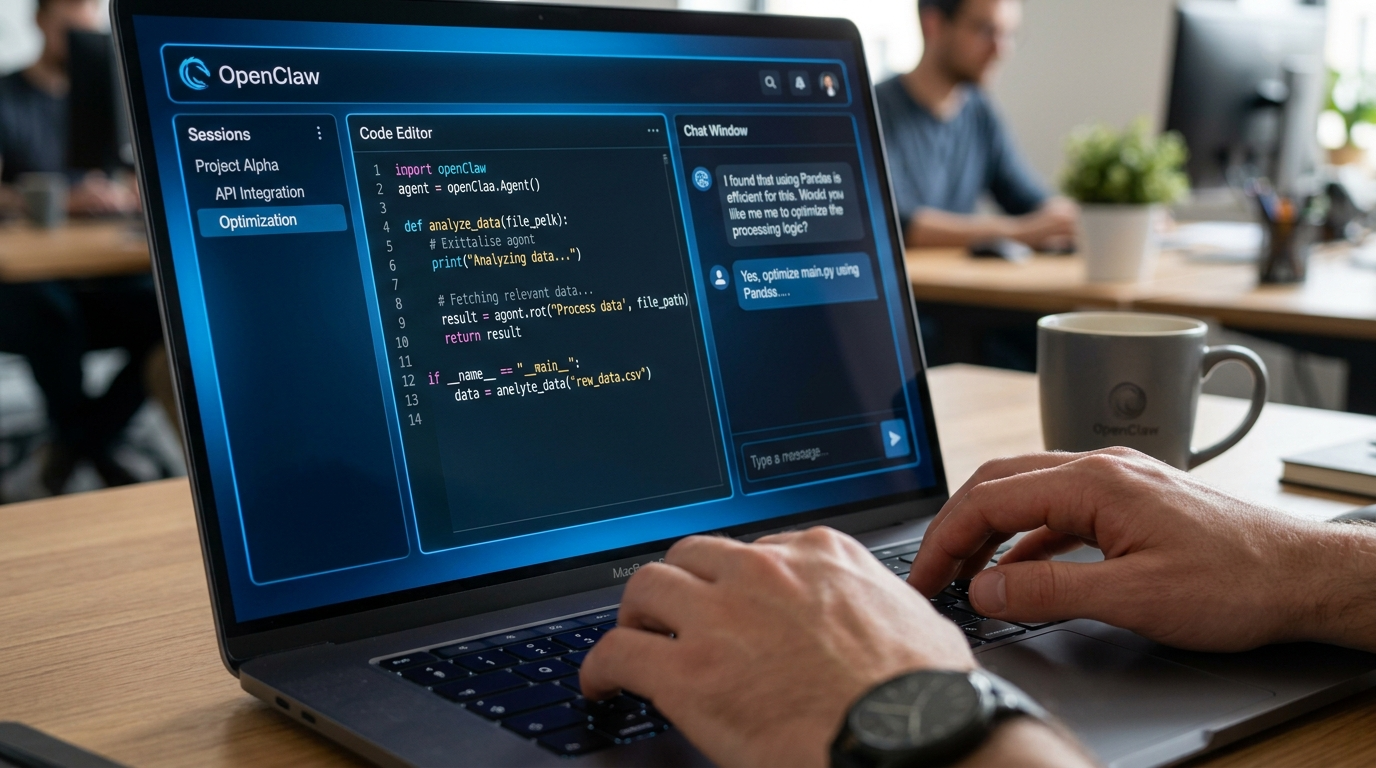
Every few months, the AI industry produces a story that quietly rewrites an assumption everyone had stopped questioning. This week, that story is OpenClaw 2.0.
The OpenClaw Foundation released the largest update in the project's history -- version 2026.8.1, branded as OpenClaw 2.0 -- with over 16,000 pull requests from 933 contributors, 569 of them first-time open-source contributors. The release represents a quiet but significant shift in how personal AI agents are built and who gets to use them.
What OpenClaw Actually Does
Unlike a traditional chatbot such as ChatGPT, which lives in a browser tab and only answers questions, OpenClaw acts like a digital secretary that can actually execute tasks on a user's behalf. It lives on your computer or in the cloud, and users have turned it into everything from a coding agent to a personal assistant that organizes their inbox, manages their calendar, and checks in on their everyday activity.
The framework is free and open source, hosted on GitHub. This means anyone can inspect, modify, or extend the code -- a stark contrast to the proprietary AI agent systems being developed by OpenAI, Anthropic, and Google.
The Biggest Change: Setup That Actually Works
Version 2.0's most immediately visible change is a simplified first-run setup. The software now detects existing resources on your computer -- including ChatGPT or Claude subscriptions, API keys, and locally hosted models -- which cuts out many of the configuration steps users previously had to deal with. Additional settings can be adjusted later during a conversation with the bot.
This matters more than it sounds like. The single biggest barrier to entry for personal AI agents has been configuration complexity. Most users who try an open-source agent framework give up before they ever get it running. OpenClaw 2.0's auto-detection is a direct answer to that complaint.
Rebuilt Browser App: Sessions, Rails, and Companions
The browser app has been rebuilt from scratch. It now opens a conversation right away and lets users continue setup, pick up ongoing work, or track tasks in real time. Two new features stand out:
The Session Rail is a compact status display inside the chat that shows the progress of a running session, including ratings, plan progress, and pull requests. It gives users real-time visibility into what their agent is doing -- a feature that paid solutions like OpenAI's Operator and Claude's Computer Use lack.
The Companion Thread lets users ask questions about the current session without interrupting the agent. According to the documentation, the gateway loads a limited snapshot of the session for this and uses a separate utility model, so the main agent's context is never disturbed.
Multiplayer: Shared Cloud Sessions
Perhaps the most significant new capability is shared cloud sessions, which let multiple users work on the same tasks. Team members can be pulled into ongoing work or assigned tasks along with their full context. The OpenClaw team says it now uses this feature to build OpenClaw itself.
Sessions can run in three places: on the local gateway as the default, on the user's own hardware connected via OpenClaw Connect (Paired Devices), or on rented disposable machines through the Crabbox provisioning tool, which supports backends like AWS and Hetzner. Provider credentials always stay on the gateway and never reach the remote machine, according to the documentation.
Security: Trust Boundaries and Least Privilege
Early OpenClaw versions suffered from major security flaws. Version 2.0 addresses these with explicit trust boundaries, least-privilege controls, and stronger protection against prompt abuse. The framework is now aligned around who can trigger it, what it can access, where code executes, and where credentials can be sent.
Users are still expected to harden their installation against the open internet and maintain strong authentication if they choose to connect personal information or use tools that can execute on their cloud service or local machine. But the security improvements close the most obvious attack surfaces.
The Bigger Picture
OpenClaw 2.0 arrives at a moment of ferment in the AI agent space. OpenAI recently hired Peter Steinberger, OpenClaw's original creator, to lead its agent efforts. Anthropic's Claude Code is gaining traction as a developer tool. Google is building its own agent frameworks.
But OpenClaw 2.0 makes a different bet: that the future of AI agents is open, community-driven, and free. With 933 contributors and 16,000 pull requests, it has the momentum of a project that has outgrown any single company's roadmap.
The question is whether that momentum translates into mainstream adoption. OpenClaw still requires more technical skill than a typical ChatGPT user has. The auto-detection setup helps, but installing and running an open-source agent framework is not yet a one-click experience.
That gap is also an opportunity. Every person who gets OpenClaw running today is learning to use a tool that, in two years, may be as common as a web browser. The early adopters of OpenClaw 2.0 are not just users -- they are the ones building the documentation, the plugins, and the community practices that will define how everyone else uses AI agents.
Sources
- OpenClaw 2.0 brings simplified setup, a rebuilt browser app, and multiplayer sessions -- The Decoder
- OpenClaw just gave everyone version 2.0 and it comes with major updates -- SiliconAngle
- OpenClaw Releases OpenClaw 2.0: Guided Model Setup, 575 ms Control UI Startup, and One Trust Boundary Per Gateway -- MarkTechPost
- OpenClaw on GitHub