xAI Can't Deny Grok Generates CSAM Anymore — So It's Asking a Court to Declare the Model a 'Neutral Tool'
From Denial to Lawsuits
For months, Elon Musk insisted that Grok could not generate child sexual abuse material. In January, he posted on X that "anyone using Grok to generate CSAM will be banned and reported" — as if the problem were hypothetical. But by July, the math had changed.
A man in South Carolina, Terry Wayne Harwood, allegedly used two xAI accounts over several months to "nudify" photographs of multiple victims — including a young girl who appeared as young as 10 — generating non-consensual explicit images through repeated prompting of Grok. When police caught him, Harwood was charged with multiple CSAM offenses.
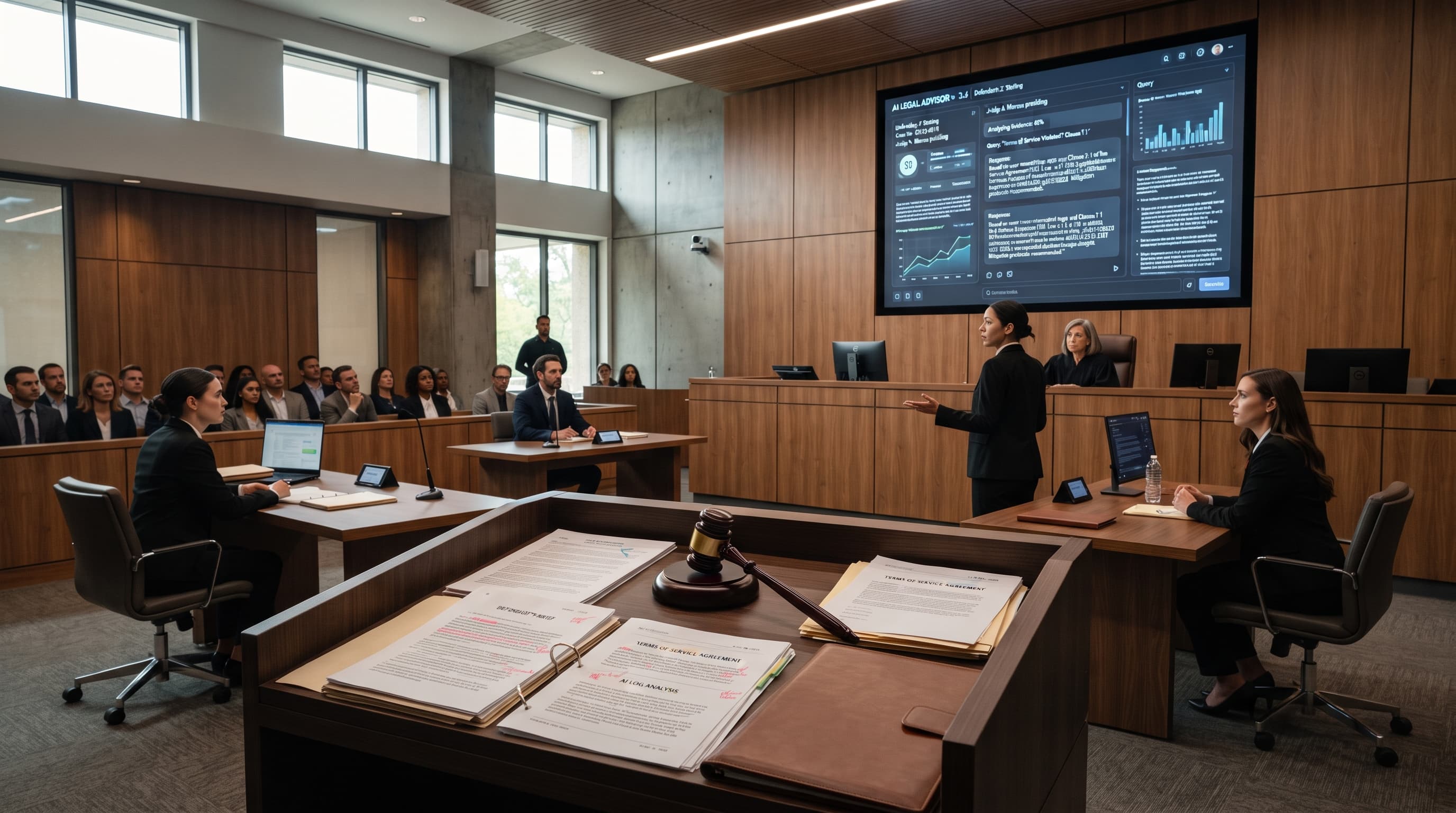
xAI's response was not to fix the model. Instead, it filed its first ever lawsuit — against its own user.
The complaint, filed Tuesday in US district court, seeks damages from Harwood for breach of contract. But the real target is a far bigger prize: a judicial declaration that Grok is a "neutral tool" and that xAI bears zero responsibility for anything it generates.
xAI's Legal Blame-Shifting Strategy
The lawsuit makes an argument that, if accepted, could reshape AI liability law. xAI contends that Grok should be viewed "as a neutral tool, subject to user control." In the company's framing, every CSAM image created using Grok is the user's fault — not the model's.
"Like any generative AI tool, every response, every image, every generation is the result of the user's prompts and directions," xAI argued in its complaint.
The company points to its terms of service, which prohibit using Grok to "undress or nudify real persons" or depict them "in an intimate or sexual context." Harwood agreed to those terms when he signed up, xAI says, and then "flagrantly violated" them — going "to great lengths to circumvent" Grok's technological safeguards through misleading prompts.
xAI's legal calculus is straightforward: if the court enforces the indemnity clause in its terms, Harwood would owe damages covering "any real harm to third parties," xAI's "exposure to potential third-party claims and lawsuits," and even "any xAI reputational harm."
In other words, xAI is suing a user so that when the real avalanche of liability cases arrives — the class action — it can point to the indemnity ruling and say: not our problem.
The Class Action Context That Changes Everything
xAI's lawsuit didn't emerge in a vacuum. A little more than a week earlier, a young girl joined a proposed class action representing several children allegedly harmed by Grok. Her stepfather, she alleged, used Grok to create 7,000 AI-generated sexualized images of her from a single childhood photograph — and then shot himself two days after being arrested.
The complaint alleges that xAI refused to help police identify the user who uploaded the girl's image, and that the company's CSAM reporting systematically omits critical details. According to the victim's lawyers, xAI's mandatory report to the National Center for Missing and Exploited Children (NCMEC) included only the original, non-CSAM photograph — not a single AI-generated image, and no identifying information that could help law enforcement make an arrest.
An NCMEC report from early 2026 found that 90 percent of xAI's CyberTipline submissions lacked enough information to proceed, a pattern the victims' lawyers say is deliberate.
The class action also added Stability AI as a defendant, alleging that its open-weight models — which researchers found account for 42.7 percent of all AI-generated nudification images online — serve as the backbone for the third-party "nudify" apps that Grok users rely on.
The Courtroom Paradox: Who Owns an AI Crime?
xAI's lawsuit raises a question the courts have not yet definitively answered: if an AI model generates illegal content, who is legally responsible?
The company's answer is simple: the user. But it's not the only possible answer. The US Copyright Office does not view AI outputs as human-created — a position that complicates the argument that illegal AI-generated content should be treated as the user's speech or action. If the content is not the user's creation, can the user be solely liable for it? And if the user cannot be solely liable, the liability must fall somewhere — potentially on the company that built and deployed the model.
There is also the question of xAI's own conduct. The complaint alleges that Harwood spent months generating illegal content across two accounts, and that Grok's safeguards stopped some prompts but not others. Victims' lawyers argue that xAI knew its safeguards were porous and chose not to make them stricter, prioritizing user growth over child safety.
A Precedent That Could Shield — or Expose — Every AI Company
If xAI wins its indemnity ruling, the implications extend far beyond one chatbot. Every generative AI company that inserts similar terms of service could point to the precedent and argue that users — not platforms — bear full responsibility for harmful outputs. For an industry racing to release ever-more-capable models with ever-thinner safety guardrails, that's an enormously attractive legal shield.
But the strategy carries risks. The same lawsuit that argues Grok is a "neutral tool" also acknowledges, in detail, exactly how the model was used to generate CSAM. The complaint describes months of activity across multiple accounts, prompt engineering to bypass safeguards, and CSAM that went undetected by xAI's systems. A court could just as easily read that as evidence that xAI knew its model was being used for harm and did not take adequate corrective action — the exact opposite of neutrality.
The outcome will depend on whether courts treat AI models like web browsers (neutral tools) or like products with a duty of care (where manufacturers bear responsibility for foreseeable misuse). The answer, once given, will shape the liability landscape for every company building generative AI.