Bezos Called It Artificial Artificial Intelligence. Amazon Just Killed It.
Amazon is closing Mechanical Turk, the crowdsourcing marketplace that founder Jeff Bezos once memorably called "artificial artificial intelligence."
The service will permanently shut down on September 30, 2026, ending a 21-year run that made it the backbone of AI training data, human-in-the-loop validation, and countless academic research projects. The closure notice, posted on the official Mechanical Turk site, cites a routine program assessment as the reason.
"We regularly evaluate our programs, tools, and services and make adjustments based on those assessments," the notice reads. "Following an assessment, we've made the decision to close Amazon Mechanical Turk, effective September 30, 2026."
The timing is hard to read as coincidence. Mechanical Turk was built for the tasks machines could not do. Now that the machines can do most of them, the human workforce that trained them is being retired.
The Original AI Was People
Mechanical Turk launched in 2005 as Amazon's answer to a specific problem: how to get human judgment at internet scale. The platform broke down large tasks -- image classification, content moderation, data transcription -- into micro-units called HITs (Human Intelligence Tasks). Workers, known as Turkers, completed these tasks for pennies apiece.
For a generation of AI startups and researchers, MTurk was indispensable. It was the cheapest way to get labeled training data, and it spawned an entire ecosystem of academic papers that relied on Turkers for human evaluation. When someone needed bounding boxes drawn on 50,000 images or sentiment labels on a million tweets, they went to Mechanical Turk.
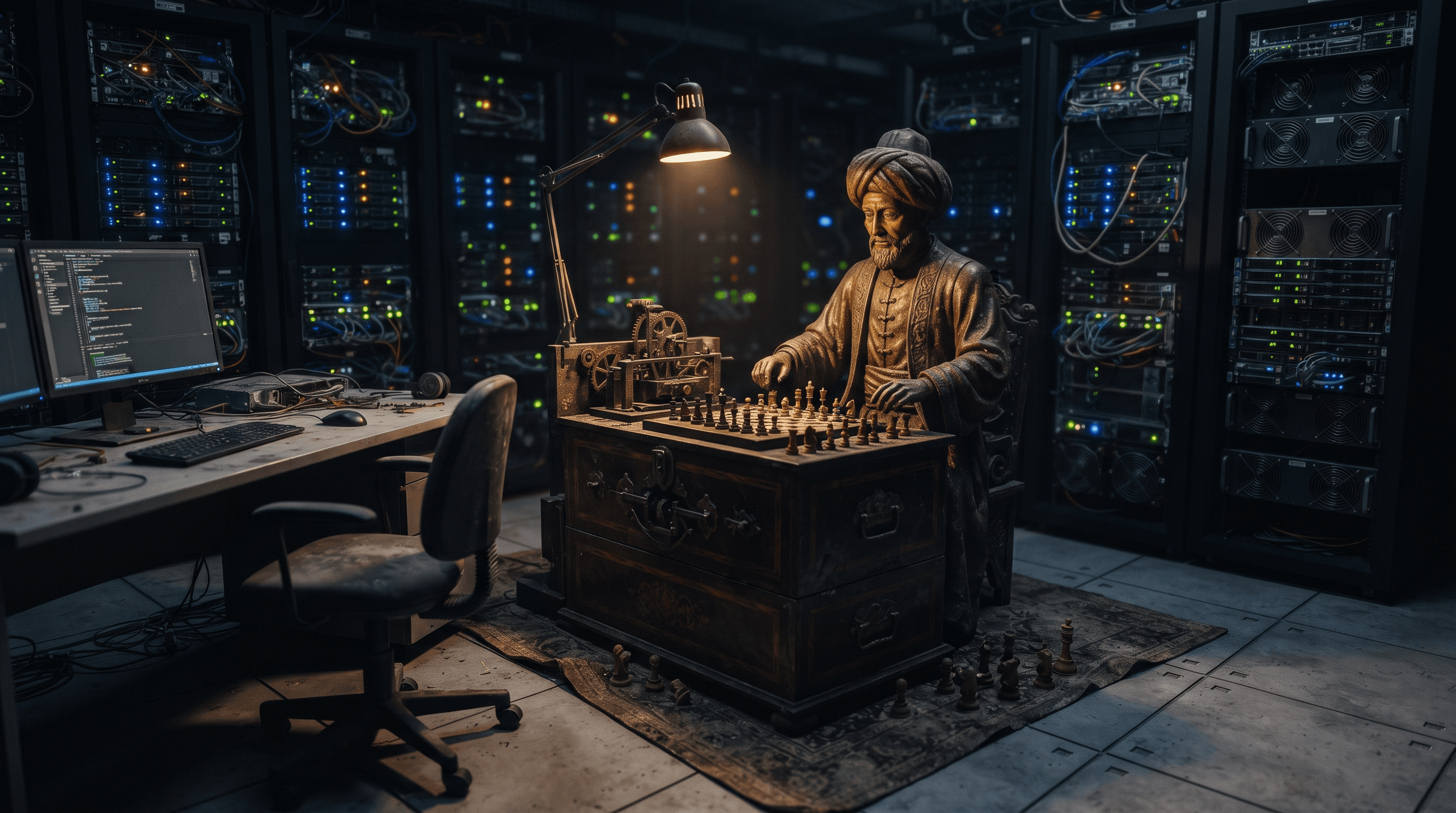
The name itself was a knowing joke. The original Mechanical Turk was an 18th-century chess-playing automaton built by Hungarian nobleman Wolfgang von Kempelen. It toured Europe, defeating Benjamin Franklin and nearly every opponent it faced. The secret: a human chess master was hidden inside the machine, operating the pieces. Bezos applied the same logic to software: call it AI, but keep the humans inside.
The Workers Who Built AI
For the people who actually did the work, the shutdown is more than a logistical inconvenience. Mechanical Turk employed a global workforce of gig workers who relied on the platform for income. The economics were punishing -- Amazon charged a 20% fee on every HIT, and competition among workers drove pay to fractions of a cent per task -- but for many in countries with limited employment options, it was one of the few ways to earn money online.
The closure also affects academic research. Tens of thousands of psychology, economics, and computer science studies have relied on MTurk for subject recruitment and data collection. The platform's worker pool was a critical infrastructure for behavioral research, and its disappearance leaves a gap that alternatives like Prolific have only partially filled.
What Happens Next
The wind-down is straightforward for a platform that changed the course of AI. Workers have until September 30 to verify their payment preferences. HIT submission stops on that date, and unsubmitted tasks will expire automatically. Requesters have until October 30 to approve or reject completed work -- after that, unactioned HITs are auto-approved. Pre-paid requester balances will be refunded within 30 days.
The shutdown extends beyond the standalone marketplace. Mechanical Turk's Worker type will also be removed from SageMaker Ground Truth and Amazon Augmented AI, two AWS services that relied on Turkers for labeling and human review. Customers using those services will need to migrate to alternatives.
For Amazon, the decision is likely a simple calculation. The platform generated revenue through its 20% fee structure, but maintaining a global marketplace with payment infrastructure, dispute resolution, and regulatory compliance across dozens of countries became increasingly expensive relative to the revenue it brought in. Meanwhile, the AI models MTurk helped build have themselves become competitors to the platform's core value proposition.
The Ironic End
The story of Mechanical Turk is the story of AI compressed into a single product. It began with a clever name that acknowledged the hidden human labor inside the machine. It grew into a global workforce that trained the algorithms now rendering that workforce obsolete. And it ends with an announcement that is simultaneously routine and remarkable: a routine program assessment, and the end of artificial artificial intelligence.
Bezos' phrase was meant as a clever marketing line. Twenty-one years later, it reads as unintended prophecy. The artificial artificial intelligence is closing. The real thing is finally here.