Huawei Rushes Ascend 960DT AI Chip to Q1 2027, Challenging Nvidia
For years, Nvidia's dominance in AI chips seemed like a permanent feature of the computing industry : a CUDA-powered fortress built on a decade of software lock-in and relentless hardware iteration. No single competitor had seriously threatened it, and the US export controls on advanced chips to China only reinforced Nvidia's position as the only game in town for frontier AI workloads.
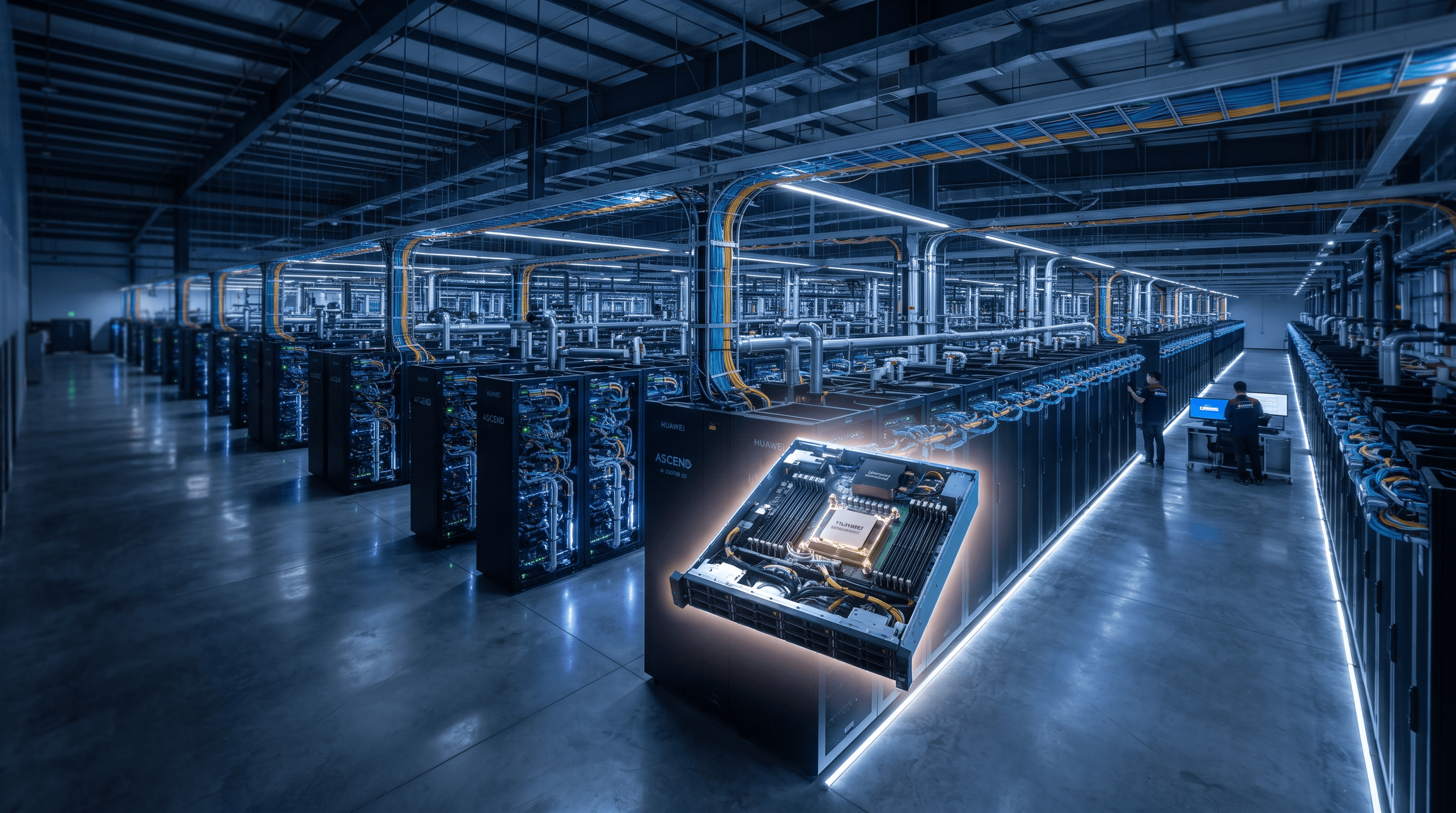
On Thursday at Huawei Connect 2026, the Chinese tech giant made its clearest move yet to change that. Rotating and acting chairman David Wang announced that Huawei's next-generation Ascend 960DT AI chip would launch in the first quarter of 2027 : three quarters ahead of its original schedule.
The Accelerated Timeline
The Ascend 960DT was previously slated for Q3 2027, a Huawei spokesperson told TechCrunch. The company brought the timeline forward by three quarters, describing the chip as "doubling performance and advancing year by year." While the Ascend 960DT arrives first, Huawei also detailed a broader roadmap: a second chip, the Ascend 960PR, is expected later in 2027, and the company has outlined plans for Ascend 970 (288 GB memory) and Ascend 980 (384 GB memory) by 2029.
The timing is notable. The announcement lands one week before US President Trump and Chinese President Xi Jinping are scheduled to meet on September 24 in Washington, DC, where chip policy and AI competition are expected to be high on the agenda.
Beyond the Chip: Peerium Computing
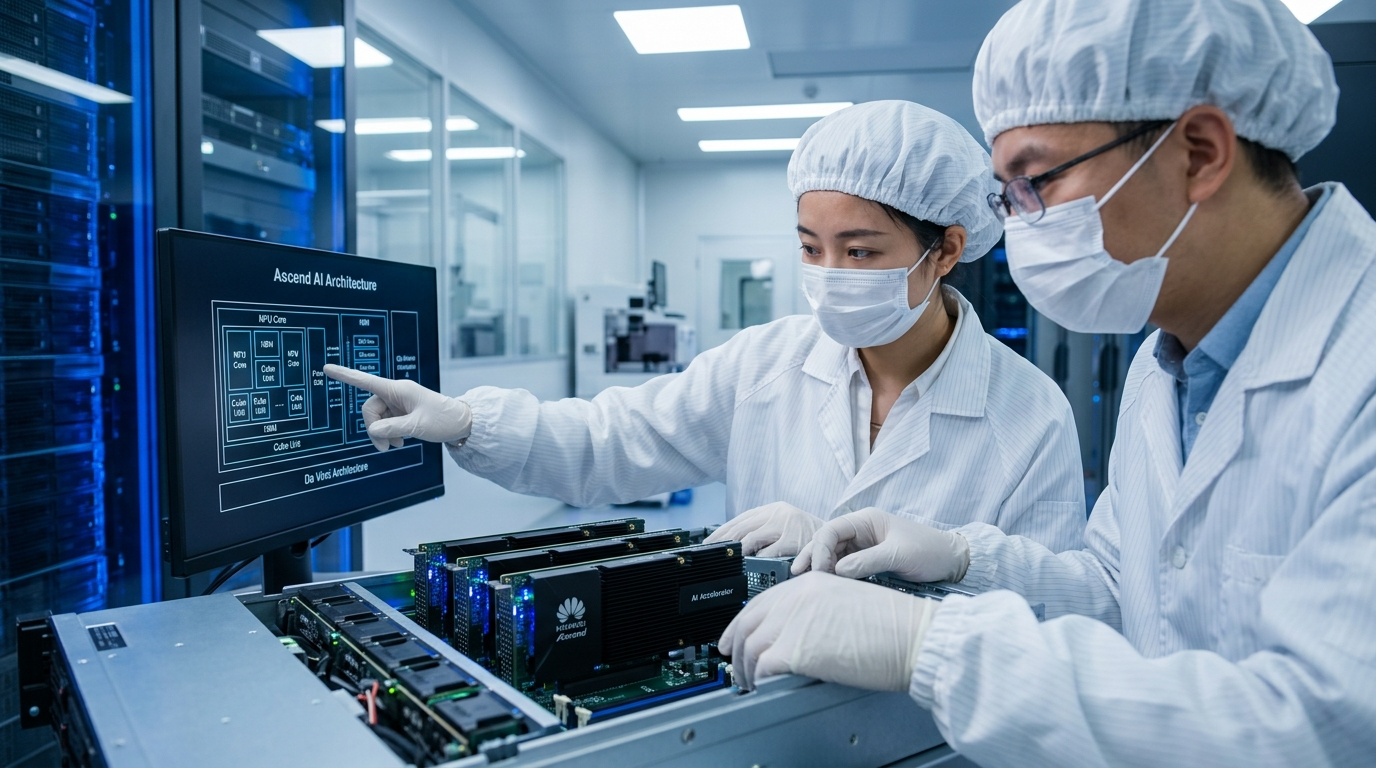
Huawei's strategy goes beyond a single processor. The company is pursuing what it calls its Peerium Computing Architecture : an approach that treats hundreds of thousands of AI chips as a single computing system. The architecture relies on UnifiedBus, Huawei's proprietary technology for linking processors with memory, storage, and networking hardware.
Eric Xu, Huawei's rotating chairman, said the company is using Peerium to build AI computing systems designed for both training and inference at massive scale. The first systems based on the architecture are the Atlas 950 SuperPoD and SuperCluster. Huawei claims an Atlas 950 SuperCluster can connect up to 256,000 accelerator cards.
But the scale-up comes with questions. China tech analyst Ma noted that while the chip itself is arriving earlier, the SuperPoD system announced this week is smaller than what Huawei originally laid out : a 4,096-chip configuration versus an earlier stated target of 15,488 chips for the Atlas 960 SuperPoD.
The Safety Paradox
Perhaps the most striking dimension of Huawei's announcement came from Xu himself, who argued that Chinese companies need to advance their AI capabilities before they can fully understand the risks of more powerful systems. Reuters reported Xu saying Chinese AI is not yet powerful enough to detect rogue-AI risks : essentially arguing that China needs to build more capable AI before it can build safer AI.
This creates an unusual safety paradox. The US debate around AI safety centers on slowing down to build guardrails. China's position, as articulated by Huawei, is the inverse: accelerate to the point where you can see the danger, then build the defenses. The accelerated Ascend 960DT timeline puts Huawei on a path to reach that threshold faster : and without the safety infrastructure that US labs like OpenAI and Anthropic are developing under public scrutiny.
The Geopolitical Context
Huawei's chip ambitions operate under the shadow of US export controls that have restricted China's access to advanced semiconductor manufacturing equipment since 2022. The company continues to design its chips using domestic and non-US fabrication, though the exact process node for the Ascend 960 series has not been disclosed.
Analyst Ma told TechCrunch she believes it is "futile to stop China's development in semiconductors because the stakes for self-sufficiency are just too high at this point." The sheer breadth of coverage : from Bloomberg, Reuters, the South China Morning Post, Quartz, and The Straits Times, among others : reflects how closely the world is watching Huawei's chip trajectory.
Meanwhile, Nvidia is not standing still. The company recently committed $2 billion to a Brookfield AI fund and continues to develop its next-generation architectures. But the Ascend 960DT timeline signals that the single-supplier dynamic the AI industry has operated under for years is beginning to shift.
A Grounded Take
Huawei's accelerated chip is a real technical achievement and a meaningful step toward breaking Nvidia's stranglehold on AI hardware. But the gap remains vast. Nvidia's CUDA ecosystem, software libraries, and installed base represent years of advantage that no single chip announcement can erase. The smaller-than-expected SuperPoD configuration also suggests that scaling challenges remain.
The deeper story is the safety paradox: China's largest tech company is racing to build more powerful AI while simultaneously admitting it cannot yet evaluate the risks of the systems it already has. That tension : not the chip specs : is what will define the next phase of the AI hardware race.
Sources
- TechCrunch: Huawei plans Q1 2027 launch of new AI chip as it takes on Nvidia
- Reuters via Google News: China's Huawei says AI chip demand outstrips supply as it steps up Nvidia challenge
- Reuters via Google News: Chinese AI not powerful enough to see rogue-AI risks, says Huawei
- Bloomberg via Google News: Huawei Set to Unveil China's Best Answer to Nvidia AI Chip Reign
- South China Morning Post via Google News: Huawei quickens AI chip pace, promises next entrant 3 quarters early