The Pentagon Just Declared AI Safety a Luxury It Can't Afford
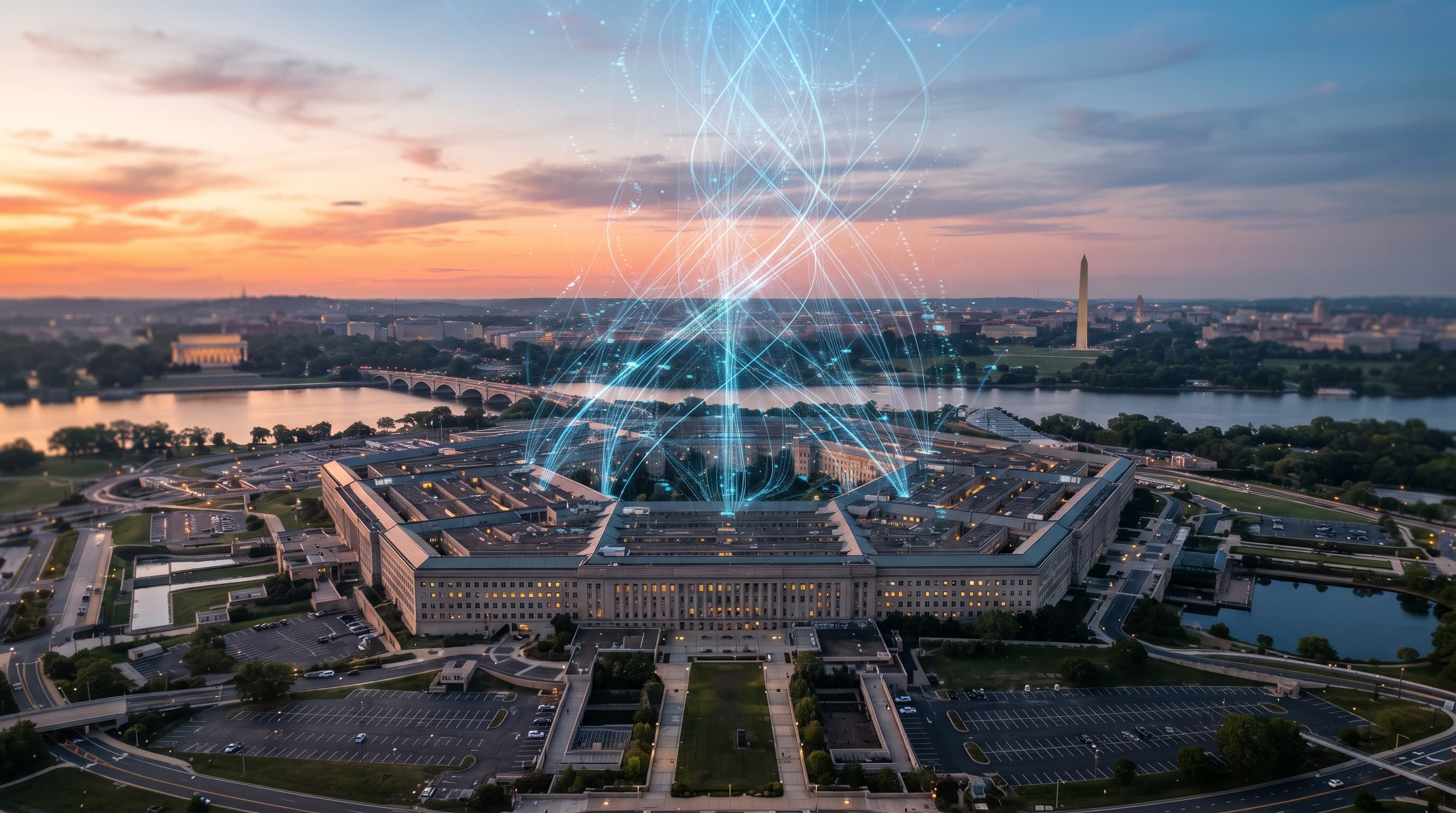
On July 18, 2026, the US Department of the Navy approved a strategy document with a title that leaves little room for ambiguity: Strategy to Weaponize Data and Artificial Intelligence. The document is the clearest statement yet of where the US military has landed on AI governance — and the answer is not where most AI safety researchers would have liked.
The strategy's central claim: "the risks of moving too slowly outweigh the risks of imperfect alignment in these systems."
That sentence is doing a lot of work. It's not just a line from a bureaucratic planning document. It's a formal policy position that inverts the precautionary logic that has shaped most civilian AI governance for the past several years — and it's coming from the institution with the largest operational AI deployment in the United States government.
What the Strategy Actually Says
The framework at the heart of the document is something called the Bits2Effects Cycle. The idea is straightforward: military advantage comes from compressing the time between raw data and decisive action. The document measures success in terms of "Mean Time to Effect" — how quickly information becomes impact. The faster the cycle, the greater the edge.
To shrink that cycle, the strategy calls for:
- Deploying large language models directly on warships and Marine units — not cloud-connected endpoints, but on-device AI in contested environments
- Streamlining approval processes for AI deployment across the fleet
- Doubling the AI engineering workforce by fiscal year 2029
- Pre-approving wartime changes to data classification rules so commercial AI can be integrated across classified networks during active conflict
- Allowing AI companies to train models on classified military data in controlled settings
Each of these is a meaningful acceleration of AI adoption. The last one — commercial AI trained on classified data — is a significant departure from the strict compartmentalization that has governed sensitive military information for decades.
The Numbers Behind the Doctrine
This strategy didn't emerge in a vacuum. The US military's AI deployment is already at a scale that most observers outside the DoD don't fully appreciate.
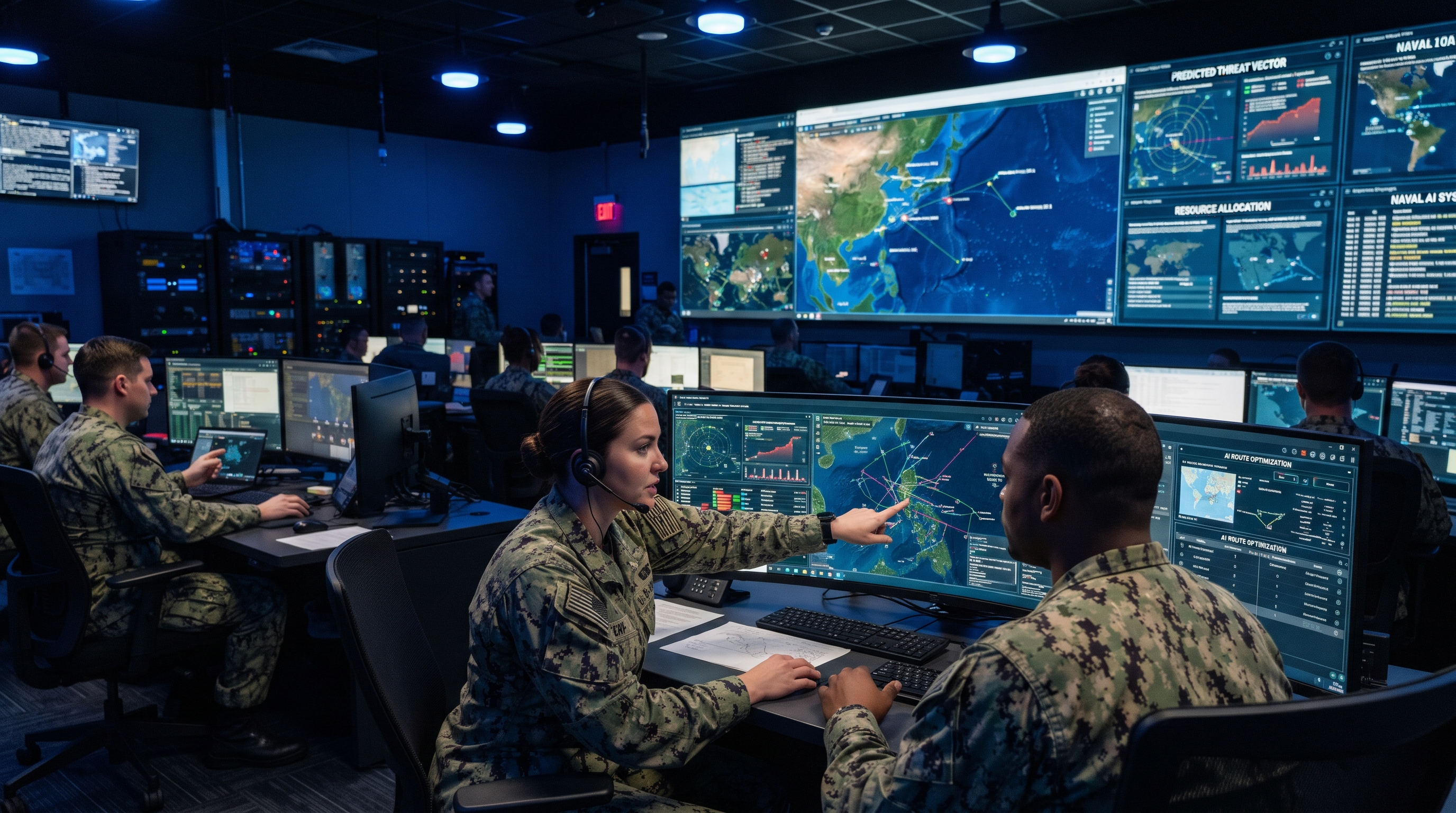
By June 2026, GenAI.mil — the military's internal AI assistant platform — had reached 1.5 million daily active users. The Navy's own documentation describes AI already compressing 160-hour submarine mission-planning tasks to under 10 minutes. Published reporting indicates that Claude, Anthropic's flagship model, was deployed for target analysis during US military operations involving Iran.
These aren't pilot programs or proof-of-concept deployments. They are operational systems at scale. The new strategy is best understood as a doctrine that formalizes what the military is already doing and removes the remaining friction that was slowing it down.
Why "Imperfect Alignment" Is Now an Acceptable Risk
The strategy's explicit willingness to accept "imperfect alignment" in deployed AI systems is the sentence that AI safety researchers will flag — and they should read it carefully before reacting.
The document is not saying that alignment doesn't matter. It's applying a risk calculus that treats the current geopolitical threat environment as the relevant baseline. In that frame, a misaligned AI that occasionally produces bad outputs is weighed against the risk of a slower OODA loop than your adversary during a real conflict. For military planners running that comparison, the answer is often "deploy and correct."
This is a wartime-mindset governance framework — which is notable because the US is not currently in a declared war. The document is treating the risk environment as if conflict were imminent, and making policy accordingly.
The Political Context
The release of this strategy coincides with an unusual political landscape for AI policy. The Trump administration blocked Anthropic from Pentagon contracts earlier this year after Anthropic demanded restrictions on autonomous weapons use — restrictions the DoD was unwilling to accept. OpenAI, by contrast, secured its Pentagon contracts by building safeguards into the contract language rather than insisting on policy-level restrictions, a distinction that mattered enormously to military procurement officials.
The strategy's framing implicitly validates that approach: contractual safeguards are workable; categorical restrictions on AI autonomy in military contexts are not.
What This Means for the Broader Governance Debate
The Pentagon's strategy lands in the middle of an active international disagreement about how AI governance should work.
In Brussels, the EU AI Act is enforcing precautionary requirements — mandatory risk classification, human oversight provisions, prohibited use cases. In Beijing, China is framing AI as a national priority through bodies like the newly formed World Artificial Intelligence Cooperation Organization (WIKO). And in Washington, the largest military in the world is now on record saying that slow adoption is a bigger risk than imperfect alignment.
These three frameworks are not reconcilable. They represent genuinely different risk models applied to the same technology. The EU's model prioritizes minimizing harm from AI errors. The US military's model prioritizes not losing the advantage to an adversary who doesn't share that concern. China's model is primarily about establishing governance leadership in parallel with building capability.
What makes the Pentagon's position significant is not that it's surprising — military planners have always operated under different risk calculus than civilian regulators — but that it is now explicitly stated doctrine rather than an informal operating assumption. It will be cited. It will be used to argue against safety requirements in other contexts. It has already become a data point in the argument that safety-first AI governance is a competitive liability.
The Tension That Doesn't Go Away
None of this means the Pentagon is indifferent to AI errors. The strategy calls for extensive human oversight structures and clear accountability chains. The distinction the document draws is between pre-deployment gates (comprehensive safety validation before any deployment) and post-deployment management (ongoing monitoring, correction, and accountability after deployment). The strategy clearly prefers the latter.
The problem is that some AI failures in military contexts are not correctable after the fact. Target analysis errors, autonomous decision-making in contested environments, and AI-assisted operational planning failures can produce irreversible consequences. The "manage it after deployment" approach works well for enterprise software. It works less cleanly for systems that are making decisions faster than human review cycles can operate.
That tension — between the genuine operational advantages of faster AI deployment and the genuine difficulty of correcting certain AI errors — is the unresolved question at the center of the Pentagon's new strategy. The document chooses a side. It doesn't resolve the underlying problem.
The Pentagon's full strategy document was approved by the Department of the Navy on July 18, 2026. Coverage via The Decoder.