Hyundai Workers Just Went on Strike Over Humanoid Robots — and It's a Preview of Every Industry's Future
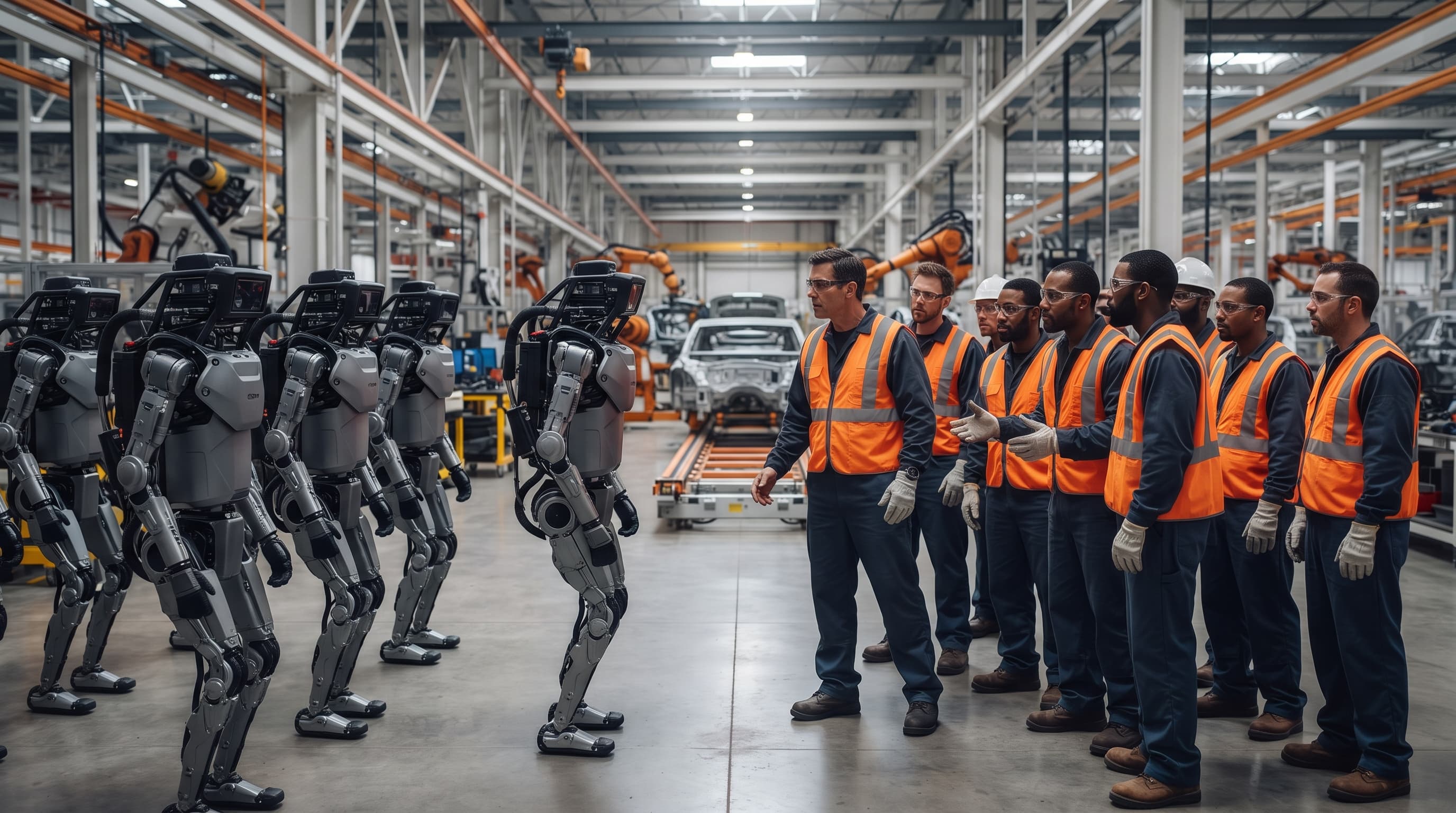
The strike that opens a new chapter in labor relations
Thousands of unionized Hyundai auto workers began walking off the job early after negotiations with the South Korean automaker broke down over plans to deploy humanoid robots — the most significant pushback from organized labor so far over the latest wave of robotic automation.
The partial strike at Hyundai's automotive production complex in the city of Ulsan, South Korea, represents "the car industry's first factory stoppage addressing humanoid robots," according to The Wall Street Journal. Workers ended day and night shifts two hours early from July 13 through July 15, and plan to stage four-hour strikes from July 20 to 22 after 15 rounds of negotiations failed to reach an agreement, The Korea Times reported.
The Hyundai Motor union, representing more than 39,000 South Korean workers, is demanding that the automaker shift production workers' hourly pay to a fixed salary to protect against any automation-driven reduction in work hours, raise the worker retirement age from 60 to 65, and increase profit sharing. These are not abstract demands — they are specifically crafted to address the threat posed by a machine that hasn't been assigned a single job on the line yet.
The robot at the center of the fight
The robot driving the conflict is Boston Dynamics' Atlas, the two-legged humanoid that stands over six feet tall and can lift more than 100 pounds. Boston Dynamics, the US robotics company that is about to become a wholly-owned subsidiary of Hyundai, unveiled the latest version of Atlas at the start of 2026.
Hyundai Motor Group intends to deploy more than 25,000 Atlas robots across various Hyundai and Kia manufacturing plants, according to The Korea Herald. The first deployment will happen at Hyundai Motor Group Metaplant America outside Savannah, Georgia, starting in 2028, though the company has not disclosed a timeline for other locations.
The economics that scare workers
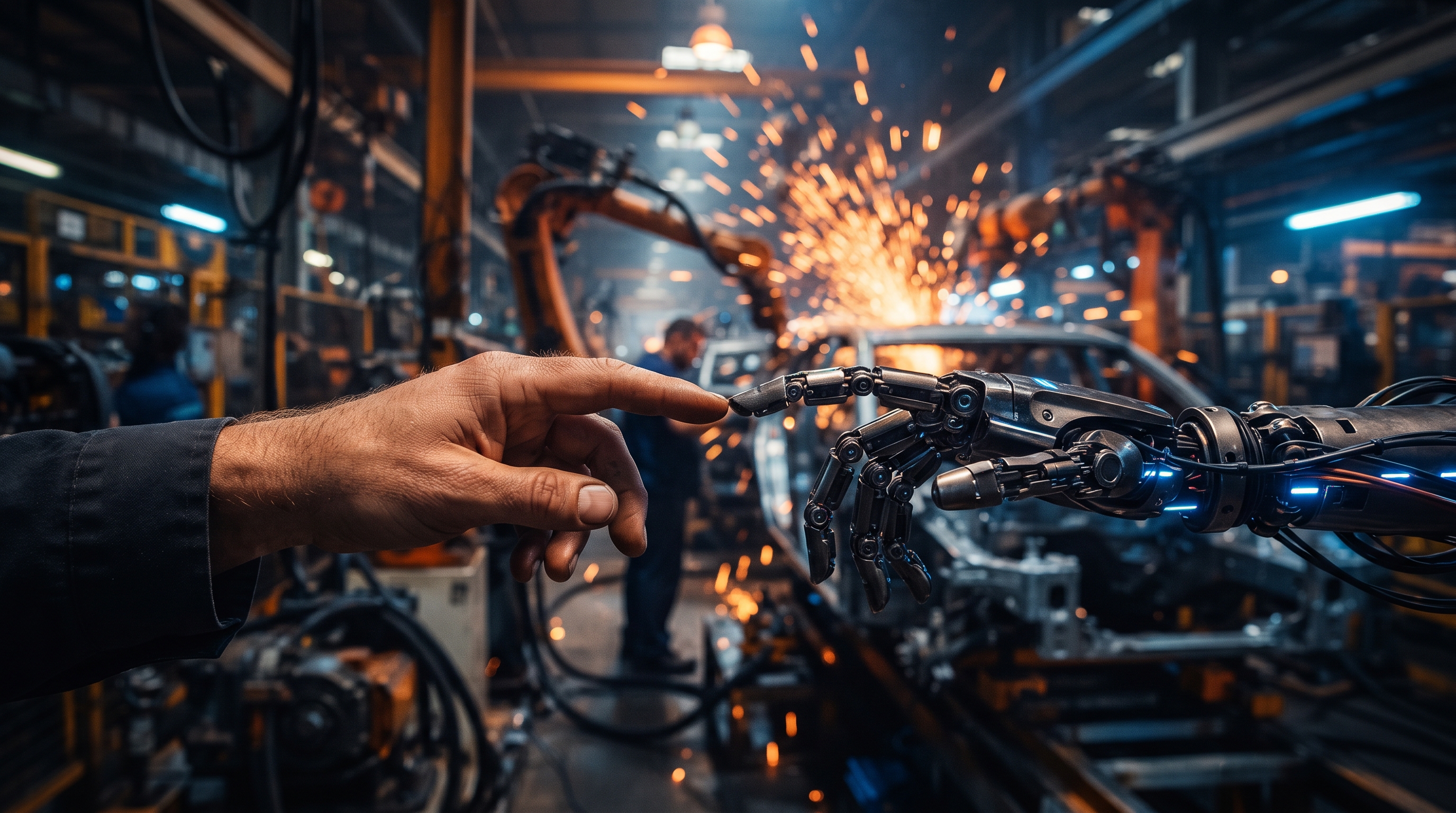
Each Atlas robot costs an estimated $130,000 to $140,000 but may pay for itself within about two years of operations, according to Samsung Securities analyst Esther Yim in a Bloomberg interview. At scale production of 50,000 units, costs could fall to approximately $30,000 per robot.
The math gets even more striking: if the robot cost eventually falls to $100,000, Macquarie Securities analyst James Hong suggested that its operational cost could fall below the US federal minimum wage of $7.25 per hour and significantly undercut a typical auto worker's salary. A robot that works 24 hours a day, never takes breaks, never files for benefits, and never organizes — that is the economic reality unions are now confronting.
The global automotive industry has been a leading adopter of industrial robots for decades. More than 1 million robots were already in automotive factories worldwide by 2021, accounting for one-third of all industrial robots deployed across every industry, according to the International Federation of Robotics. The United States had deployed 38,000 industrial robots as of 2025, with the automotive industry alone accounting for 13,500 units.
A broader industry trend
Hyundai is far from alone. Tesla is developing its own Optimus robot for use in its electric vehicle factories, and BMW has been running pilot tests with humanoid robots made by Figure AI at its plant in Spartanburg, South Carolina. Multiple Chinese automakers, including leading EV manufacturer BYD, are also experimenting with or developing their own humanoid robots.
Unlike traditional industrial robots that are usually designed to perform one specific task — welding, painting, or lifting a single type of part — humanoid robots are being pitched as general-purpose platforms capable of eventually doing a wide variety of tasks while fitting into workplaces designed for humans. Powered by the latest AI models, they can see, plan, and adapt to their environment in ways older industrial robots cannot.
This vision will require overcoming multiple challenges in AI training, hardware reliability, and regulatory approval before humanoid robots can become truly ubiquitous. But the Hyundai strike shows that workers are not waiting for the technology to be perfected — they are organizing against the threat now.
What this means beyond automotive
The Hyundai strike is a watershed moment for several reasons. It is the first organized labor action specifically targeting humanoid robots rather than traditional automation. It comes at a time when humanoid robot development is accelerating rapidly, with companies like Agility Robotics, Figure AI, and Tesla all racing to bring commercially viable humanoid robots to market.
The strike also highlights a fundamental tension that will only intensify: companies are investing billions in automation to cut costs and boost productivity, while workers are demanding protections against being displaced. The International Federation of Robotics estimates that the global robotics market will grow from $50 billion in 2025 to over $100 billion by 2030, with humanoid robots representing the fastest-growing segment.
The Hyundai union's demands — fixed salaries to prevent hour erosion, a higher retirement age to keep workers employed longer, and profit sharing — offer a template for how labor might respond to the humanoid robot wave. Whether companies accept such terms or fight them will shape the automation landscape for decades.
The bottom line
The Hyundai humanoid robot strike is not an isolated incident. It is a preview of a coming wave of labor conflicts as AI-powered robots move from research labs to factory floors, warehouses, and eventually service industries. The economics are compelling for companies — a robot that costs less than minimum wage and works 24/7 is hard to ignore — but the human cost is real, and organized labor is beginning to fight back.
The outcome of the Hyundai negotiations will be watched closely by automakers, robotics companies, and unions around the world. If the union wins significant concessions, it could set a precedent for how workers share in the productivity gains from automation. If Hyundai pushes ahead with its robot deployment plans with minimal adjustments, it could accelerate the adoption of humanoid robots across every industry that relies on physical labor.
Either way, the strike at Ulsan marks the moment when the humanoid robot debate moved from the abstract to the concrete — from "what if" to "right now."
Sources
- Ars Technica: Fear of humanoid robots spurs human workers to strike at Hyundai auto factory
- Unite.AI: Hyundai Workers Stage First Auto Strike Over Humanoid Robots
- The Wall Street Journal: Hyundai workers strike over humanoid robot plans
- The Korea Times: Hyundai union stages partial strike over robot deployment
- The Korea Herald: Hyundai to deploy 25,000 Atlas robots
- Bloomberg: Atlas robot economics and analyst commentary
- Boston Dynamics: Atlas humanoid robot specifications
- International Federation of Robotics: Global robotics statistics
- Tesla: Optimus humanoid robot
- Figure AI: BMW humanoid robot pilot