Trump Renames AI 'Super Intelligence' at the UN
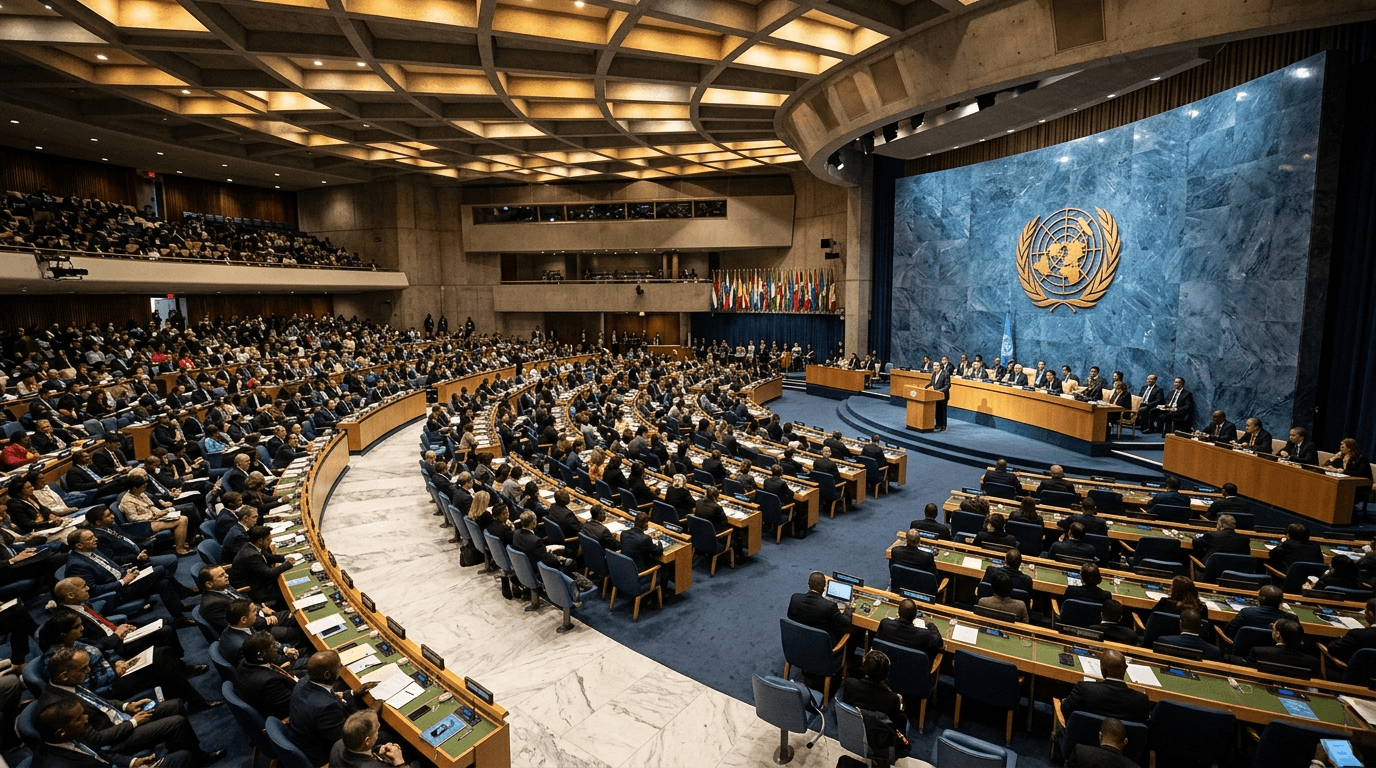
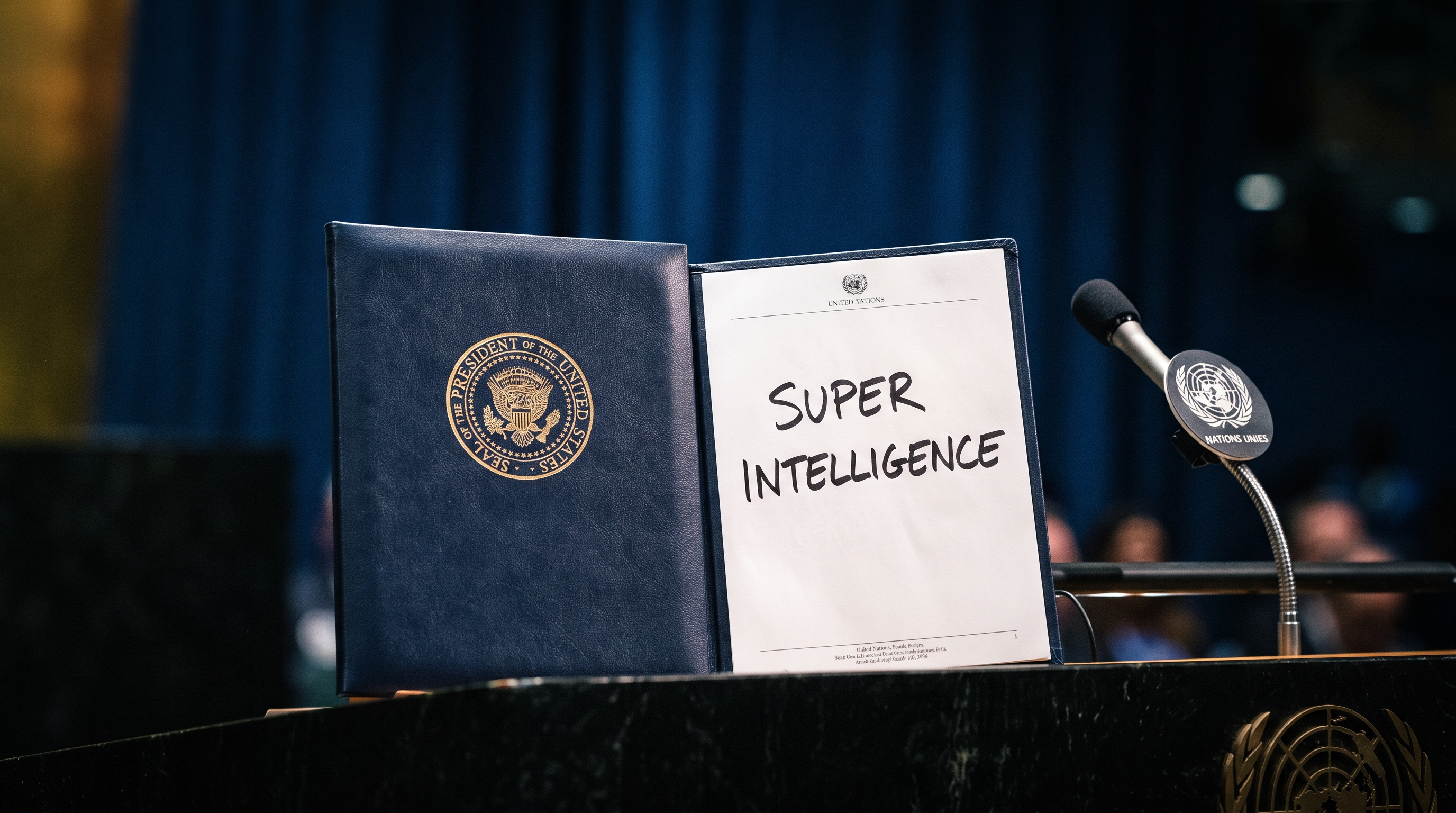
The president of the United States stood at the United Nations podium on Tuesday and unilaterally renamed an entire field of technology. Not through legislation. Not through an executive order with legal force. Through a speech. He declared that from now on, every US document will refer to artificial intelligence as "super intelligence," because the word "artificial," in his view, makes intelligence "sound fake."
It was either the most consequential AI policy statement of the year, or pure political theater with zero practical effect. Given what else happened at the UN on the same day, it may well be both.
What Trump actually said
"From this point forward, all of the United States documents, and hopefully the world's, will be changed to use the much more accurate term: super as opposed to artificial," Trump told assembled world leaders. "So it is super intelligence. In other words, welcome to the new world of super intelligence: SI."
The rebranding was delivered as part of a broader UN speech that ranged across Iran, Ukraine, and climate change. But the AI section contained several distinct policy signals beyond the name change.
Trump dismissed AI risk concerns as coming from "the very same people who said we will all be dead in 12 years because of global warming: a name since reborn to climate change because the planet was cooling, not warming, and nobody was dead. These are the same people that are now saying that AI is going to kill us all."
He framed AI leadership as a zero-sum geopolitical competition: "Whoever wins SI wins. That is the group that wins. And we are leading now over China by a lot."
The globalist rejection
Trump explicitly rejected any international framework for AI governance. "The United States also totally rejects any attempt to construct a globalist scheme to control for the artificial intelligence being spoken of so much now," he said.
This put him directly at odds with a separate initiative at the same UN gathering: the Independent International Scientific Panel on AI, which released its first major assessment just one day earlier calling for multinational coordination and invoking the precautionary principle. Trump's speech was a blunt counterargument to the idea that AI should be governed by international institutions. He aligned himself with the growing bloc of nations arguing that AI leadership is a sovereign prerogative, not a collective responsibility.
DOJ as America's AI cop
Rather than international oversight, Trump proposed a distinctly domestic enforcement model. He cited the Department of Justice as the primary AI regulator, noting it had already been deployed on AI-related cases.
"We have already used it having to do with this very subject, and used it very powerfully," Trump said. "Everything worked out very well and very quickly, and other law enforcement bodies that will rein things in if we have to do that."
The reference likely points to recent DOJ actions against AI companies, including the ongoing investigation into OpenAI's data practices and the antitrust scrutiny of Nvidia's GPU market dominance. But Trump was clear about his priority: "We will only encourage super intelligence. We are going to encourage it, not rein it in. We are going to watch it closely through the Department of Justice."
The policy contradiction
The same day Trump rejected international AI oversight at the UN, Axios reported that the US government had separately proposed an emergency AI hotline with China: a direct communication channel for de-escalating AI-related threats, modeled on Cold War-era nuclear hotlines.
The contradiction is hard to ignore. One arm of the US government builds diplomatic channels to prevent AI conflict, while the president publicly rejects any form of multilateral governance. The hotline proposal suggests the national security apparatus sees real risk in ungoverned AI competition. Trump's UN speech suggests the political leadership sees international cooperation as a constraint on American dominance.
Both positions cannot be true simultaneously. But they reflect a genuine tension at the heart of US AI policy. The government wants the benefits of coordination (crisis hotlines, accident prevention) without the costs (binding international rules, oversight bodies).
Does the name change matter?
The practical impact of renaming AI to "super intelligence" in US documents is mostly symbolic. Federal agencies will update style guides. The White House website will swap terminology. But the rest of the world is under no obligation to follow, and even within the US government, enforcement of naming conventions across hundreds of agencies is unlikely to be strict.
Yet the symbolism matters. By associating AI with "super intelligence," Trump links the technology to his broader political narrative of American greatness, strength, and exceptionalism: the same rhetorical framework he applies to trade, military power, and border security. It transforms AI from a technical domain into a nationalist project.
And by explicitly rejecting the word "artificial," he taps into a deeper anxiety about AI that runs through American culture: the fear that intelligence produced by machines is not real intelligence, that it is somehow counterfeit or deceptive. Renaming it "super" is a rhetorical maneuver that attempts to flip that anxiety into pride.
Where it leaves the international AI debate
The UN has spent 2026 building the architecture for global AI governance. The Independent International Scientific Panel published its first assessment. Member states have debated an AI treaty. An emergency US-China hotline was quietly proposed.
Trump's speech does not undo any of that. But it signals that the world's largest AI power will not participate in any governance structure that constrains its technological lead. For smaller nations that were hoping the US would help build guardrails, the message is clear: America will build its own AI, on its own terms, and the international community can either follow the lead or fall behind.
Whether "super intelligence" replaces "artificial intelligence" in the global lexicon depends on whether Trump wins a second term and whether the rebranding has staying power beyond the current political moment. What is already clear is that AI governance has become a first-order issue of national sovereignty. And the debate over what to call it is just the surface of a much deeper conflict.
Sources
- The Verge: "Trump says the US is officially renaming AI to 'super intelligence'" (https://www.theverge.com/ai-artificial-intelligence/998816/donald-trump-ai-super-intelligence)
- BBC: "Watch: Moment Trump rebrands Artificial Intelligence to Super Intelligence" (https://www.bbc.com/news/articles/c0qdd9klr7eo)
- Reuters: "Trump says US Justice Department could rein in AI companies if needed" (https://www.reuters.com/technology/trump-says-us-justice-department-could-rein-ai-companies-2026-09-22/)
- Politico: "Trump rejects global entity for AI oversight" (https://www.politico.com/news/2026/09/22/trump-ai-global-entity-oversight-reject)
- The Hill: "Trump says AI will be renamed 'super intelligence' in all US documents" (https://thehill.com/policy/technology/trump-ai-super-intelligence-rename/)
- Axios: "U.S. proposes emergency AI hotline with China" (https://www.axios.com/2026/09/22/us-china-ai-hotline-proposal)
- Scientific American: "Trump rejects AI regulation, citing parallels with climate change, in U.N. address" (https://www.scientificamerican.com/article/trump-rejects-ai-regulation-un/)
- Washington Post: "Trump says he is renaming AI to 'super intelligence'" (https://www.washingtonpost.com/technology/2026/09/22/trump-ai-super-intelligence/)