AMD Bets $5 Billion on Anthropic in a Two-Gigawatt Challenge to Nvidia's AI Monopoly
The $5 Billion Back Door
For two years, the AI hardware market has had a simple geography: Nvidia sells the GPUs, and everyone else tries to catch up. AMD has now placed the largest bet yet that the map is about to change.
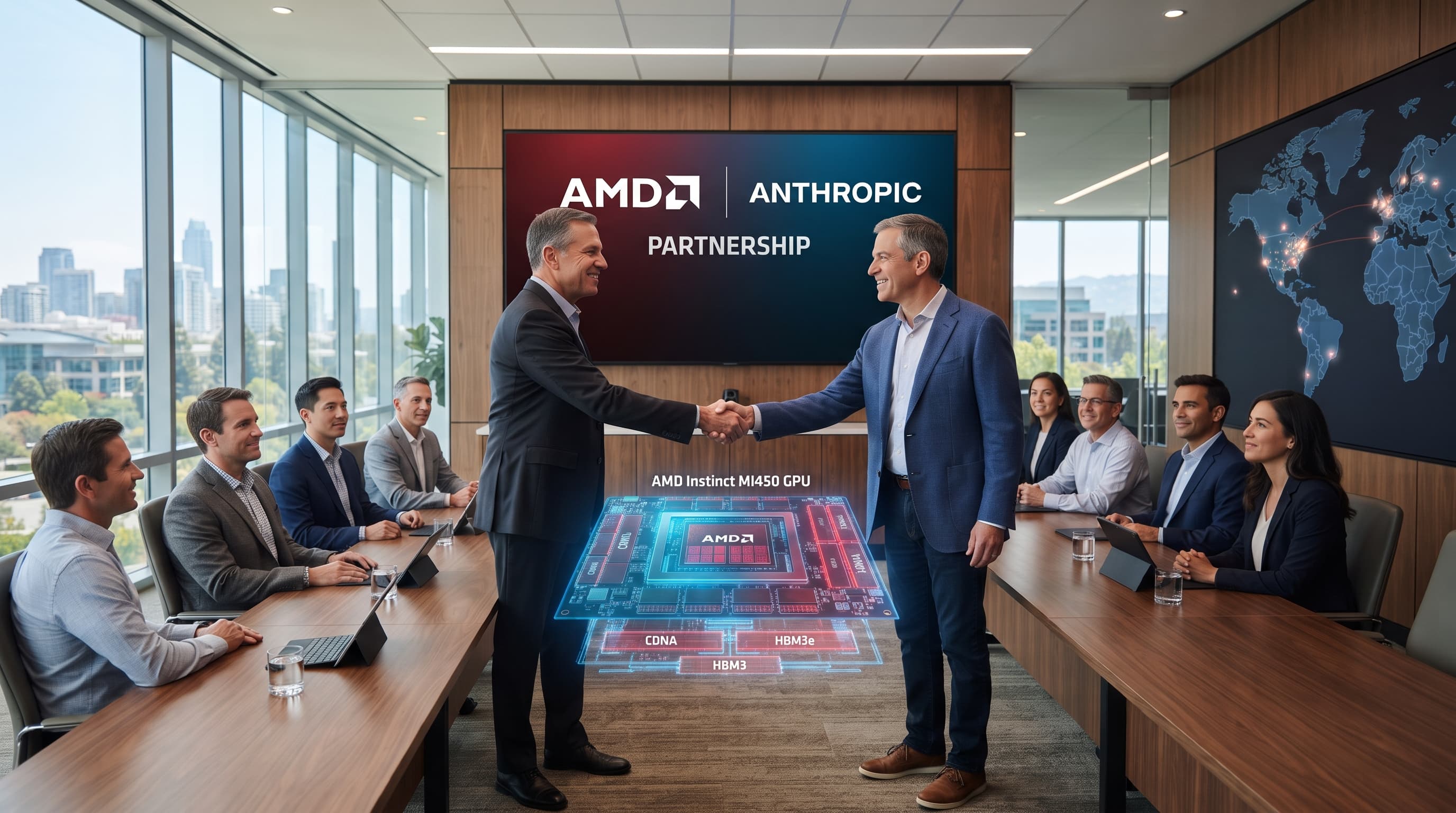
The chipmaker agreed to invest up to $5 billion in Anthropic and supply tens of billions of dollars in AMD-powered AI infrastructure, in a deal that gives the Claude maker a path to two gigawatts of computing capacity running on AMD Instinct MI450-series accelerators rather than Nvidia's H100/B200 lineage. The first gigawatt is expected to come online in the first half of 2027.
The structure is notable for what it is not. Unlike AMD's agreements with OpenAI and Meta — which use warrants that give those companies rights to acquire AMD shares — the Anthropic deal is a direct equity investment tied to deployment milestones. AMD has not disclosed the valuation attached to the investment or the specific conditions that trigger each tranche.
"AMD's Anthropic investment is tied to the rollout of AMD-based infrastructure," the company confirmed. The full $5 billion has not yet been transferred; it will be released as Anthropic meets its deployment targets.
The Helios Stack
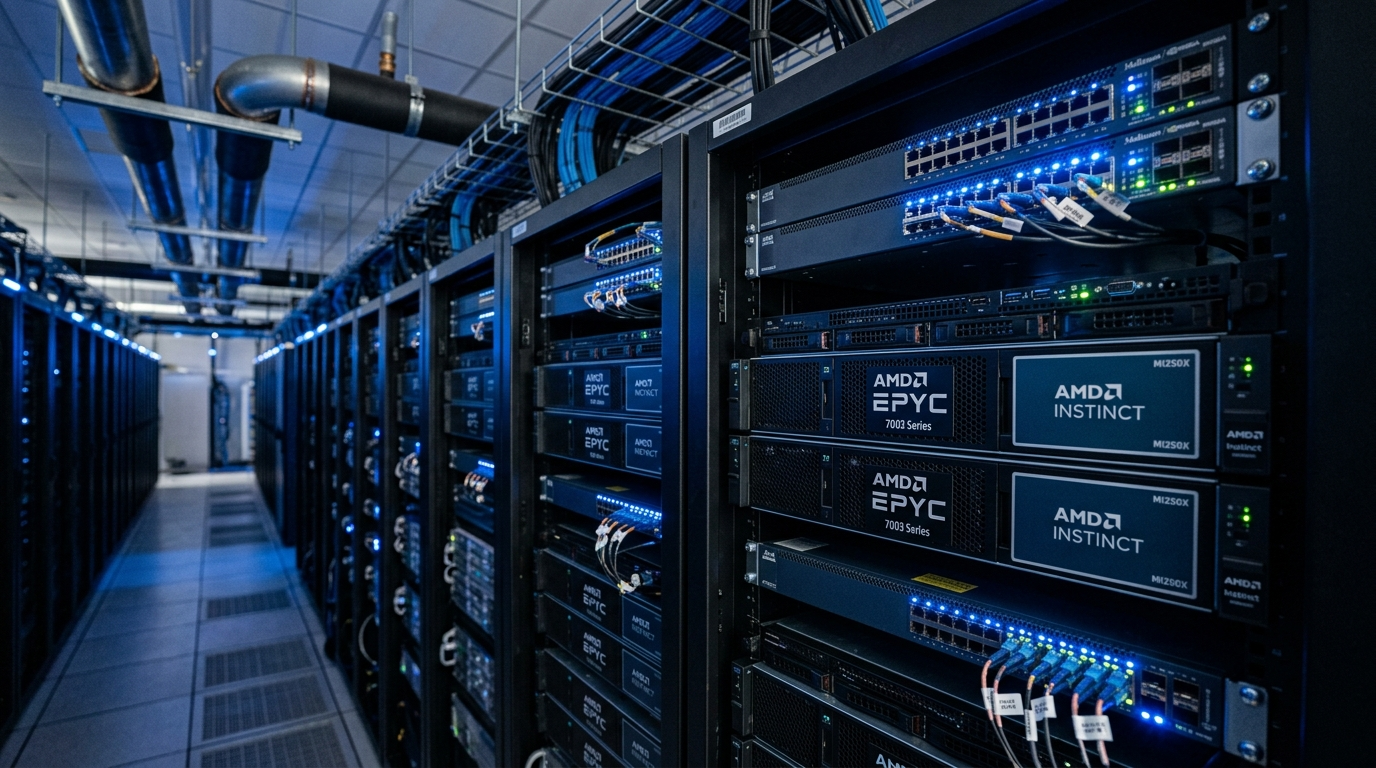
The hardware underpinning the deal is AMD's Helios platform, a rack-scale system that bundles MI455X GPUs from the Instinct MI450 series with EPYC "Venice" processors, Pensando networking, and the ROCm software stack. This is not a standalone GPU purchase — it is an integrated platform designed to compete with Nvidia's DGX systems at hyperscale.
Anthropic already uses AMD's earlier MI355X accelerators, but the Helios deployment represents a step change in scale. AMD CEO Lisa Su framed the agreement as a strategic partnership rather than a vendor relationship: "We are thrilled to deepen our partnership with Anthropic and deploy AMD Helios at gigawatt scale. This collaboration brings together Anthropic's leadership in frontier AI with the full strength of AMD high-performance computing."
The two-gigawatt commitment represents 2,000 megawatts of power capacity. AMD executives have said that developing one gigawatt of AI computing infrastructure can cost tens of billions of dollars, depending on equipment and facilities. The deal builds on AMD's pattern of pairing large infrastructure orders with financial arrangements — a template it established with OpenAI in October 2025 (up to six gigawatts, plus warrants for roughly 10% of AMD shares) and Meta in February 2026 (also up to six gigawatts, with performance-based warrants).
Nvidia's Shadow
The elephant in every room of this deal is Nvidia. AMD's investment comes at a moment when Nvidia has also been exploring large financial commitments to AI developers: Reuters reported that Nvidia held talks about investing up to $30 billion in OpenAI. The pattern is clear — chip suppliers are increasingly using equity or equity-like incentives to lock in the customers who need their hardware at massive scale.
Anthropic is not abandoning Nvidia. The company has separately secured more than 300 megawatts through SpaceX's Colossus 1 facility in Memphis, a cluster that houses more than 220,000 Nvidia GPUs. At its full planned scale, the AMD deployment would represent more than six times the power capacity of Colossus 1, though the performance comparison is not direct because the architectures differ.
The strategic logic is straightforward: Anthropic, as one of the world's most capital-intensive AI startups, needs to avoid dependency on any single hardware supplier. AMD gets a marquee customer that validates its Instinct platform at the scale Nvidia has dominated for years. Nvidia, meanwhile, faces the most credible threat to its GPU monopoly since the AI boom began.
What's Not Said
The deal leaves several questions unanswered. The companies have not disclosed Anthropic's purchase obligations, cancellation rights, the valuation attached to AMD's investment, or the treatment of delayed deployments. The investment timetable beyond its connection to milestones is unspecified. AMD has said it "has committed to make the strategic equity investment in the future," meaning the full amount has not been transferred and may never be if Anthropic fails to meet its targets.
There is also the question of timing. Two gigawatts of AI infrastructure does not appear overnight. Lisa Su noted that gigawatt-scale capacity requires 12 to 24 months of planning before deployment. The first gigawatt is slated for the first half of 2027, which means the earliest meaningful impact on the GPU market is still a year away. In AI hardware, a year is a long time — Nvidia's next-generation architecture will likely be in production by then.
Anthropic plans to install some of the AMD systems in its own data centers, with others hosted by cloud providers and specialist AI infrastructure companies. AMD and Anthropic are also actively seeking operators capable of hosting the planned systems, adding another layer of execution risk.
The Bottom Line
AMD's $5 billion bet on Anthropic is the most serious strategic challenge to Nvidia's GPU dominance since the AI arms race began. It gives Anthropic a genuine alternative to Nvidia silicon, validates AMD's Instinct platform at hyperscale, and signals that the AI hardware market is no longer a one-company story.
But the deal is also a bet on timing, execution, and the willingness of a fast-moving AI company to navigate the complexities of a multi-vendor hardware strategy. The first AMD-powered Anthropic cluster won't go live until 2027. In AI, that is an eternity — and Nvidia is not standing still.
Sources
- AMD to invest up to $5 billion in Anthropic under AI infrastructure deal — AI News
- AMD to sell Anthropic tens of billions in AI servers, invest up to $5 billion in startup — Reuters
- AMD to Invest Up to $5 Billion in Anthropic, Deploy Chips — Bloomberg
- AMD to invest up to $5 billion in Anthropic as part of computing power deal — CNBC
- AMD plans to invest up to $5 billion into Anthropic as it seeks to cut into Nvidia's dominance — MarketWatch