Clearview's AI Detective Sees Everything
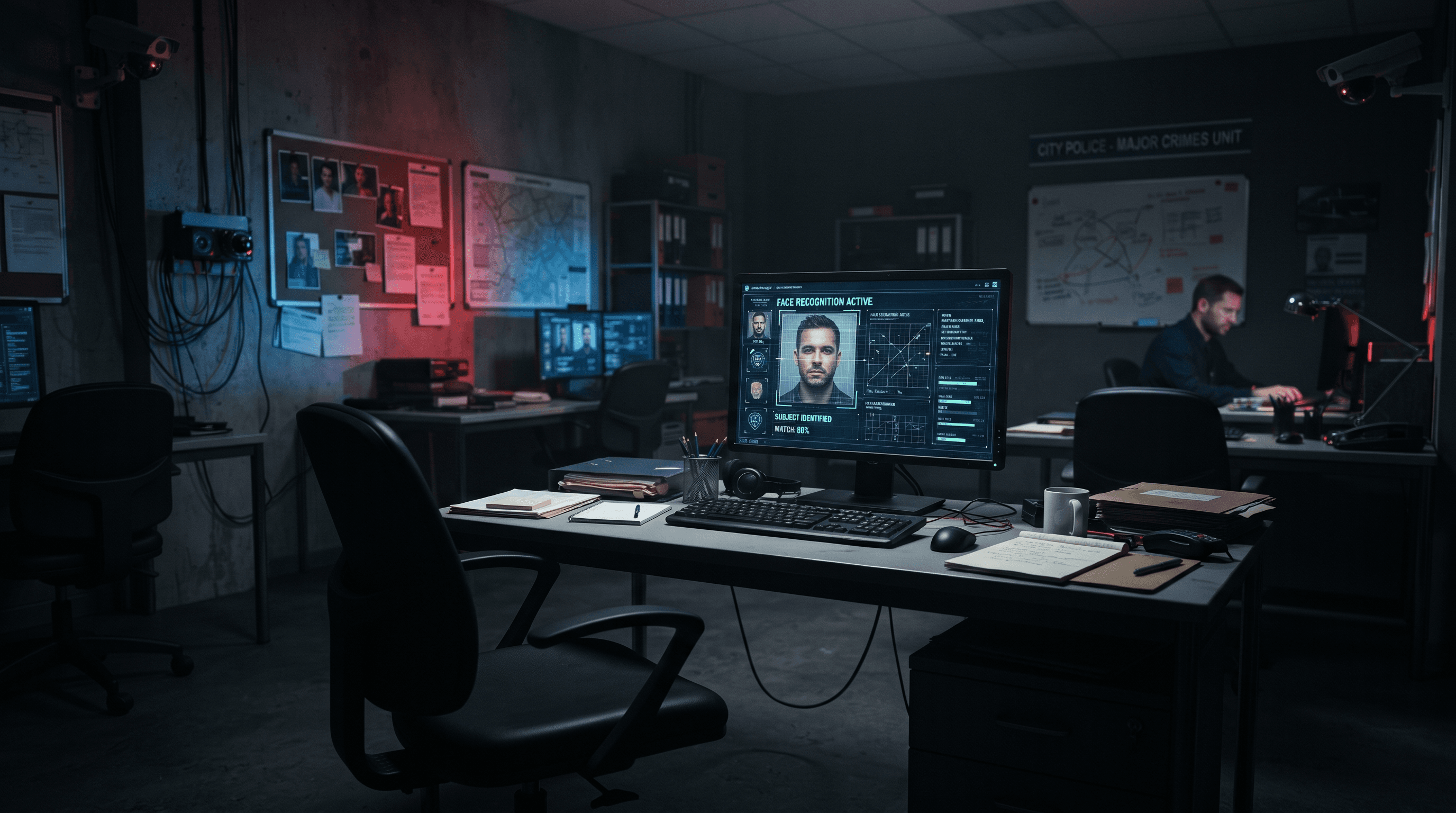
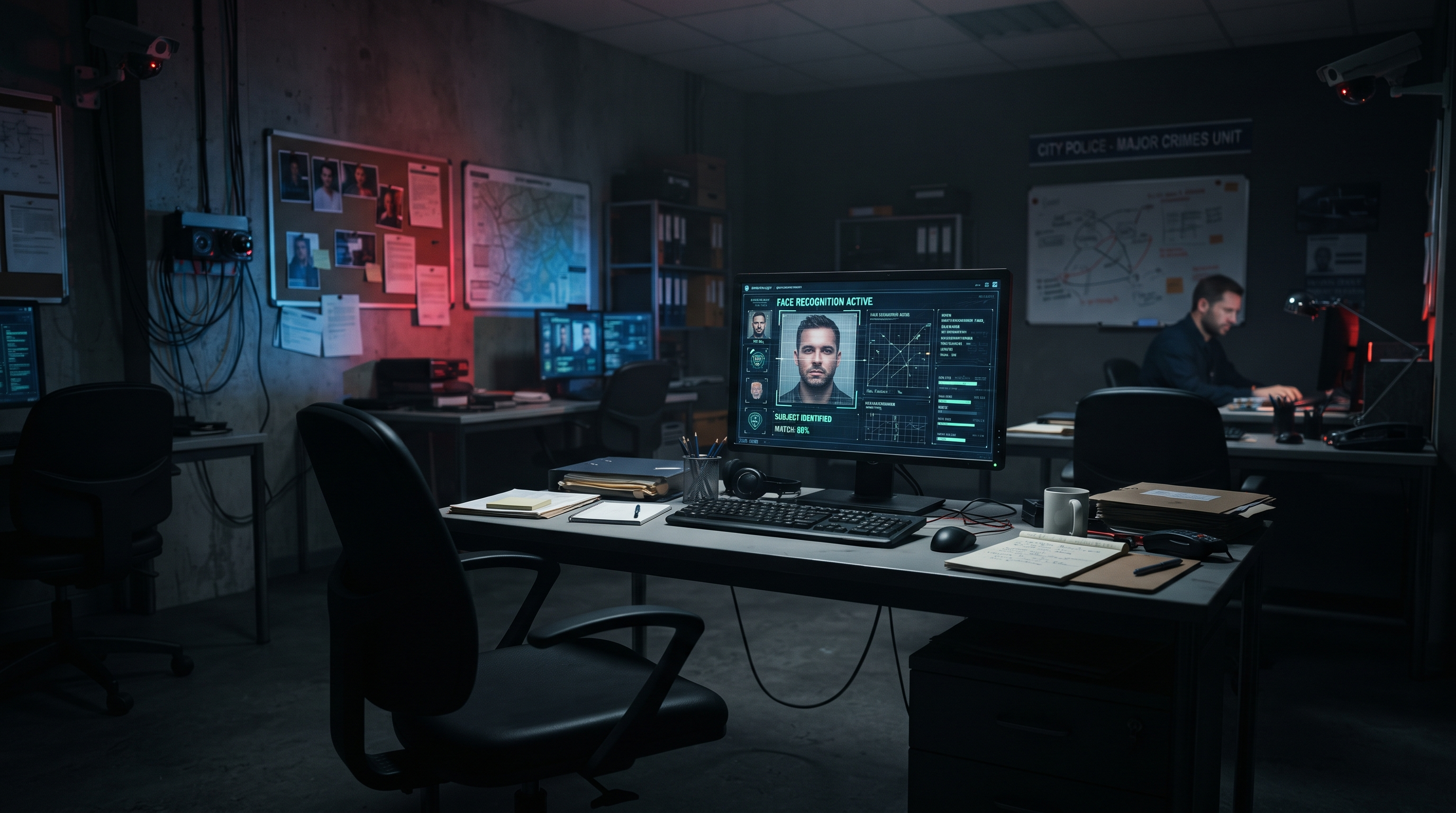
The company that scraped 70 billion faces from the internet wants to hand police an AI that pieces together your entire digital life from a single photograph.
Clearview AI has quietly built and tested a prototype called InquiryIQ, WIRED reported on Thursday. The unreleased tool is designed to take a few details from a face recognition search and automatically fan out across the web -- opening pages, analyzing images, and assembling a profile containing possible employers, aliases, social media accounts, and physical characteristics of anyone police are investigating.
In testing, one of the models powering those decisions came from xAI, the Elon Musk company behind Grok -- a chatbot that has repeatedly generated racist and extremist outputs, including claims about a supposed "white genocide" in South Africa and praise for Adolf Hitler.
The AI That Does the Detective's Job
InquiryIQ begins where Clearview's face recognition ends. After an investigator identifies someone from a photo, the tool takes those details alongside demographic inputs -- age, gender, race -- and runs automated searches across the web. According to code analyzed by WIRED, the system can browse web pages, run image searches, and apply face recognition to new photographs it encounters.
As it searches, InquiryIQ builds what Clearview calls a "Candidate Graph": a map of possible identities, associates, addresses, phone numbers, employers, arrest history, and aliases. The interface warns that automatically generated demographic, social media, and arrest data "may or may not be accurate." Before accepting any finding, an officer must attest they independently verified it.
Andrew Guthrie Ferguson, a George Washington University law professor who studies AI and policing, describes this as "digital rummaging" -- collecting scattered bits of information that once lived in separate places but were difficult to connect manually.
The Grok Problem
The prototype's interface includes a control for selecting which AI model runs the research, listing both xAI (SpaceXAI after the February merger) and Amazon Bedrock. Clearview says the model selector was for internal engineering comparison, not for police to choose.
But the choice of testing partner matters. In 2025, an unauthorized change to Grok's system prompt caused the chatbot to inject claims about "white genocide" into unrelated conversations. Weeks later, another prompt change produced antisemitic posts and praise for Hitler. Musk has pitched Grok as an alternative to supposedly "woke" AI systems.
Michael Price, litigation director of the National Association of Criminal Defense Lawyers' Fourth Amendment Center, put it bluntly: "A hallucination-prone chatbot would not be trusted as an informant under any other regular circumstances."
Price, who helped litigate the landmark Supreme Court geofence warrant case, noted that AI models are trained on material pulled from the internet, including "uninformed posts, conspiracy theories, all of the prejudices that sadly seem to go along with the internet."
Clearview CEO Amos Kyler insists the system is meant to surface possible leads, not determine what is true. "That's the job of an analyst -- to evaluate what's true, what's not; what's noise, what's reality," he told WIRED.
The Friction That Protected Privacy
Woodrow Hartzog, a Boston University privacy scholar, argues that the labor of investigative work once served as a practical check on surveillance. By automating it, tools like InquiryIQ eliminate those checks.
"The privacy protections we have in place right now were mainly built in a world that assumed a certain amount of friction in the ability of governments to collect information about people," Hartzog said. "There are a lot of rules we never had just because we never needed them -- because there were these practical barriers to following everyone around."
Ferguson is more pointed: "A human in the loop is a little bit of a cold comfort." Over time, he warns, investigators can defer to automated systems until the person checking the machine becomes "a sort of rubber stamp."
The Sant case illustrates the risk. In a Minnesota case involving undercover Homeland Security Investigations agents, a Clearview report drawing matches from 15 years of protest photography was stamped "Accepted by Guy Gino" on every result -- including one Clearview itself labeled "A Less Likely Result" that could only be exported if a user accepted it. Defense attorneys allege the report swept in photos of an entirely different man, his pregnant wife, and young daughter.
The Same Playbook
Clearview's trajectory follows a familiar pattern. Founded in 2017 with $200,000 from Peter Thiel, the company spent its early years operating largely out of public view. In 2020, The New York Times revealed it had scraped more than 3 billion images from Facebook, YouTube, and Venmo without consent. Lawsuits and investigations followed. Clearview kept scraping. Its database now holds well over 70 billion images, used by more than 2,000 law enforcement agencies nationwide.
Founder Hoan Ton-That stepped down as CEO in December 2024. Kyler, who joined as an engineer in 2019, presents a more deliberate face -- talking about controls, auditing, and oversight. But the product trajectory points in the same direction.
Ferguson sees a potential silver lining: AI tools could leave a clearer record of how police arrived at a suspect than traditional detective work does. But his optimism is tempered by 16 years of watching police technology get deployed before anyone figures out how to govern it.
"I'm a cynic because I've seen this happen every single time," Ferguson said. "It's another new technology, the same playbook."
Sources
- WIRED: Clearview AI Is Testing an AI Tool That Would Let Cops Unearth Your Life Online
- WIRED: Flock Has a Powerful New AI Tool for Police. We Got Its Code (August 2026, for the OS Investigate technique reference)
- The New York Times (via WIRED): Clearview's 2020 3 billion images scandal (background referenced in the WIRED article)