A Nonprofit Just Raised $400 Million to Build the World Wide Web of AI — Free for Everyone

What Is Current AI?
Every major AI system today — from OpenAI to Google to Anthropic — belongs to a private company. That's the problem Current AI, a nonprofit founded in February 2025 by Martin Tisne, is trying to solve.
"IF AI is truly a transformative technology, if it's going to change every aspect of everyone's life, there has to be a public alternative," CEO Ayah Bdeir told TechCrunch. "Like the World Wide Web, available to anyone, for free."
Bdeir joined Current AI in January 2025 after leading Mozilla's AI strategy. She previously founded littleBits, the STEM education company that reached millions of children before selling to Sphero in 2019. The nonprofit operates as a public-private partnership bringing together governments, companies, and philanthropies to fund public interest AI infrastructure.
The French government seeded Current AI with $100 million. The Ford Foundation, MacArthur Foundation, Google DeepMind, and Salesforce joined, bringing total committed funding to $400 million. Unlike traditional venture capital, none of these organizations hold equity — they're funders, not investors.
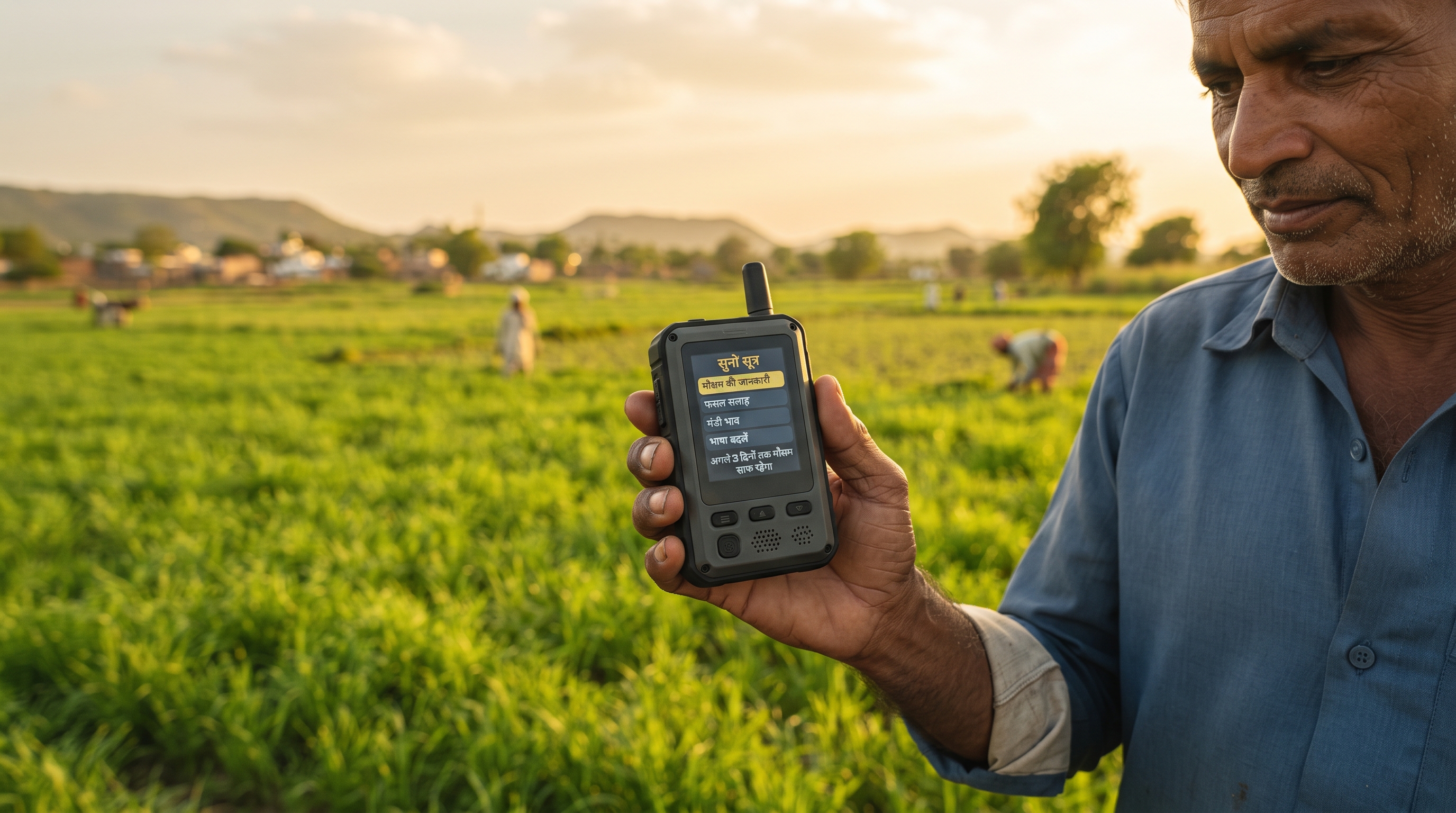
The Suno Sutra Device
In February 2026 at the India AI Summit, Current AI teamed up with Bhashini, the Indian government's AI language division, to create Suno Sutra — Hindi for "listening chronicles." The result is a pocket-sized, completely offline device that runs AI in 22 Indian languages without any internet connection.
"In India, there are hundreds of different languages and dialects, and right now AI is not representing them," Bdeir said. The device is open-sourced, available for developer communities to build on and adapt for their own linguistic contexts.
The device's design reflects a deliberate choice: for communities where internet access is unreliable or expensive, an offline-first AI tool is the only genuinely accessible option. Half the world's spoken languages face extinction, and with English driving the largest language models, a bulk of the world's languages and cultures are left behind.
Alpha Chat and the Open Stack
Earlier this month in Geneva, Current AI launched Alpha Chat, an open-source AI chatbot assembled in just seven weeks by a coalition of ten organizations including Hugging Face, Mozilla, and MIT Media Lab. Each contributor brought a piece of the stack — a language model, safety tooling, and computing power — demonstrating that open AI infrastructure can be built collaboratively rather than monopolized by a single company.
The chatbot represents a proof of concept: that an AI stack assembled from independently developed, open components can compete with proprietary systems on quality while remaining accessible to anyone who wants to use or modify it.
Grants Across the Global South
Current AI's first cohort grant round, announced last month, deployed $3.2 million across four organizations spanning three continents:
In Masakhane, Kenya, the project is building AI datasets across more than 50 African languages for health, farming, and education — domains where commercial AI systems have little incentive to invest.
In Lebanon, the Institute for Worldmaking is digitizing Arab cultural history and contemporary practice into machine-readable databases, with communities — not tech companies — retaining control of the data.
In the Brazilian Amazon, Portal sem Porteiras is building offline AI tools with Indigenous communities, keeping data within the territory rather than exporting it to corporate servers.
In Kenya, the African Internet Rights Alliance is developing audit tools to hold AI systems accountable across the continent.
"Scale is not always the measure," Bdeir said when asked about the relatively modest $3.2 million budget. "That is the Big Tech paradigm. This could look like an Indigenous elder in the Brazilian Amazon using a tool built in Kenya to be able to pass down ecological knowledge in their own language."
The Sakana AI Partnership
Current AI also struck a deal with Sakana AI, a Tokyo-based startup known for its work on what it calls Sovereign AI. The two organizations plan to build a shared open-source AI stack designed to support the Japanese language and culture, but also communities across the Global South that dominant AI systems have largely ignored.
The partnership reflects a broader thesis: that AI sovereignty is not just about nations controlling their own AI infrastructure, but about ensuring that the next generation of AI tools reflects the linguistic and cultural diversity of the people who use them — not just the priorities of the companies that build them.
A Public Alternative to Big Tech's Walled Gardens
On the question of data ownership, Bdeir draws a sharp line. "Big tech builds multilingual models to expand their market, regardless of consent or context," she said. The consequences are concrete: "For Indigenous languages, missionary Bible translations become training data before communities have set any rules."
Current AI's approach is different. Models and data are stored locally. Community experts are brought in before anything is built. Consent protocols are written into the pipeline so communities can halt the process at any point. None of Current AI's grantees have fully solved the data governance problem yet, but Bdeir sees that as the point: "Every one of them has built the question into their work, rather than accepting the usual default, where complexity becomes the excuse to let a government or a tech company decide for everyone."
The nonprofit's vision is an open system modeled on the early web, where improvements benefit everyone, no one gets locked out, and communities keep control of their own data. Whether $400 million and a coalition of foundations can build a genuine alternative to the trillion-dollar AI industry is an open question. But Current AI is making the case that the attempt itself matters — and that the default path of letting a handful of Silicon Valley companies shape the future of AI for everyone is not the only option.