Palantir AI Helped Kill 123 Children in Iran
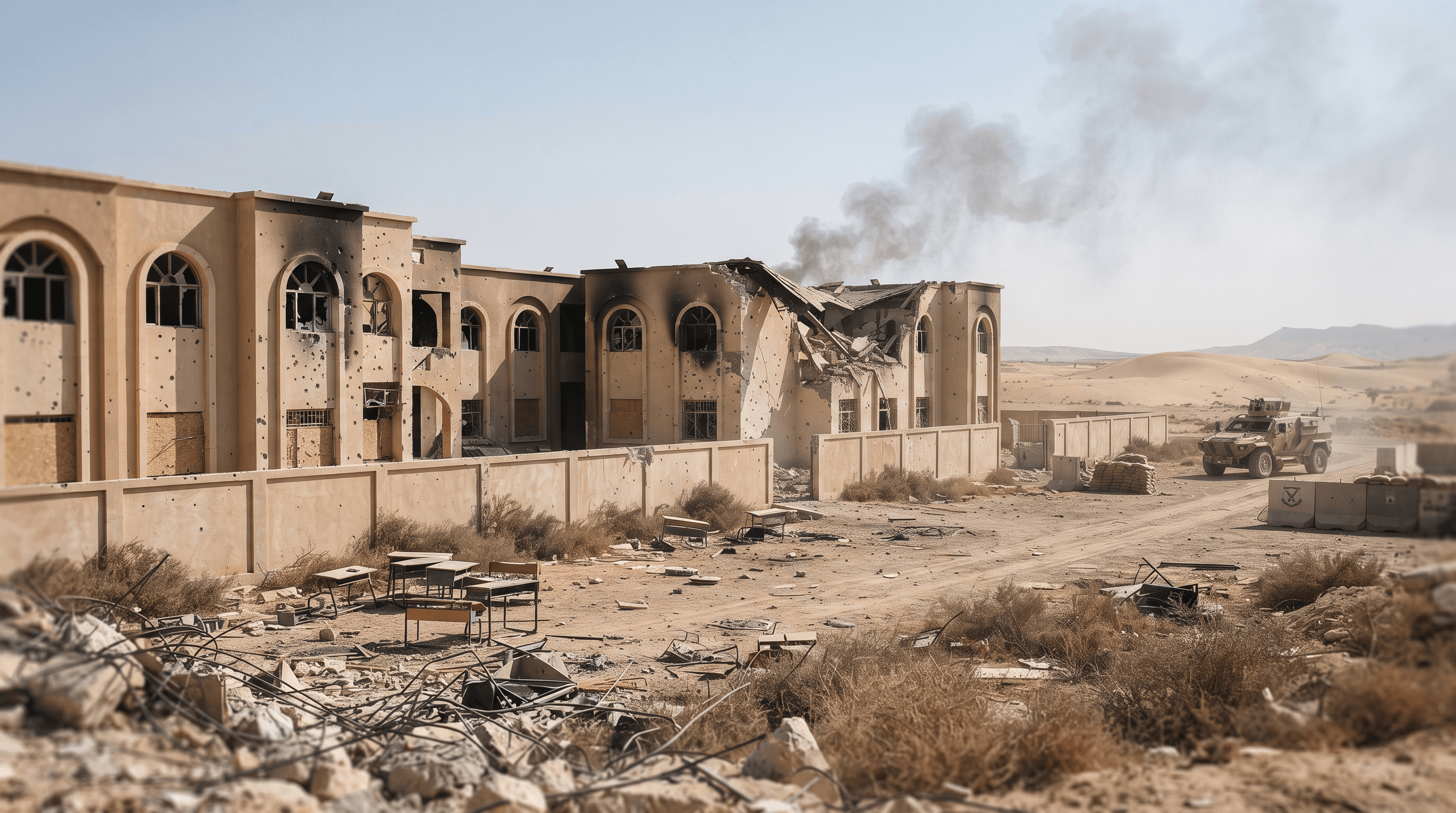
For years, the AI industry sold a simple promise: machines would make military targeting more precise. Faster data processing, fewer errors, reduced civilian harm. A Pentagon investigation just proved the opposite. Overreliance on an AI targeting system built by Palantir helped produce a strike that killed 123 children at an elementary school in Iran.
The story of what happened in Minab on February 20, 2026, is a case study in how automation bias - not rogue AI, not malicious code, but ordinary human trust in a machine - can amplify disaster at a scale that was supposed to be impossible in the age of precision warfare.
The strike that shouldnt have happened
Two Tomahawk missiles hit Shajarah Tayyebeh Elementary School in the southern Iranian town of Minab on the opening day of the Iran war. The blasts killed more than 150 people, including at least 123 children. The school had been a school for years. Commercial satellite images from 2017 showed walls and separate entrances cutting it off from an adjacent military base. A 2018 image showed brightly painted walls, a soccer pitch, assembly rows, and playground markings. One analyst spotted the changes as early as 2019 and logged remarks - in a database that was not connected to the primary military intelligence system used for targeting.
The site stayed labeled as an Islamic Revolutionary Guard Corps facility in U.S. targeting databases. And then it was fed into Palantir's Maven Smart System.
How the AI failed
The Maven Smart System is an AI-powered data integration and targeting platform that the Defense Department made a cornerstone of military operations. The tool accelerates intelligence analysis - work that once took hours is condensed into minutes. According to officials involved in an unreleased internal Pentagon review obtained by Bloomberg, some personnel inside U.S. Central Command leaned too heavily on the AI. They expected Maven to flag stale records or contradictions in the intelligence assembled for potential targets. But the system was not designed to do that.
The Minab site, cataloged as an IRGC facility due to outdated data, was fed into Maven with other candidates and came out as a recommended day-one target. The pace compressed review time: the Trump administration demanded an overwhelming opening assault, and more than 1,000 Iranian targets were hit in the first 24 hours.
The human factor that should have caught it
What makes this story more disturbing than a simple AI failure is the human infrastructure that was supposed to prevent it. Staffing on civilian harm mitigation teams across the U.S. Department of Defense had fallen by roughly 90% over recent years, shrinking to fewer than 20 people overall. Centcoms group shrank from 10 people to one. No member of those teams reviewed the Minab site before the missiles were in the air.
Three failures in one kill chain: bad intelligence, an AI system that was trusted to catch what it was not designed to catch, and a civilian oversight apparatus hollowed out to the point of irrelevance.
A Palantir spokesperson told Bloomberg the company is not responsible for the underlying data nor identifying intelligence deficiencies, and there is no evidence its software was at fault. Two people familiar with Palantirs Pentagon contracts said the government keeps primary responsibility for the quality of the information fed into Maven.
After the strike, Palantir added features that re-review underlying intelligence to identify factors that would disqualify a target and flag inconsistencies and inaccuracies that human review may have missed. That new functionality is said to have already caught some anomalies. Added after 123 children were dead.
The accountability gap
More than 120 House Democrats wrote to Defense Secretary Pete Hegseth in March asking what role Maven and other AI tools played in identifying the site. The Pentagon has not answered publicly, citing the ongoing investigation. A UN Independent International Fact-Finding Mission called the strike a war crime.
Several former senior officers now work for Palantir, including some with high-level clearances at Centcoms Tampa headquarters. The Pentagon report has been all but complete for months but remains unreleased.
The pattern mirrors what technology critics have warned about for years: AI systems that make decisions faster do not inherently make them better. When trust in automation replaces human judgment, and when the humans meant to provide that judgment have been systematically cut from the process, the machine's speed becomes a liability rather than an asset.
Palantir's own fix - adding the disqualification features only after the strike killed 123 children - suggests the company understood the gap. The question is why that gap existed during an active war, and whether any AI vendor whose software is involved in a war crime will ever be held accountable.