A News Agency Sued OpenAI for Stealing Its Articles — Its Own Evidence Proved the Opposite
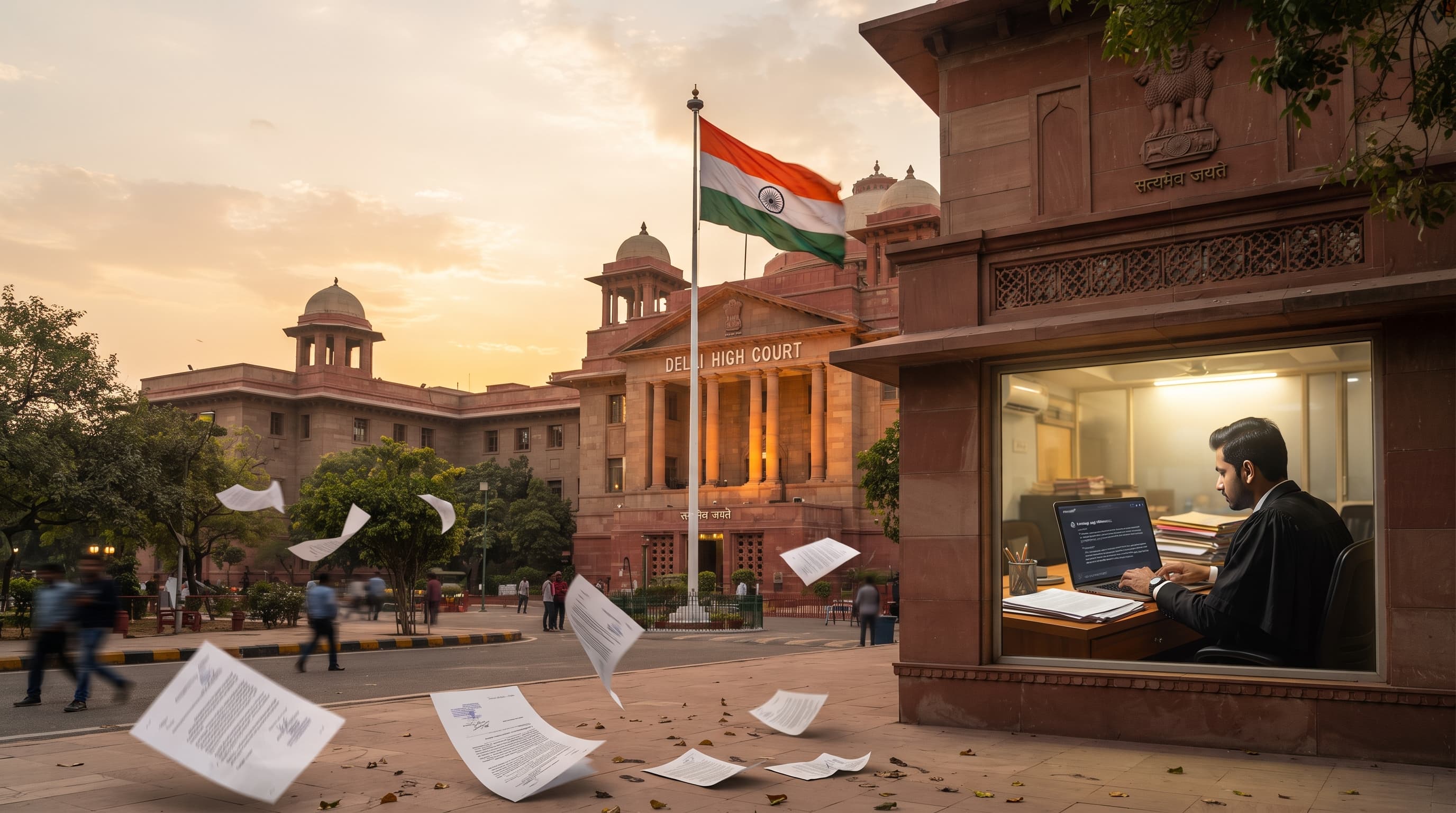
A major Indian news agency walked into the Delhi High Court with what looked like an airtight case: OpenAI, it argued, had ingested thousands of its copyrighted articles into ChatGPT and was now reproducing them without permission. The problem? The articles ANI submitted as evidence were published after the models had already finished training. The court didn't just reject the request — it laid out a legal framework for when AI training counts as fair dealing, and the news agency failed every test it set.
The case that backfired
Asian News International (ANI), one of India's largest news agencies, sued OpenAI in late 2024, alleging the company had used its copyrighted content both to train ChatGPT and to generate the chatbot's outputs. ANI sought an interim injunction to block OpenAI from using its content while the case proceeded.
Justice Amit Bansal of the Delhi High Court rejected the request on both counts. According to a report from The Decoder, the core problem was that ANI's own evidence actively undermined its argument. The agency submitted ChatGPT outputs it claimed were near-verbatim copies of its articles. OpenAI showed that the models in question, GPT-4 and GPT-4o, were trained on data only through April 2022 and April 2024 respectively — and the articles ANI cited were mostly from August and September 2024, after both cutoffs.
Why the evidence fell apart
The ruling exposed a series of weaknesses in ANI's argument. The agency had prompted the models with adversarial instructions explicitly designed to force "exact" reproduction of its articles. Even with those aggressive prompts, ANI could not produce a single verbatim reproduction.
The judge also found that facts contained in news articles are generally not copyrightable, and that reproducing topics or headlines doesn't constitute direct competition with ANI. Several Indian outlets, including The Hindu and The Indian Express, covered the ruling as a landmark precedent.
The public-interest argument
Perhaps the most significant part of the ruling was Justice Bansal's explicit weighing of the public interest. According to Bar and Bench, the court found that an injunction would harm India's developing AI ecosystem. ETLegalWorld reported that the court classified AI training as prima facie fair dealing under Section 52 of India's Copyright Act.
What happens next
This ruling only concerned an interim injunction, not a final judgment. The main trial still has to resolve several open questions: whether models retain copyrighted content long-term, whether RAG-based outputs count as "communication to the public," and whether OpenAI's use is ultimately transformative enough.
The case has drawn international attention as one of the first major AI copyright rulings from the Global South.
A skeptical read
The ruling left one question open: what happens when a model can be shown to have memorized and reproduced copyrighted content verbatim? A future plaintiff with stronger evidence could reach a very different result. The industry has a useful precedent here — it shouldn't mistake it for a blanket exemption.